
• Welcome to Photrio!
    Registration is fast and free. Join today to unlock search, see fewer ads, and access all forum features.
    Click here to sign up

Condenser and Diffuser Head

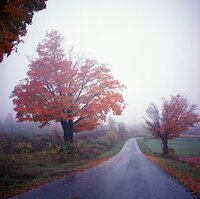
Rainy Day Trees

A
Rainy Day Trees

  • 6
  • 1
  • 92
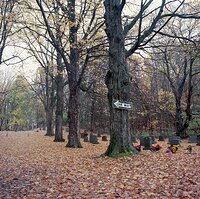
One Way

A
One Way

  • 3
  • 1
  • 91

Recent Classifieds

Forum statistics

Threads
203,157
Messages
2,850,716
Members
101,704
Latest member
yppnq
Recent bookmarks
0

ivanlow

Member
Allowing Ads
Joined
Dec 4, 2015
Messages
48
Location
Singapore
Format
35mm
Hi, just want to check with the experience users here. If I have a sand-blast glass and I put it above the condenser glass, does that mean I can convert it to a diffuser head?


Sent from my iPhone using Tapatalk
 
It isn't an either-or question.

Very few use a true "no-diffusion" light source. A point source is one example of those, and they are relatively rare, and essentially for special purpose use mainly.

Even the heads which are identified as being condenser heads usually use a partially diffused light bulb.

You can certainly add additional diffusion, but it probably will still give results that are at least moderately different from the results from a fully diffused source.

And you may lose light intensity as well.

Be careful that you don't make the light less even.
 
Hi, just want to check with the experience users here. If I have a sand-blast glass and I put it above the condenser glass, does that mean I can convert it to a diffuser head?

MattKing makes a good point about making sure the light is evenly distributed.

If you are getting the piece made, and your glazier has it... opal glass is nice for the purpose. I have a round disk made of opal glass that I got made for my DII. It worked well but I ended up using cold light and Aristo grid light sources.

It was a pleasure working with someone who knew his glass. He also made me several sheets of glass that I intended to use for masking, with safe edges for easy handling.
 
The reason I'm asking this question is because I just bought a Opemus iii and it came with a round disk which is opaque. I wonder is it design for that purpose use.


Sent from my iPhone using Tapatalk
 
Likely.

The diffuser will get you a softer print but.

You need to try and control the contrast on your negatives better when wet printing even with VC paper.
 
I have an enlarger that uses one condenser lens above the negative and a ground glass diffuser a couple of inches above that and then a 12v old fashioned car headlight bulb. Illumination was even unfortunately at some point the glass got broken and I need to get a new piece cut

The advantage of using ground glass over opal glass is there's less light loss

Ian
 
Hi, just want to check with the experience users here. If I have a sand-blast glass and I put it above the condenser glass, does that mean I can convert it to a diffuser head?


Sent from my iPhone using Tapatalk

You will convert it further to a hybrid head.
Opemus iii most likely use opal lamp already, so you will add to it's hybrid-ness a bit more.
 
I use a condenser enlarger but insert a thin sheet of drafting film (art supply store, very cheap) in the filter tray. Thus, I have made a diffusion enlarger out my my condenser enlarger. And, NO, resolution does NOT suffer. Lighting is more even. - David Lyga
 
Last edited by a moderator:
I've used a diffusion sheet an inch or so above the negative in the past. It worked, although it cut down the illumination a lot. That will happen regardless of where you put the diffuser. In any case, the important thing is to get even illumination over the entire negative. With some enlargers, that may not happen with a simple diffuser. You can check by focusing on the easel without a negative and then using a light meter to measure the illumination at several points across the entire field.
 
This is why I recommend drafting film: it is less opaque but still offers full diffusion. When focusing, I pull out the filter drawer enough to allow full lighting. - David Lyga
 
I've done David's trick - it's mylar drafting film, widely available (Dura-Lar is the brand I use) and comes in 2 thicknesses. It has absolutely no texture to show up on your prints (like tracing paper would); it's also just the thing for pencil dodge masks. Far as I know, you have to buy a full pad of it, but it makes a nice first-stage diffuser for flash heads when you want really soft light.

It does eat some light - something like 2 stops. You might not like it for lith prints!!!
 
I used an Opemus IV for many years and had the frosted disk installed all the time.
 
I don't know why drafting film would use a lot of light. 5-mil frosted mylar has a density of only around .07 - about a quarter of a stop! It
could be that by introducing the diffusion in the first place you are scattering more light and simply need a tighter mirror box or diffusion
box relative to the printing format. But the trick is to use mylar, not drafting acetate, which sometimes does leave a visible pattern and is
otherwise inferior.
 
Would anyone like to post a URL with exactly what is needed?
 
> Does it result in soft image?

It results in a softER image. But the image is not that soft you would achieve with a light mixer.
 
Thanks for the URL. When I first looked at it, I saw clear and matte. I assumed matte, but you know how the old assume proverb goes.

Santa Regards
Dick
 
Or get a scrap of thin "Sign White" plexiglas, intended for backlighting. Transmits more light than white plexi per se.
 
Photrio.com contains affiliate links to products. We may receive a commission for purchases made through these links.
To read our full affiliate disclosure statement please click Here.

PHOTRIO PARTNERS EQUALLY FUNDING OUR COMMUNITY:


Ilford ADOX Freestyle Photographic Stearman Press Weldon Color Lab Blue Moon Camera & Machine
Top Bottom