Hello zolveria,
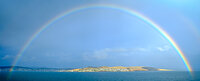
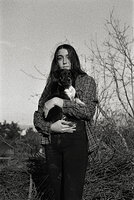
I have used an enlarger (tungsten lamp) to make wet-plate collodion on glass positives from B&W film negatives and ambrotypes from B&W film transparencies. The exposure time was 5-8 minutes, but works quite well. There are many variables, so your results will differ. I do not have a working set-up to use sunlight, as was used in the old days, and some people use today. I wanted to make images of subjects that could not be still long enough for wet-plate. Another thing to note: Wet-plate has a very different spectral response than panchromatic film, so if you use a panchromatic negative the results will look quite different than a wet-plate of the same scene. Also, wet-plate is extremely fine-grained. The enlarged image of a film negative may not have as fine a grain. Tonal range and Dmax are also factors. I did not find this to be a problem for my purposes.
If you already do wet-plate, give it a go. If not, the harder part (and most fun), is making wet plates. It is magic! (So is making silver-gelatin emulsions).
Cheers,
Clarence