

• Welcome to Photrio!
    Registration is fast and free. Join today to unlock search, see fewer ads, and access all forum features.
    Click here to sign up

Chromogenic BW film

Filling In

H
Filling In

  • 1
  • 2
  • 28
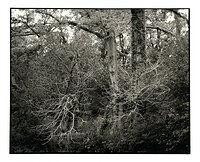
Painted Hills # 3.jpg

H
Painted Hills # 3.jpg

  • 4
  • 0
  • 76

Recent Classifieds

Forum statistics

Threads
203,208
Messages
2,851,408
Members
101,724
Latest member
Pituck
Recent bookmarks
0

Mainecoonmaniac

Member
Allowing Ads
Joined
Dec 10, 2009
Messages
6,295
Format
Multi Format
A while back. I took a trip to Yosemite. I shot some Arista Edu film and a roll of Ilford FP4 film. For some reason, I don't like the look of FP4 film. It looks mushy to me compared to Arista EDU. I don't know if it's just my perception. What are your opinions of chromogenic BW films? :confused:
 
If you don't like FP4 but do like Arista EDU, keep shooting the Arista! Mushy would be the last word I would use to describe FP4—my guess would be that the film was underdeveloped causing a lack of contrast. I'm not sure how switching to a chromogenic B&W film will give you better results (if that's what you're asking).
 
Not sure what you are asking here given the films you listed, but I like the chromogenics (XP2/BW400NC). They are sharp, faster than FP4, and show little grain.

I'm still learning how to use them best. They do seem to work better with ample exposure and can be a bit flat in contrast. I've started playing with plus developing XP2 with nice results. Stronger exposure actually reduces grain too so skies seem to print smoother for me.
 
I just shot some Kodak BW400CN for the first time recently. I still like real B&W films better, but the chromogenic seemed to hold detail in the shadows more readily, but at the expense of shedding it more readily in the highlights. So I'd say, given my limited experience, that it really shines in shadowy or lower-contrast scenes. For high-contrast scenes I'd use real B&W and stand develop.
 
the chromogenic seemed to hold detail in the shadows more readily, but at the expense of shedding it more readily in the highlights.

I'd bet that the detail is there in the highlights, they just need to be burned in, at least that's my experience. Hard paper contrast helps. :wink:

This is part of why I'm starting to experiment plus development.
 
The Foma (Arista EDU) films have more inherent contrast and need tighter process/exposure controls than FP4, so visually they may appear clearer. The FP4 may be easier to print though.

Ian
 
Dear APUGers. I made a mistake of miscalling XP1 as "FP4". This thread is regarding the chromogenic film XP1. From some of the responses, some feel the same about chromogenic films. Are there differences between the look of a print made from a chromogenic neg which the image is made of dyes and a print made from conventional BW film where the image is made from grains of silver? The reason I tried XP1 film is out of curiousity. I've read that highlights don't block up like conventional film. However, the results were disappointing. Are there any die hard BW chromogenic films out there?
 
If you used XP-1 it would be way out of date :D You mean XP-2+

It's a film some like others don't. I used XP-1 then XP-2 for years but always push processed for shooting Rock concerts.

At box speed or 100/200 EI it's a very good film but I never liked the tones it gives and much preferred FP4. it doesn't have the acutance (edge sharpness) of conventional B&W films either.

So I'd agree with your first comments now you've clarified it's XP-2 rather than FP4 your comparing to the Foma film.

Ian
 
Dear APUGers. I made a mistake of miscalling XP1 as "FP4". This thread is regarding the chromogenic film XP1. From some of the responses, some feel the same about chromogenic films. Are there differences between the look of a print made from a chromogenic neg which the image is made of dyes and a print made from conventional BW film where the image is made from grains of silver? The reason I tried XP1 film is out of curiousity. I've read that highlights don't block up like conventional film. However, the results were disappointing. Are there any die hard BW chromogenic films out there?


You need to print the chromogenic negatives on harder grade contrast paper(or VC filter)to get the most benefit of what it can offer. I've had decent results printing on grades 4 and 5 Kodabrome. I still dont like how the skies print out with it, and it still looks a tad bland. I'll stick to traditional B&W films.
 
I've only used it in 135, but I really like xp2 pushed to 800 for indoor and natural light portrait work. The grain and tones look lovely to me.

That said, it would not be my first choice for landscapes, which I'm assuming you shot while at Yosemite.
 
I tried Kodak BW400 twice, I really tried to like it. I had the same experience that Ottre notes, blown highlights. As for me, any blown highlight is a File 13 item, I never used it again.

Everyone's experience will vary, but whatever format, E-6, bw or chromo, I can handle shadows going dark, but not loss of detail in a highlight.
 
It's an old roll

If you used XP-1 it would be way out of date :D You mean XP-2+

It's a film some like others don't. I used XP-1 then XP-2 for years but always push processed for shooting Rock concerts.

At box speed or 100/200 EI it's a very good film but I never liked the tones it gives and much preferred FP4. it doesn't have the acutance (edge sharpness) of conventional B&W films either.

So I'd agree with your first comments now you've clarified it's XP-2 rather than FP4 your comparing to the Foma film.

Ian

Hi Ian,

It was an old roll I found in the fridge so it was XP1. Do you know if XP2 is any better? I do see an advantage of chromogenic films. There aren't many pro film labs around anymore other than drug store labs that have C-41 processing. I'd imagine if you need a roll of conventional BW film process, you'd probably have to go out one your way to have it souped if you don't have your own darkroom. From looking at this thread, they're aren't any rabid fans of chromogenic film commenting on this thread. I though I was missing something and I probably wasn't.
 
XP1 was an early start for Ilford, and to be kind the kinks weren't quite worked out.
Its keeping properties aren't known to be great.
Current XP2+ is light years better.

Chromagenic films such as XP2 / BW400 / Fuji BW400 CN can be quite soft looking with a smooth contrast. If you want harder, sharper contrast, I'd recommend a t grain film like Ilford Delta, Kodaks TMax, or Fuji Acros
 
One other advantage of chromogenics is that, if one does the horrible things with it that they are reported to discuss in our sister hybridphoto forum, cleanup of negatives may be done more easily.
 
XP1 was an early start for Ilford, and to be kind the kinks weren't quite worked out.
Its keeping properties aren't known to be great.
Current XP2+ is light years better.

Chromagenic films such as XP2 / BW400 / Fuji BW400 CN can be quite soft looking with a smooth contrast. If you want harder, sharper contrast, I'd recommend a t grain film like Ilford Delta, Kodaks TMax, or Fuji Acros


The original XP1 was very good, I'm not sure there were any kinks that needed ironing out with the film itself, however it had to be changed because smaller labs didn't like & often couldn't cope with it's non standard C41 development time and the push processing recommendations.

With XP2 the film used the standard C41 development time and push processing recommendations were dropped. However it still pushed extremely well to 1600+ with increased development and was way ahead of HP5 or Tri-X push processed.

Hi Ian,

It was an old roll I found in the fridge so it was XP1. Do you know if XP2 is any better?

It would be underdeveloped in standard C41 processing so XP2 Super would be much better.

Ian
 
What kind of development does XP1 require? I have a roll that I was thinking about shooting. Could underdevelopment in normal C41 be compensated for by overexposing it (at say 100)?
 
Before I had my darkroom and when I could ALWAYS get same-day C41 service I loved chromogenic film. The lab prints I got done on Kodak paper were usually pretty good. I wasn't printing them myself so I didn't care if they had a mask like BW400CN while XP2 doesn't have one. Waiting a few hours was better than waiting a few weeks for B&W service I thought.

Once I got my own darkroom I dumped chromogenic films. I still have all my chromogenic negatives but I would much rather print real B&W film. I'm getting into home C41 processing so I suppose I could process chromogenic films too but I'd much rather do room temperature B&W development if I can help it rather than fever pitched water baths.
 
What kind of development does XP1 require? I have a roll that I was thinking about shooting. Could underdevelopment in normal C41 be compensated for by overexposing it (at say 100)?

XP1 needed 4 minutes at 38° C in C41 developer as oposed to 3:15 mins for XP2.

XP1 or 2 give finer grain when shot at 100 EI but the development times must remain the same, it has a straight line response and it doesn't block up like conventional films.

Ian
 
Thank you for the info.
Is the (linearly) denser negative why overexposing reputedly gives finer grain? (Less "gaps", as someone put it somewhere on another discussion).
 
I would think a neg made of dye wouldn't last as long with a well processed BW neg. I haven't tried XP2, and I have no desire for now. I do prefer harder contrast and maybe that's why the old XP1 looks mushy to me. I do like Tmax film, but haven't tried Ilford Delta or Fuji Acros.
 
Thank you for the info.
Is the (linearly) denser negative why overexposing reputedly gives finer grain? (Less "gaps", as someone put it somewhere on another discussion).

pretty much :D

I would think a neg made of dye wouldn't last as long with a well processed BW neg. I haven't tried XP2, and I have no desire for now. I do prefer harder contrast and maybe that's why the old XP1 looks mushy to me. I do like Tmax film, but haven't tried Ilford Delta or Fuji Acros.

Well I made some prints off some of my earliest XP1 negatives last year and they printed normally, no differences to 20+ years ago.

The honest truth is that with experience choice of conventional film from different manufacturers makes only slight differences, it's nuances. So Tmax 100 and delta 100 are not that far apart, likewise Tmax 400 and Delta 400, Fuji films are slightly different but just as good.

It's far more important to choose a film and stick with it, often you need a faster/slower film as well - if they are the same manufacturer then there's greater similarities.

Ian
 
Well I made some prints off some of my earliest XP1 negatives last year and they printed normally, no differences to 20+ years ago.

The honest truth is that with experience choice of conventional film from different manufacturers makes only slight differences, it's nuances. So Tmax 100 and delta 100 are not that far apart, likewise Tmax 400 and Delta 400, Fuji films are slightly different but just as good.

pretty much :D
It's far more important to choose a film and stick with it, often you need a faster/slower film as well - if they are the same manufacturer then there's greater similarities.

Ian

That's so true. but I'm the kind that's always curious and always thinks that some film out there that I haven't tried that is better. Chances are, it's not any better and end up going back using an old friend. Testing film developer combos can be fun and a pain at the same time.:D
 
My opinions of chromogenic b/w films are not based on grossly out of date film! I'd reshoot a fresh roll of XP-2 and see what you think.
 
I like XP2+, though I'm more likely to grab a "real" B&W because I can develop those faster here. When I lived near some decent labs (Massachusetts), I shot XP2+ more. I do not like Kodak's chromogenic because of the mask (I usually print my own). The shot of the boots with the chair in my gallery here was shot on XP2+ in 120.
 
Hey Bethe. Nice shot! So what made you try XP2? I feel the same about processing my own "Real BW" film. I was told XP2 was way better than XP1. I might give it a shot in the future inspired by your shot of the old boots.
 
Photrio.com contains affiliate links to products. We may receive a commission for purchases made through these links.
To read our full affiliate disclosure statement please click Here.

PHOTRIO PARTNERS EQUALLY FUNDING OUR COMMUNITY:


Ilford ADOX Freestyle Photographic Stearman Press Weldon Color Lab Blue Moon Camera & Machine
Top Bottom
