
• Welcome to Photrio!
    Registration is fast and free. Join today to unlock search, see fewer ads, and access all forum features.
    Click here to sign up

Chromogenic B&W Film

Recent Classifieds

Forum statistics

Threads
201,720
Messages
2,829,068
Members
100,910
Latest member
SuninPisces
Recent bookmarks
1

alapin

Member
Allowing Ads
Joined
May 10, 2008
Messages
70
Location
South Caroli
Format
35mm
I haven't shot B&W film for along time. The only available film in my area is limited to Kodak BW400 CN. I found on the web which says it can be developed in color developer, but is difficult to print on BW paper or to make digital scans. I know you can order from the web and get Ilford XP Super chromogenic cn film as well. I also found that Kodak Portra Cn is available but cost much more.

The question is does anyone use any of these and what is your opinion of them? Do you recommend using them or such I just order regular B&W film.

I am looking to setup a darkroom around the first of the year. So I would need to use a lab until the darkroom is up and running.
 

Paul Howell

Subscriber
Allowing Ads
Joined
Dec 23, 2004
Messages
10,087
Location
Scottsdale Az
Format
Multi Format
I haven't shot B&W film for along time. The only available film in my area is limited to Kodak BW400 CN. I found on the web which says it can be developed in color developer, but is difficult to print on BW paper or to make digital scans. I know you can order from the web and get Ilford XP Super chromogenic cn film as well. I also found that Kodak Portra Cn is available but cost much more.

The question is does anyone use any of these and what is your opinion of them? Do you recommend using them or such I just order regular B&W film.

I am looking to setup a darkroom around the first of the year. So I would need to use a lab until the darkroom is up and running.

I have not scanned BW400, but I have made B&W prints without much trouble.
 

Aurum

Member
Allowing Ads
Joined
Apr 19, 2008
Messages
917
Location
Landrover Ce
Format
Medium Format
Admittedly, I haven't used the Kodak Version of this Technology, but Chromagenic films I've used have printed up and scanned fine.

I believe the difference between the 400CN, and the Ilford XP2 is the colour of the base. XP2 is pale grey, wheras the Kodak has an amber tint like regular C41 colour. This might make it more difficult to print on regular straight grade B&W papers than XP2

Certainly if all else fails, the standard Minilab prints onto colour paper look fine
 

winger

Subscriber
Allowing Ads
Joined
Jan 13, 2005
Messages
3,980
Location
southwest PA
Format
Multi Format
I haven't gotten great results with Kodak's 400CN, but I like Ilford XP2. It does print well in a regular B&W darkroom. It's quite likely that you won't get decent prints back from a lab, though, so don't be discouraged by that. It depends on the lab, though.
 

srs5694

Member
Allowing Ads
Joined
May 18, 2005
Messages
2,718
Location
Woonsocket,
Format
35mm
I've shot both BW400CN and XP2 Super, but I don't use either on a regular basis. I've seen posts from others who do, though. In that respect, they're like any other B&W film -- some people love them, some people hate them, and other people don't feel strongly about them either way. It's impossible to say which category you'll be in if/when you try them.

I've also made prints from both films on regular B&W paper. The Kodak requires significantly longer exposures and seems more likely to need higher contrast settings (when using variable contrast papers). Some people don't like the results of this combination, but I have no specific objections, other than the practical issue of the extra time required to expose the paper. That said, if you plan to be making your own prints on B&W paper in the future, you might want to favor the XP2 Super.

I've gotten both good and bad prints back from labs for both types of film. Locally, a Walgreens with a Fuji Frontier minilab has produced near-neutral prints from both films. I'm told that the Frontier has a "B&W" setting, so you might want to ask minilab operators about this and be sure they use that setting. One mail-order outfit I used once printed my Ilford XP2 negatives on conventional B&W paper.
 

sanking

Member
Allowing Ads
Joined
Mar 26, 2003
Messages
5,437
Location
Greenville,
Format
Large Format
I have used quite a bit of Kodak BW400 CN. It scans very well in my experience and has good grain and sharpness. I think the Ilford XP Super CN film has slightly finer grain, but you would have to make large prints to see a difference.

The disadvantage of using chromogenic B&W film is that the dynamic range is much less than with traditional B&W films. So if you shoot in conditions of high contrast you will probably get better results with a traditional film. This assumes that you understand how to expose and develop to maximize the dynamic range of the film.

Sandy King


I haven't shot B&W film for along time. The only available film in my area is limited to Kodak BW400 CN. I found on the web which says it can be developed in color developer, but is difficult to print on BW paper or to make digital scans. I know you can order from the web and get Ilford XP Super chromogenic cn film as well. I also found that Kodak Portra Cn is available but cost much more.

The question is does anyone use any of these and what is your opinion of them? Do you recommend using them or such I just order regular B&W film.

I am looking to setup a darkroom around the first of the year. So I would need to use a lab until the darkroom is up and running.
 

2F/2F

Member
Allowing Ads
Joined
Apr 29, 2008
Messages
8,031
Location
Los Angeles,
Format
Multi Format
As you will probably hear from others, the Ilford is better suited to printing on black and white paper, and the Kodak works best on color paper (process RA4, etc.). The Kodak looks just like a color neg, minus the dye. The Ilford looks more like a normal b/w film.

So, to do your own printing on b/w paper, I would shoot the Ilford.

To have it printed at a lab on their auto machines, I would use the Kodak.

To have it printed at a lab by hand on b/w paper, I would shoot the Ilford.

I am assuming that you will not be printing RA at home, but if you were, I would use the Kodak.

Sounds confusing, eh?
 

srs5694

Member
Allowing Ads
Joined
May 18, 2005
Messages
2,718
Location
Woonsocket,
Format
35mm
The disadvantage of using chromogenic B&W film is that the dynamic range is much less than with traditional B&W films.

One other drawback (depending on your needs) is that the image is formed by dyes rather than silver particles. Thus, the image might fade more quickly than it would with a conventional B&W film. I don't know of any studies of the long-term keeping properties of these films, though. I have no reason to think they'd be any worse in this respect than modern C-41 color films, and those can be expected to last for decades with reasonable care.
 

Ty Phillips

Member
Allowing Ads
Joined
Jul 10, 2008
Messages
9
Location
Chicago, IL
Format
35mm
I have experience scanning both BW400CN and XP2. I've made a contact sheet from BW400CN negatives before, but never any enlargements.

XP2 looks much more like traditional B&W film, to my eyes anyway. And, as others have said, it can be printed normally (although I've never done so).

BW400CN is extremely low contrast, which may or may not be a plus, depending on what you are looking for. I have gotten some nice scans out of it for certain subject matter, though. Trying to print with it on B&W paper though would appear to be a challenge. When I made the contact sheet I mentioned above my exposure time was probably about 4 times what it was for the normal B&W negatives and I think I used a #4 1/2 filter. Still looked muddy.

If I were in your shoes it would be a no brainer. XP2.

Good luck finding a lab that will treat your film properly, though!
 

srs5694

Member
Allowing Ads
Joined
May 18, 2005
Messages
2,718
Location
Woonsocket,
Format
35mm
Paul's and Ty's comments on conventional B&W printing with BW400CN are typical of the range you'll find -- from Paul's "without much trouble" to Ty's "a challenge." I'm not sure what accounts for this range, but several possibilities spring to mind: different standards of what makes a good print, different standards for what constitutes a "challenge" in printing, different papers (perhaps they respond differently to BW400CN), or different enlargers/light sources/filters (perhaps they interact with the film differently).

Unfortunately, in your situation, alapin, it's hard to say where you'll end up falling on this range of opinions when you finally start B&W printing, hence my earlier recommendation that you favor XP2 Super -- every post I've seen indicates that it prints easily on conventional B&W paper, whereas there's substantial variability of opinion about BW400CN. It'd be a pity for you to get a great shot in the next few months and then have difficulty getting a good print out of it in your own darkroom.
 

eddym

Member
Allowing Ads
Joined
Jan 22, 2006
Messages
1,924
Location
Puerto Rico
Format
Multi Format
XP2 is a great film. The Kodak CN films are OK if they will be printed by a color lab, but printing them yourself is a pain. I've never gotten what I consider a really good print from them. If you plan to make your own prints, shoot XP2.
 

Kycoo

Member
Allowing Ads
Joined
Jul 8, 2008
Messages
20
Location
California
Format
35mm
I have not used the Kodak, but I have no trouble printing the Ilford XP2 in the darkroom. Pretty much like printing traditional BW except that I had to bump the contrast filter a little, starting on filter 2.5, instead of 2.0.

If I could develop XP2 at home, I would use it a lot more as I often need to both scan (for photobook) and darkroom print. I find the XP2 easier to scan compared to my mainstay, Tri-x.
 
Joined
Jan 21, 2003
Messages
15,715
Location
Switzerland
Format
Multi Format
That makes a lot of sense. I've shot a fair bit of Ilford XP2 Super in the 35mm format, and I get about the same amount of grain I get from an ISO 100 regular film. But, I've gotten the best results in low to medium lighting conditions, and a tendency for blown out highlights in harsh light.
When you get it right, though, it's amazing film. I have 11x14 enlargements with very little grain from this ISO 400 film, and that's impressive in my opinion.

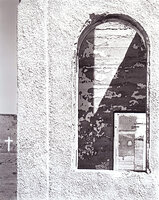
The attached image is from XP2 35mm, printed on 11x14 (to size 9x12) on Fotokemika Emaks Grade 3 paper. Wonderful combination.

- Thomas

I have used quite a bit of Kodak BW400 CN. It scans very well in my experience and has good grain and sharpness. I think the Ilford XP Super CN film has slightly finer grain, but you would have to make large prints to see a difference.

The disadvantage of using chromogenic B&W film is that the dynamic range is much less than with traditional B&W films. So if you shoot in conditions of high contrast you will probably get better results with a traditional film. This assumes that you understand how to expose and develop to maximize the dynamic range of the film.

Sandy King
 

Attachments

  • Babcock Mill 01.jpg
    Babcock Mill 01.jpg
    183.5 KB · Views: 177
Last edited by a moderator:

mabman

Member
Allowing Ads
Joined
Jun 7, 2007
Messages
834
Location
Winnipeg, MB
Format
35mm
....
The disadvantage of using chromogenic B&W film is that the dynamic range is much less than with traditional B&W films....

Sandy King

Full dynamic range, perhaps (I will defer to your greater experience), but I've found with the BW400CN at least you can throw a lot of light at it and it still retains quite a bit of detail without blowing highlights (eg, popping a diffused but direct flash a couple of feet away from a subject). I haven't done extensive tests vs. traditional B&W films, but I've been quite impressed with its use for informal portraits. YMMV, of course.
 

sanking

Member
Allowing Ads
Joined
Mar 26, 2003
Messages
5,437
Location
Greenville,
Format
Large Format
Even though you may be perfectly satisfied with the dynamic range of BW400CN there is no doubt but that a traditional B&W 400 ASA film will give much longer dynamic range. If you don't need it, don't worry about it.

Sandy King


Full dynamic range, perhaps (I will defer to your greater experience), but I've found with the BW400CN at least you can throw a lot of light at it and it still retains quite a bit of detail without blowing highlights (eg, popping a diffused but direct flash a couple of feet away from a subject). I haven't done extensive tests vs. traditional B&W films, but I've been quite impressed with its use for informal portraits. YMMV, of course.
 

radiantdarkroom

Member
Allowing Ads
Joined
Oct 31, 2006
Messages
105
Format
35mm
Both films(KODAK ILFORD) print very well on traditional B&W papers if you color correct the base color to grey first.
 

cowanw

Member
Allowing Ads
Joined
Aug 29, 2006
Messages
2,304
Location
Hamilton, On
Format
Large Format
The disadvantage of using chromogenic B&W film is that the dynamic range is much less than with traditional B&W films. So if you shoot in conditions of high contrast you will probably get better results with a traditional film. This assumes that you understand how to expose and develop to maximize the dynamic range of the film.

Sandy King

I cannot for the life of me get this dynamic range stuff. I thought that a film with a short dynamic range would be contrastier more like slide film, and Kodak BW400 cn is any thing but contrasty
 

sanking

Member
Allowing Ads
Joined
Mar 26, 2003
Messages
5,437
Location
Greenville,
Format
Large Format
I cannot for the life of me get this dynamic range stuff. I thought that a film with a short dynamic range would be contrastier more like slide film, and Kodak BW400 cn is any thing but contrasty

Bill,

Dynamic range is the range of subject brightness values that a specific film can capture. You can think of as stops of EV or stops of brightness. Color slide film has a short dynamic range, 5-6 stops, color negative film, 8-10 stops, and traditional B&W film 12-19 stops.

Dynamic range has nothing to do with the contrast of the negative or its density range or maximum density, but with range of brightness values the film can capture.

With B&W films we can extend the dynamic range by over-exposing and reducing time of development, by the use of reduced agitation techniques or by the two of two-bath development. Such controls are not normally possible with color film, unless we develop it ourselves.

Sandy King
 

cowanw

Member
Allowing Ads
Joined
Aug 29, 2006
Messages
2,304
Location
Hamilton, On
Format
Large Format
Bill,

Dynamic range is the range of subject brightness values that a specific film can capture. You can think of as stops of EV or stops of brightness. Color slide film has a short dynamic range, 5-6 stops, color negative film, 8-10 stops, and traditional B&W film 12-19 stops.

Dynamic range has nothing to do with the contrast of the negative or its density range or maximum density, but with range of brightness values the film can capture.

With B&W films we can extend the dynamic range by over-exposing and reducing time of development, by the use of reduced agitation techniques or by the two of two-bath development. Such controls are not normally possible with color film, unless we develop it ourselves.

Sandy King

Thank you for answering.
this is as I understand it but I stumble at this.
The kodak film requires much higher grade paper to bring the print contrast to expectations. Which suggests to me that there is a greater (longer) range of greys on the negative. If so the film should take a contrasty scene and still have detail in the highlights and blacks.
Can you help me get over this gap in my understanding?
thanks
 

takef586

Member
Allowing Ads
Joined
Aug 24, 2006
Messages
55
Format
Medium Format
Well, to me the answer is pretty straightforward: they are both great films, but you have to know their strong and weak points. To begin with, unless you are shooting a grey wall, the true speed is 200ISO at most, on the other hand, the latitude in the highlights is incredible - it is impossible to blow them out. Then, for me, since these films come out fairly flat to begin with, and then there's the question of the orange base for BW400CN, they should be scanned. You will benefit greatly from scanning them yourself, or at most get an unadjusted 16 bit TIFF scan made, and work on it to make YOUR adjustments. The XP2 is slightly sharper and has slightly bigger grain than the other, but both of them have practically invisible grain if compared to silver films. For me, these films excel in portraiture, but some people like using XP2 in outdoors shots when they have to cope with very bright scenes, like beach, snow, and the like. I made some 13x19 enlargements from a 35mm shot of BW400CN, and some people thought it was digital capture for absence of grain... All in all, very versatile films, but, I repeat, beware uf underexposure, and make your own scans if possible.
 

sanking

Member
Allowing Ads
Joined
Mar 26, 2003
Messages
5,437
Location
Greenville,
Format
Large Format
Thank you for answering.
this is as I understand it but I stumble at this.
The kodak film requires much higher grade paper to bring the print contrast to expectations. Which suggests to me that there is a greater (longer) range of greys on the negative. If so the film should take a contrasty scene and still have detail in the highlights and blacks.
Can you help me get over this gap in my understanding?
thanks


The fact that the film prints flat only means that the density range of the negative is too low for the exposure scale of your printing process. For best results DR and ES should match.

You may have a very great range of gray tones on the negatives, but that fact does not assure that the negative will print with proper contrast (that depends on the ES of the paper) or that the film has captured (or has not captured) all of the range of brightness that was present in the original scene.

In fact, some of the brightness range that film can capture may not be usable in printing, so we say that the dynamic range of capture goes from the minimum usable exposure (which is called D-min) to the maximum usable exposure the film can accept (which is called D-max). This is due to the fact that film curves are not perfectly straight line. Typically it is hard to blow out the highlights wit C41 type black and white film because there is very hard compression of densities in the highlights of the negative. In fact, it is rather like the film density curve just increases to a certain point, and then levels off flat.

Sandy King
 
Last edited by a moderator:

nworth

Member
Allowing Ads
Joined
Aug 27, 2005
Messages
2,228
Location
Los Alamos,
Format
Multi Format
I've used a fair amount of XP2, but I haven't tried BW400CN. My experience with XP2 has been excellent. The dynamic range is more than adequate for anything I've encountered, but I have not tried it in any extreme contrast situations. It should be mentioned that there is a great deal of variation between ordinary black and white films in this regard - some do extremely well while others have much less range than color negative films. Of course, you have the option of manipulating ordinary black and white films in the developer to control contrast, and you can't do that with chromogenic films. My experience with the Kodak Portra series of color negative films has shown that they have excellent dynamic range and behave well in high contrast situations, although high contrast scenes can be difficult to print. The low contrast BW400CN may be similar in this regard, and dynamic range may not be much of a problem. The low contrast may be a problem with some scanners, however. If this is the case, it may help to scan it as a color negative and then to convert the image to black and white in Photoshop.
 

2F/2F

Member
Allowing Ads
Joined
Apr 29, 2008
Messages
8,031
Location
Los Angeles,
Format
Multi Format
"Of course, you have the option of manipulating ordinary black and white films in the developer to control contrast, and you can't do that with chromogenic films."

I disagree. Try it and see.
 
Photrio.com contains affiliate links to products. We may receive a commission for purchases made through these links.
To read our full affiliate disclosure statement please click Here.

PHOTRIO PARTNERS EQUALLY FUNDING OUR COMMUNITY:


Ilford ADOX Freestyle Photographic Stearman Press Weldon Color Lab Blue Moon Camera & Machine
Top Bottom