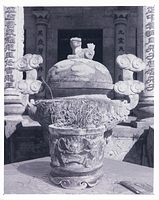
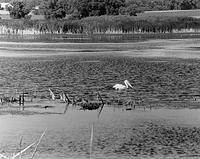
Has anybody else found value in using ChatGPT as a darkrrom tool? I am a novice photographer that picked up film photography during the early days of the COVID pandemic. I've never had formal photography training and have pieced together whatever knowledge I've gained largely through trial and error supported by reading the Ansel Adams trio of books, this forum, and Large Format Photography's forum.
Over the last month I've used ChatGPT as a darkroom aid in two ways: 1) to help dial-in my development process for 4x5 B/W film, and 2) to print a B/W photo album I am giving as a Christmas gift. In each case I've uploaded images and other information (especially densitometer measurements) to ChatGPT. It interprets the inputs I've provided and suggests next steps . For example, when printing from a new negative an iteracton might go something like this: 1) I upload a test strip with 3 second increments made with a 2.5 filter. 2) ChatGPT recommends trying an intial print with a base exposure of 8 seconds using the 2.5 filter, 3 second burn on a particular object that needs to be lightened, and a 5 second burn using a 5 filter on a different object that needs to be darkened, 3) I execute that sequence and upload the results, 4) ChatGPT suggests tweaks. Etc.
I've found it to be hugely helpful. While it is not infallible, I have not uncovered any "hallucinations" or other clearly crazy ideas. I think of it as being a knowledgeable partner, one that might forget things that I'm surprised it will forget (it definitely "thinks" differently than other computer systems I've used over the years), but one that is still quite knowledgble and can explain its reasoning. I'm glad to follow its advice in the relatively low risk environment of the darkroom, where errors are measured in the range of a failed print or blown practice negative (I haven't trusted it with precious ones yet).
BTW, I have found ChatGPT to be an incredible aid in a wide range of DIY realms (plumbing, auto repair). I am optinistic that I'm on a path to solve a problem that my plumber couldn't solve -- and I'm a worse plumber than I am photographer, but that is a different subject!
Over the last month I've used ChatGPT as a darkroom aid in two ways: 1) to help dial-in my development process for 4x5 B/W film, and 2) to print a B/W photo album I am giving as a Christmas gift. In each case I've uploaded images and other information (especially densitometer measurements) to ChatGPT. It interprets the inputs I've provided and suggests next steps . For example, when printing from a new negative an iteracton might go something like this: 1) I upload a test strip with 3 second increments made with a 2.5 filter. 2) ChatGPT recommends trying an intial print with a base exposure of 8 seconds using the 2.5 filter, 3 second burn on a particular object that needs to be lightened, and a 5 second burn using a 5 filter on a different object that needs to be darkened, 3) I execute that sequence and upload the results, 4) ChatGPT suggests tweaks. Etc.
I've found it to be hugely helpful. While it is not infallible, I have not uncovered any "hallucinations" or other clearly crazy ideas. I think of it as being a knowledgeable partner, one that might forget things that I'm surprised it will forget (it definitely "thinks" differently than other computer systems I've used over the years), but one that is still quite knowledgble and can explain its reasoning. I'm glad to follow its advice in the relatively low risk environment of the darkroom, where errors are measured in the range of a failed print or blown practice negative (I haven't trusted it with precious ones yet).
BTW, I have found ChatGPT to be an incredible aid in a wide range of DIY realms (plumbing, auto repair). I am optinistic that I'm on a path to solve a problem that my plumber couldn't solve -- and I'm a worse plumber than I am photographer, but that is a different subject!