
• Welcome to Photrio!
    Registration is fast and free. Join today to unlock search, see fewer ads, and access all forum features.
    Click here to sign up

Changing development times for more dilution (from 1+9 to 1+19, 1+24, et cetera)

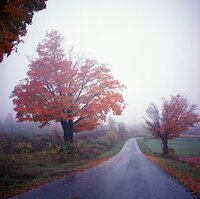
Rainy Day Trees

A
Rainy Day Trees

  • 4
  • 0
  • 59
One Way

A
One Way

  • 1
  • 1
  • 57

Forum statistics

Threads
203,152
Messages
2,850,617
Members
101,700
Latest member
Cpeason301
Recent bookmarks
1
Status
Not open for further replies.

luckycharms

Member
Allowing Ads
Joined
Aug 17, 2008
Messages
39
Format
35mm
(To the chagrin of many of you), I've been "bumping around in the dark" lately trying to get black and white negatives that scan half decent. Up until now, I had been having my negatives scanned at the local CVS, as I had no access to my own scanning equipment (and a real print darkroom is a definite "no" for the time being). I blamed all of the scanning issues on CVS and was happy. Ignorance is bliss.

I recently got my hands on my own negative scanner, and my results are not impressing me. I've looked into various options for making my negatives more scannable, and one of the most promising seems to be increasing the dilution of my developer. I am using Clayton F76+, which is suggested at 1+9 for normal processing and 1+19 for a one stop push. I'd like to try 1+19 or 1+24 on film shot at box speed (in this case, APX400). I understand the relationship between developing time and exposure, but I am not sure how dilution is related. Should I develop for the same amount of time? Double it? Multiply it by the reciprocal of pi? My current recipe is 8 minutes at 68 degrees at 1+9 (which I discovered from . . . the developer bottle). Any suggestions are greatly appreciated.
 
First off what is wrong with the negatives, when scanned? Too contrasty, not enough contrast? Not enough density too much? Knowing this will help in the direction to go.

You may just need to change the developing time.
 
First off what is wrong with the negatives, when scanned? Too contrasty, not enough contrast? Not enough density too much? Knowing this will help in the direction to go.

You may just need to change the developing time.

Very noticeable grain (APX400 in F76+ at 400 doesn't seem like it should be an excessively grainy combo) and unimpressive dynamic range (I end up stretching it in Lightroom, but it's way below the dynamic range capabilities of the scanner). I have heard it suggested that contrasty negatives can make grain more prominent, and that lower contrast negatives generally scan better. I was hoping to give that a shot.
 
The general rule I've seen for dilution is if you double the dilution you should multiply your time by square root of two. I've only tried it once, but it worked and checked against some published numbers......but this won't help you if your negatives are too high in contrast or too low. For that you need to reduce or increase your development.

Keep in mind that you need to do adjustments after a neg scan. A good scan can look low in contrast. You might want to ask this question over at hybridphoto.com. They can point you in the right direction on scanning.
 
The general rule I've seen for dilution is if you double the dilution you should multiply your time by square root of two. I've only tried it once, but it worked and checked against some published numbers......but this won't help you if your negatives are too high in contrast or too low. For that you need to reduce or increase your development.

Keep in mind that you need to do adjustments after a neg scan. A good scan can look low in contrast. You might want to ask this question over at hybridphoto.com. They can point you in the right direction on scanning.

Sounds good to me. I need something to do to keep my mind off of something (someone?) and this is a perfect distraction. I have been adjusting afterwards, but I'm really struggling to get the images to where I want them. Perhaps a new starting point will do the trick.

Based on this evidence, I am going to try:

1+19 for 10 minutes (8 multiplied by the square root of two, then with roughly 10% subtracted for a little less contrast)

I will let all of you know how it turns out.
 
It is a rule of thumb, but wrong more often than it is correct. You have to start someplace ! Few film and developer combinations are linear, most are curves, and outguessing a curve is painful.


Are you sure the film is grainy, and not your scanner aliasing ? Unless you're using a drum scanner, you can't
actually SEE the grain, and the little scanner goes quietly crazy trying to imagine what it is looking at. It fills in the blanks,
and we say, " AHA ! GRAIN ! " when it isn't grain at all.

Some developers that PRINT very well don't scan well. And vice versa. Sandy King wrote a fine article about good scanning developers a little while back, and you ought to be able to find info here by searching.
 
It is a rule of thumb, but wrong more often than it is correct. You have to start someplace ! Few film and developer combinations are linear, most are curves, and outguessing a curve is painful.


Are you sure the film is grainy, and not your scanner aliasing ? Unless you're using a drum scanner, you can't
actually SEE the grain, and the little scanner goes quietly crazy trying to imagine what it is looking at. It fills in the blanks,
and we say, " AHA ! GRAIN ! " when it isn't grain at all.

Some developers that PRINT very well don't scan well. And vice versa. Sandy King wrote a fine article about good scanning developers a little while back, and you ought to be able to find info here by searching.

I agree with df, most of the scanning problems that are blamed on film and processing are problems with the scanning process itself. The best thing to do, is have the same negatives optically printed, if they don't look grainy in prints, then it's a problem in the scans. Try adjusting the scanning process, if you want more comment on this, PM me as it's OT for this group.
 
Are you sure the film is grainy, and not your scanner aliasing ? Unless you're using a drum scanner, you can't
actually SEE the grain, and the little scanner goes quietly crazy trying to imagine what it is looking at. It fills in the blanks,
and we say, " AHA ! GRAIN ! " when it isn't grain at all.

No, the film isn't grainy. I should've been more clear. What I'm looking for is not specifically less grain, but a combo that could potentially reduce the aliasing (is that possible?). I was once told lower grain would do so, but I don't really know anything anymore.
 
Hello luckycharms;

in another thread some months ago, I was told by another member that if you want to scan your negatives you'd better make them somewhat thiner than normal. I didn't ask any further, because that's not my intention, but I assume that it has to do with the Dmax the scanner is comfortable with. Published values (if published at all) might also be unrealistic, as much as the nominal resolution :wink:. Anyway, it gets *very* hybrid and this might be a thread for the hybrid sister forum...
 
If you look at Ilford's film developing chart you should get some good indications of how your dilutions compare with recommended dev times.

F76 1+9 is equivalent to ID-11/D76 FS
so 1+19 equivalent to 1+1
and 1+39 equivalent to 1+3

So your 1+24 suggestion isn't as severe or great a dilution as you think.

Ian
 
Well, I developed them for 10 minutes at 20C and 1+19, and the results look pretty good. I also turned off the scanners' unsharp mask, and that makde a huge difference. The images are a bit soft now, but the scanner software's unsharp mask absolutely butchered out of focus areas, making the images appear flat and adding really ugly aliasing where bokeh should have resided. I will sharpen in Lightroom or GIMP to taste.
 
Turning off the USM in your scanner software was a good choice.

You might be able to manually focus the image, as well... depending on your software.
At high scanning resolution, the finer the grain, the greater the difficulty to focus sharply.
 
Does your scanning software allow you sufficient level/curves adjustment? My wife uses a zone plate to shoot her images and gets a rather wild variety of exposures from relatively thin to nearly bulletproof. I scan all of them and rarely find one that exceeds the capacity of the scanner/software. She shoots Δ3200 and we process in Beutler's for a long time to compensate for the zone plate's low contrast.

I'm using an Epson v750 and Silverscan. While this scanner has the capacity for wet scanning, I've never done that; seems fine without. We get good sharp grain (which is what we are looking for). I understand that the masks supplied by Epson are calibrated to hold the emulsion at a certain height above the glass, and that any other placement, unless calibrated (there are methods to do this available commercially) will not produce correctly focused images.

I doubt that you can make a valid generalization about dilution. At school we started using HC110 in "dilution H" - a dilution that Kodak doesn't support. It is made by diluting "dilution B" 1:1 with water, and it seems to work perfectly by simply doubling the development time. We went to it because many development times are just too short for me, let alone beginning students.
 
He said "Silverscan".

I need a drink....
 

Attachments

  • SILVERFAST .jpg
    SILVERFAST .jpg
    40.1 KB · Views: 129
I understand the relationship between developing time and exposure, but I am not sure how dilution is related. Should I develop for the same amount of time? Double it? Multiply it by the reciprocal of pi? My current recipe is 8 minutes at 68 degrees at 1+9 (which I discovered from . . . the developer bottle). Any suggestions are greatly appreciated.

Like so many things in photography, it depends.

The effect of dilution depend greatly on your agitation technique. If you are using constant agitation, say a Jobo system, then then development time is a function of the square root of the additional dilution. For example, if you are using D76 1:1 for five minutes at 20C, and you want to move to D76 1:3. Well, you doubled dilution, so your new time is (5)(sqrt(2) = 7 minutes.

If you are using small tanks with some type of inverting agitation, a place to start is that doubling dilution results in a doubling of time.

If you are using stand or semi-stand development there aren't really any rules of thumb. You'll just have to experiment and see what works out for you.

-----------------------------------------------------------------

But this doesn't answer your real question, which is how to improve scanning of films.

Basically, if you are ever going to print your film via the traditional darkroom, then optimize your film for the darkroom. It will scan just fine.

If you are *never* going to print in the darkroom and will *only* scan, you might want to optimize for scanning. To do that, you develop a little less. How much less is going to depend on your scanner and your scanning workflow so you'll have to experiment some. But a good place to start is about a one stop pull. Say a zone VIII density of about 1.0 maybe.
 
Honest. i've never been fully satisfied with scans from ANY standard B&W film. Maybe it's me or my scanner, which I admit is old and not top of the line. The way I see it, the metallic silver in the emulsion scatters the light from the scanner and causes all sorts of problems from aliasing artifacts to blown highlights. It's just the nature of the beast. The best I've gotten from a film scanner and standard B&W films has been from TMX, somewhat over exposed and under developed. This hasn't been too bad, but still not what I'd call good.

On the other hand, C-41 and E-6 materials do not suffer from these problems. As you are probably aware, there is no image bearing silver, or silver of any kind, in a finished C-41 or E-6 product. The image is made of translucent dyes which the scanner is more than capable of handling. Results can be spectacularly good. Ilford's XP-2 Super fits the bill almost perfectly. Not only does it scan well, it is also very easy to print at home on conventional B&W papers. It is the best of both worlds. This doesn't help LF shooters a bit, but for 35 mm and medium format users this stuff is a godsend.
 
Developing for scanning and scanning subjects in general are best discussed freely and wholesomely at Hybridphoto.com.
 
Status
Not open for further replies.
Photrio.com contains affiliate links to products. We may receive a commission for purchases made through these links.
To read our full affiliate disclosure statement please click Here.

PHOTRIO PARTNERS EQUALLY FUNDING OUR COMMUNITY:


Ilford ADOX Freestyle Photographic Stearman Press Weldon Color Lab Blue Moon Camera & Machine
Top Bottom