• Welcome to Photrio!
    Registration is fast and free. Join today to unlock search, see fewer ads, and access all forum features.
    Click here to sign up

CCFL bulbs and B&W contrast

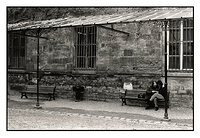
Amour - Paris

A
Amour - Paris

  • 0
  • 0
  • 24
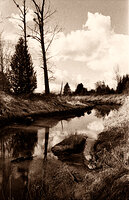
Bend in the river

H
Bend in the river

  • 1
  • 0
  • 42

Recent Classifieds

Forum statistics

Threads
203,229
Messages
2,851,784
Members
101,737
Latest member
Altamira
Recent bookmarks
0

Tony-S

Subscriber
Joined
Aug 16, 2009
Messages
1,170
Location
Colorado, USA
Format
Multi Format
I recently tried some cold carbon fluorescent bulbs from my local hardware store as a lighting source (reflected) for a roll of Fuji Acros and I was pleasantly surprised at how good the contrast was on the negatives. It seems the newer technology is better than the old fluorescent tubes from years past, which were decidedly flat. Does anyone else use CCFLs for their still lighting with B&W films? They sure are convenient to work with.
 
Cool colour balanced flourescent is a better light source for colour rendering, in that is is closer to daylight colour temp. There can still be many dips in their spectral output. I am not up on cold carbon technology though.
 
Is there any such thing as true full spectrum fluorescent lighting? Or a reasonably close approximation? I seem to remember seeing references to such types that are used in light therapy. If so, would these also make better overall light sources for color - and, I suppose, even b&w - films?

Ken
 
Just a nitpick - Isn't it Cold CATHODE Fluorescent Lamps? Or is this some new type I have not heard of?

Duncan
 
Hi there,

Fluorescent lamps are a bit of an interesting subject. :whistling:

They do come in different color temperatures that can vary from descriptions of "cool white" throught to "warm" - some are even listed with the rated color temperature.

What is more relevant is the Color Rendering Index (CRI) of the light source - and this is applicable to all light sources, bulbs, flashguns, candles etc. The CRi is some measurement of the spectral range of the emmiting light. Pure white light is said to have a CRI of 100, the greater the deviation from 100, the greater the deviation from pure wight light - this is relevant as if a part of the spectrum is missing from the light source it will be missing from the reflection off the subject.

Standard fluorescents have a terrible CRI rating - which might be suitable for human vision as our brain tries to emulate what we see to what we expect to see, but film just records exactly what it sees. That is the green color cast on some fluorescent lit subjects, low CRI.

The fluorescent lamps used in TV and films have a CRI of around 98 yet still need to be filtered for total color accuracy - the lamps can only be bought in batches bundles of ten, matched sets from the same production batch with the same consistent deviation from pure.

Additionally, the control gear or ballasts need to be electronic control to provide totally constant flicker free light output. Some office lights will have flicker that is not registered by sight but the peaks and troughs cannot be synched with the camera shutter.

The range of fluorescents available is quite staggering and can be very specefic to its use, from those made for the supermarket meat counter (red to make the meat look fresh), the veg counter (green), clothing (warm color), cool for walkways (uninviting therefore unwelcoming to hang around in) through to automotive fit and finish and the tv studio lighting.

Compared to studio lights their power output is woefully low - however it is comparable to tungsten studio lamps - the advantage being that they run cooler (physical temperature) and use a whole lot less electricity to power them.

They are not for everyone, but can be useful.

Sim2.


Fluorescent

 
The light from a fluorescent tube is almost entirely dependent on the phosphor used. Unfortunately, different phosphors are used by different manufacturers at different times, even for bulbs that are the same "color," like cool white. The choice of phosphor also affects things like flicker and afterglow. Almost any tube will work for black and white, but the peaky nature of the light can fool exposure meters. That peaky spectrum also renders the colors in a scene differently than continuous spectrum light, and that could affect the contrast recorded on film. Unfortunately, theses effects are hard to predict. Your increase in contrast is even more likely due to the thin profile of the CCFL, which likely renders sharper shadows. Incidentally, you can get CRI 90 lamps in hardware stores. They are fairly suitable for viewing colors, but may have difficulties as photographic light sources.
 
Look at the newer white LED lamps, also. They have a good, continuous spectrum, although they are quite blue.
 
Photrio.com contains affiliate links to products. We may receive a commission for purchases made through these links.
To read our full affiliate disclosure statement please click Here.

PHOTRIO PARTNERS EQUALLY FUNDING OUR COMMUNITY:


Ilford ADOX Freestyle Photographic Stearman Press Weldon Color Lab Blue Moon Camera & Machine
Top Bottom