• Welcome to Photrio!
    Registration is fast and free. Join today to unlock search, see fewer ads, and access all forum features.
    Click here to sign up

Caused by twirl agitation?

PenStocks

A
PenStocks

  • 8
  • 2
  • 116
Landed Here

H
Landed Here

  • 4
  • 6
  • 97

Recent Classifieds

Forum statistics

Threads
201,847
Messages
2,831,063
Members
100,983
Latest member
PotPie
Recent bookmarks
0

bvy

Member
Allowing Ads
Joined
Jul 22, 2009
Messages
3,285
Location
Pittsburgh
Format
Multi Format
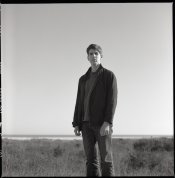
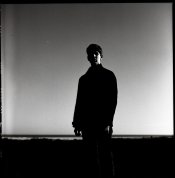
Here's a frame from a roll of Acros 100, developed in Perceptol 1+1 at 68F for 15 minutes. I used a Paterson tank with single plastic reel and 620ml of solution. My initial agitation was with the twirl stick -- eight slow but deliberate cycles over the first thirty seconds -- followed by four inversions (with the lid on) every minute. I notice some streaking or banding along the left edge of frames that have lots of exposure (skies mainly). First is the straight scan, the second is the scan with a heavy curves adjustment to better show the problem area.

One interesting thing I noticed is that, when I removed the film from the reel, the film had "crawled" all the way to the core of the reel.

(For what it's worth, I twirl agitate because it takes me a good fifteen seconds to get the flimsy Paterson lid secured to the tank -- and I've always read that it's critical to get agitation underway right away after pouring in the developer.)

Thanks in advance for your thoughts and advice.
 

Attachments

  • 0277-02.jpg
    0277-02.jpg
    277.3 KB · Views: 182
  • 0277-02a.jpg
    0277-02a.jpg
    354.1 KB · Views: 200

MattKing

Moderator
Moderator
Joined
Apr 24, 2005
Messages
55,196
Location
Delta, BC Canada
Format
Medium Format
I cannot envision why twirl agitation would cause uneven development on one edge only.

Is there any chance that the backing paper wasn't tight? Or any chance that the tank itself has a light leak?
 

banandrew

Member
Allowing Ads
Joined
Oct 13, 2015
Messages
84
Format
Multi Format
What scanner did you use? I have an Epson V550 with Vuescan and just noticed something similar when I scanned a 6x6. Bright edge along one side. I suspect it has to do with the film not being totally flat. Haven't tried to print this neg yet (in the darkroom).
 

R.Gould

Member
Allowing Ads
Joined
Apr 22, 2010
Messages
1,752
Location
Jersey Chann
Format
Multi Format
Can't see twirl agition causing any problems, I use that method all the time with no problems, in fact at times I use the twirl method for the entire developing without problems, as for putting the top on the tank, can't see how it takes 15 seconds, easy peasy, just takes a second or two in the dark, but I put the lid on before pouning the developer, again, never caused me any problems over twenty or more years of using Patterson tanks
 

Xmas

Member
Allowing Ads
Joined
Sep 4, 2006
Messages
6,398
Location
UK
Format
35mm RF
Always inspect the negative out of tank and before filing, if there are yellowish stains refix and rewash immediately!
 
Joined
Sep 10, 2002
Messages
3,676
Location
Eugene, Oregon
Format
4x5 Format
120 film? I'm assuming so, and if I'm right it may be an agitation issue. I'd put more money on your inversion agitation than the twirl, but who knows.

I had a similar problem years ago when I used roll-film backs on my LF cameras. There were denser, overdeveloped areas on the edges of the roll. I spent an afternoon stripping rolls of film from the backing paper in the dark, exposing them quickly to the room light (just enough to get a little overall density) and then developing them with different agitation schemes and amounts of developer.

My results (I was using Nikor SS tanks): Don't fill the tank all the way to the top; make sure the film is covered but leave a little room for the developer to slosh around when agitating. And, I had to really agitate vigorously to get rid of the dense areas.

So, you might try altering agitation to see if you can solve the problem. That is, after you've excluded the possibility of a light leak or a scanning artifact. These are "lower-hanging fruit," so make sure one of these isn't the problem first.

Good luck finding your problem,

Doremus
 

Anon Ymous

Member
Allowing Ads
Joined
Feb 7, 2008
Messages
3,679
Location
Greece
Format
35mm
I've had such marks on my film only once and it was developed in a large Patterson tank, using the agitation rod. I didn't invert the tank at all and in my case the surge marks were much stronger. I never used it again and never had any problems. Honestly, I don't see why you need to use it and you probably worry too much about the 15'' it takes to pour the developer in the tank. You develop for 15', so 15'' is below 2% of the total time. It can't make much of a difference. It might have made a difference if your development time was particularly short (below 5'), and even then the density difference would be far more gradual.
 

bdial

Subscriber
Joined
Jan 2, 2005
Messages
7,516
Location
North East U.S.
Format
Multi Format
How vigorously do you twirl? In my experience, the slower the better, especially with 35mm because of the sprocket holes.
Also, do you only go in one direction? If so, try a quarter to 1/2 in one direction then reverse.
 

mmerig

Member
Allowing Ads
Joined
Oct 9, 2012
Messages
223
Location
Teton Valley
Format
Medium Format
Could the sharp transition in density be due to an unsteady pour-in of developer?


I had a similar problem with 135 roll-film in a two-reel Nikor tank, except I had 4 distinct density transitions that reflected a slow, stalled pour-in of developer. The baffle in the top of the tank had a slow flow capacity because of poor air exchange (I since learned that tipping the tank allowed air to escape faster). My development time was 11 minutes, but it probably took about 20 seconds or so to pour in the developer. The key problem was the stalled or non-steady pouring in -- even several seconds of a stable level of developer left a distinct line of density difference. maybe these transitions were due to something else, but it was all I could think of. Here is an example.

attachment.php
 

Attachments

  • Roll 2 Frame 17.jpg
    Roll 2 Frame 17.jpg
    353.6 KB · Views: 270
OP
OP
bvy

bvy

Member
Allowing Ads
Joined
Jul 22, 2009
Messages
3,285
Location
Pittsburgh
Format
Multi Format
Thanks everyone. I'll go in order...

The film was wound tight, backing paper looks okay. I suppose the tank could have a light leak, but it's in good condition -- no breeches that I can see. I do have another tank I can try, but I'll push this down the list of variables to change, because I don't think that's the issue.

I thought it could be the scanner (mine's a V500), but the film is flat, and I can see the increased density on the negative itself.

To get a good seal, it takes several seconds to firmly press around the circumference of the lid.

...but I put the lid on before pouning the developer...
How does that work?

No stains or discoloration. The film is clear.

120 film? I'm assuming so, and if I'm right it may be an agitation issue. I'd put more money on your inversion agitation than the twirl, but who knows.
The inversions are 180 degrees with a quarter turn -- four of them over eight to ten seconds -- followed by a good thump after a few more seconds. It's never caused me trouble before. It's the initial agitation that I tend to vary. Also, there is sufficient room for the developer to move around. When I was using the prescribed 500ml (for a single roll of 120) I was getting airbells along one edge. That stopped when I increased the solution volume to 600ml.

Perhaps I am worried too much about starting inversion right away. What's the risk of the film sitting for ten seconds or so (after pour-in) before starting agitation? Alternately, I could attach the lid loosely and start inverting immediately. I don't think I'd lose enough solution to cause me any trouble, and I can attach it more properly during the first resting period.

I twirl slowly and reverse direction -- as I said, back and forth probably eight times over around 25 seconds. Even so, I did feel some resistance when twirling.

The pour-in is pretty steady. It flows into the funnel with a bit of rotation. If it comes to it, I could lower the loaded reel into the tank in the dark.

--

Thanks everyone for weighing in on this. I have another roll, exposed under similar conditions, that I'm going to develop today -- same developer for the same amount of time. I'll switch entirely to inversion agitation and report back.
 

Kirks518

Member
Allowing Ads
Joined
Oct 5, 2013
Messages
1,494
Location
Flori-DUH
Format
Multi Format
FWIW, I use a Paterson, and depending on my mood, I'll either do the twirling right away after pouring in the developer, or I'll put the lid on and do inversions immediately. In using either method, I haven't run into a problem.

And as for getting the lid on, I do it like a Rubbermaid container; I press down on the middle of the lid quite a bit, and run my thumb around the edge, then 'burp' the lid for final closing. Takes about <4 seconds to get a tight seal. When I first used the Paterson, I just put the lid on, which resulted in leaks during inversions.

Can you post a pic of the unscanned negative? Either on a lightbox or some other white backlit surface?
 

R.Gould

Member
Allowing Ads
Joined
Apr 22, 2010
Messages
1,752
Location
Jersey Chann
Format
Multi Format
With my Patterson tanks the lid forms a funnel, (in fact I use the top of a tank I dropped onto a concrete floor as a funnel) so simple, put the reel and loaded film into the tank, put the top on, then in the light mix your chosen developer, pour down the center, when all in, perhaps 5 seconds, insert twizzele stick, start timer and twiddle for whatever time, then continue as per agitation regime, Patterson suggests 5 turns per 5 seconds, turn 1 way for ten seconds, turn other for ten, then for 10 seconds per minute 5 turns one way, five turns the other, that prevents the film from going to center of reel, If developing 2 films 120 in one reel then always invert, I invert 3 or 4 times per 5 seconds, I have followed the regime for a lot of years without problems, in fact I still have and use the original Patterson system 4 tank as well as the super system 4 tanks I should add that I am refering to the tank lid not the sealing top, with that, put it on and then raise one end to seal it
 

DannL.

Member
Allowing Ads
Joined
Oct 13, 2013
Messages
617
Format
Large Format
I'm currently using the System 4 tank . . . 30 seconds pre-wash, then develop with 5-6 complete inversions to start, followed by 4-5 complete inversions at the beginning of every 30 seconds for the entire development cycle. I used the same method with Jobo tank also, and no problems encountered. The swirly-stick method failed me several times using another brand of tank.
 
Last edited by a moderator:

RobC

Member
Allowing Ads
Joined
Nov 5, 2007
Messages
3,880
Location
UK
Format
Multi Format
It could be a light leak from dark slide or back seal.

I've never thought that the twirl stick mixes the exhausted developer properly with the rest of developer so always use inversion.
 
Last edited by a moderator:

Theo Sulphate

Member
Allowing Ads
Joined
Jul 3, 2014
Messages
6,489
Location
Gig Harbor
Format
Multi Format
...
One interesting thing I noticed is that, when I removed the film from the reel, the film had "crawled" all the way to the core of the reel.
...

That is the one thing that concerns me and I think it's a clue. You say you twirled slowly - which is good and that is what you want. I once got too enthusiastic twirling 35mm and the film came out of the guides and was all bunched together - ruined (*).

Might something have gone amiss while loading?


(*) as bad luck would have it, those were irreplaceable photos of Donald Knuth.
 

jeztastic

Member
Allowing Ads
Joined
Nov 23, 2013
Messages
102
Format
Medium Format
I've had this happen and I think it was because I did not push the reel all the way to the bottom of the tube. So it was sitting a little bit above the developer. Quite easy to do, especially if you are loading in a dark bag.
 

Kirks518

Member
Allowing Ads
Joined
Oct 5, 2013
Messages
1,494
Location
Flori-DUH
Format
Multi Format
Here's a frame from a roll of Acros 100, developed in Perceptol 1+1 at 68F for 15 minutes. I used a Paterson tank with single plastic reel and 620ml of solution. My initial agitation was with the twirl stick -- eight slow but deliberate cycles over the first thirty seconds -- followed by four inversions (with the lid on) every minute. I notice some streaking or banding along the left edge of frames that have lots of exposure (skies mainly). First is the straight scan, the second is the scan with a heavy curves adjustment to better show the problem area.

One interesting thing I noticed is that, when I removed the film from the reel, the film had "crawled" all the way to the core of the reel.

(For what it's worth, I twirl agitate because it takes me a good fifteen seconds to get the flimsy Paterson lid secured to the tank -- and I've always read that it's critical to get agitation underway right away after pouring in the developer.)

Thanks in advance for your thoughts and advice.
What camera were these shot with?

Looking at the unprocessed negative, combined with the above statement, I don't think it has anything to do with twirling vs agitation, or anything to do with your development process at all.

The frames adjacent to the originally posted image do not show (as far as I can tell) the problem. I would actually suspect something with the camera, like an issue with the internal light baffles, or something causing a light bounce internally.

Do you have another camera to compare duplicate shots with?
 
OP
OP
bvy

bvy

Member
Allowing Ads
Joined
Jul 22, 2009
Messages
3,285
Location
Pittsburgh
Format
Multi Format
The reel was fully seated and the twirl agitation slow and deliberate. I did feel some resistance when reversing direction, as I mentioned, but nothing out of the ordinary.

The camera is a Yashica Mat 124G. The camera's taken some abuse, and it could very well be a light leak caused by something or other -- though, in that case, I would have expected to see it between frames. Maybe not, though, since the film advance doesn't keep the border area exposed very long. I hadn't considered this possibility.
 

Steve Smith

Member
Allowing Ads
Joined
May 3, 2006
Messages
9,110
Location
Ryde, Isle o
Format
Medium Format
Paterson's instructions state that the twirling stick should only be used for the first agitation and that subsequent agitation should be by inversion.


Steve.
 

RobC

Member
Allowing Ads
Joined
Nov 5, 2007
Messages
3,880
Location
UK
Format
Multi Format
I would suggest you do a test and use inversion agitation. If problem disappears then you'll know it was the twirling causing the problem. If problem is still there then it's most likely a light leak or possibly film not rolled tightly enough and light has got in. Always change film in subdued light and place exposed rolls back in their packaging until you are ready to load them into tank.

The dark line down left side in middle of lighter line suggests to me it is not just a twirling problem. It could be a combination of twirling and a light leak.

Twirling really doesn't mix the chemical as well as inversion and is to be avoided IMO.
 
OP
OP
bvy

bvy

Member
Allowing Ads
Joined
Jul 22, 2009
Messages
3,285
Location
Pittsburgh
Format
Multi Format
Paterson's instructions state that the twirling stick should only be used for the first agitation and that subsequent agitation should be by inversion.
Right. Exactly what I did.

I would suggest you do a test and use inversion agitation. If problem disappears then you'll know it was the twirling causing the problem. If problem is still there then it's most likely a light leak or possibly film not rolled tightly enough and light has got in. Always change film in subdued light and place exposed rolls back in their packaging until you are ready to load them into tank.

The dark line down left side in middle of lighter line suggests to me it is not just a twirling problem. It could be a combination of twirling and a light leak.
Pretty sure it's one or the other. I did another roll yesterday using only inversion agitation. Looks good, though I don't have the large areas of sky in this roll to compare. I haven't scanned it yet.
 

Steve Smith

Member
Allowing Ads
Joined
May 3, 2006
Messages
9,110
Location
Ryde, Isle o
Format
Medium Format
Right. Exactly what I did.

In that case, with a development time of fifteen minutes and inversion agitation all way through except at the start, I don't see that having the first agitation swirled instead of inverted woukld make a perceptable difference.


Steve.
 
Photrio.com contains affiliate links to products. We may receive a commission for purchases made through these links.
To read our full affiliate disclosure statement please click Here.

PHOTRIO PARTNERS EQUALLY FUNDING OUR COMMUNITY:


Ilford ADOX Freestyle Photographic Stearman Press Weldon Color Lab Blue Moon Camera & Machine
Top Bottom