• Welcome to Photrio!
    Registration is fast and free. Join today to unlock search, see fewer ads, and access all forum features.
    Click here to sign up

Can you print C41 B&W negatives onto regular paper?

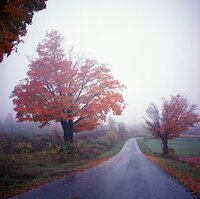
Rainy Day Trees

A
Rainy Day Trees

  • 4
  • 0
  • 59
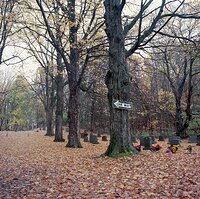
One Way

A
One Way

  • 1
  • 1
  • 57

Forum statistics

Threads
203,152
Messages
2,850,617
Members
101,700
Latest member
Cpeason301
Recent bookmarks
1

BetterSense

Member
Allowing Ads
Joined
Aug 16, 2008
Messages
3,151
Location
North Caroli
Format
35mm
Or does the chromogenicness make it not work? I really like the looks of the BW400CN I shot this summer and had 1-hour developed.
 
I print XP2 onto Ilford MGIV paper all the time
 
Yes you can. Ilford XP2 works better than the Kodak film in my experience, since it doesn't have the orange mask. That said, I've used the Kodak film for traditional b+w prints, utilizing magenta (I think.... it was a few years ago) filters to compensate for the orange.
 
How does the filter compensate for the orange, considering we are talking B&W here?

Sure the light areas of the negative will shine orange light on the paper....but the paper shouldn't care, right? I would imagine it would only slow things down overall a bit.
 
The Kodak C41 is better for printing on to color paper in the 1 hour machines. Still, you get interesting split tones on occasion, especially if the photo has a lot of detail. IME both print well in an enlarger on VC paper, but contrast on the Kodak is different than it might appear when eyeballing the neg. Just takes a little bit of test stripping to find the right test filter setting.
 
the times will increase and you will need to increase the contrast , that is why the use of the filter. How much will depend on the negatives. There may also be an increase in grain.

It is a bit tricky, but i have several students who make very nice prints from c-41 negatives.
 
How does the filter compensate for the orange, considering we are talking B&W here?

Sure the light areas of the negative will shine orange light on the paper....but the paper shouldn't care, right? I would imagine it would only slow things down overall a bit.

The paper will "care" if it's variable contrast paper, as most is today. The orange mask will lower the contrast.
 
Ok. I didn't know about variable contrast paper. I guess it must have different contrasts depending on which color of light you use.
 
The Kodak film is designed to be printed onto RA (color) paper, while the Ilford is designed to be printed onto black and white paper. Either can be printed on the other, but with more difficulty and "worse" results.

If you want to make b/w prints from the film, you can do it. You will just need to add a lot of contrast (and it still might look a little "funky"). If you don't need many prints, I would take the film to a pro lab like A and I, and ask them to make "optical prints on RA paper". Or, you can do the RA prints yourself if you are set up for it at home or go to a rental darkroom.

If you want cheapness, quickness, and repeatability for multiple prints, you can scan, adjust, leave as an RGB image, and take the files to a direct-to-print service like Costco. If you leave the image RGB, you will get a decent b/w tone, because the file contains specific color information for the printer. If you convert to greyscale, you throw out the info for each channel, and the printer has to make up its own, so you get a nasty tint on the pix. They do print onto "actual" photo paper, so results are acceptable, and certainly better than most one-hour labs.
 
Last edited by a moderator:
I printed my first-ever enlargement on MGIV from a BW400CN negative last night (it's all I had). It worked, but I think maybe I didn't expose long enough and the contrast is kinda flat. I don't have any filters. BTW, how do you keep the paper flat when enlarging? It kept bubbling up in the middle slightly.
 
My only thing to add to what the others have said is that, in my experience, the XP2 are much easier to print with better results (in terms of sharpness, contrast) than the Kodak film.

Although when I overexposed the Ilford film even a bit it resulted in long exposure times when making prints.
 
BTW, how do you keep the paper flat when enlarging? It kept bubbling up in the middle slightly.

I take it you are using a borderless easel where you simply butt the paper to the edges then expose. I have done this and found that while it can bow a little towards the centre, it didn't seem to make any real difference to the print's sharpness in the middle.

If the paper is bowed slightly then bending it a little in the opposite direction helps. Otherwise you can make a slightly sticky surface to which the paper will adhere but will lift from after exposure or use small dots of double sided tape. More expensively there are vacuum easels which suck the paper flat. I have no experience of these but others will no doubt chime in with information

However for most applications a two bladed easel is useful. The blades hold down the paper and produce borders that can be varied.

If you don't use variable borders or unusual size paper then Paterson do fixed easels for 5x7, 8x10 and even 12x16. These are very convenient, are quite cheap and guarantee sharp regular sized borders.

An easel of some kind to hold down paper and to produce borders is really an essential piece of darkroom kit.

Hope this helps

pentaxuser
 
I take it you are using a borderless easel where you simply butt the paper to the edges then expose.
I don't think so. The bottom of my enlarger is white fiberboard, and I laid the paper on there, that's all. I didn't know i was supposed to have an easel, or what at easel is. I'm quite a noob here. But I was thinking to myself that something with little holes in it to vacuum the paper down would be ideal.
 
You have to offset the film's orange base with filters or use graded paper. You want an easel, it will hold the paper flat and give you nice even borders (unless it's a borderless easel.)
 
Have a look round on Google or E-bay for enlarging easel....there are various kinds, but basically it's usually a metal frame with adjustable sides to hold different sizes of paper flat on the enlarger baseboard. Some give a white border to the print, others borderless.
Mine is an "LPL" make, years old so doubtful if they are still around...but lots of other sorts.
As pentaxuser says, an essential accessory for enlarging, saves so much time and wasted paper.
 
You want an easel, it will hold the paper flat and give you nice even borders (unless it's a borderless easel.)

I'll add to that. Borderless easels are ok with resin coated papers because they lie flat, or at least more flat than fiber based stocks. They're handy to have around, but not as your only easel. The best are the 4 bladed Saunders V-track easels, Expensive? You bet. But they are quality products. Buy it once and you'll never need to replace it. If you decide to sell it, it is one of the few darkroom items that can command a decent resale price. In any case though, any four bladed easel is hands down more useful than a two bladed model.
 
I don't think so. The bottom of my enlarger is white fiberboard, and I laid the paper on there, that's all. I didn't know i was supposed to have an easel, or what at easel is. I'm quite a noob here. But I was thinking to myself that something with little holes in it to vacuum the paper down would be ideal.

It seems to me that flatness of RC paper is mostly matter of humidity. Through my first year of printing I did not even have an easel - if the humidity is right most RC papers fresh from the black bag lies completely flat. Then I even bought two bladed one and honestly hated it. I did not print any FB back then so I sold it.

Now I mostly use Durst vacuum easel and love it but again its only good for RC. I'm not quite sure how difficult it would be to build one from scratch. Way to much for my skills. To make things bad a new vacuum pump costs quite a lot. I don't know if a vacuum cleaner sucks good enough.
 
I imagine one of those venturi pumps that fit on a sink would be good enough.
 
A vacuum cleaner would have plenty of suction. All you want to do is to hold a piece of paper flat. Problem with a vacuum cleaner is dust. You don't want to run one of those things in your darkroom. Unless it is equipped with a HEPA filter, a vacuum cleaner can spit lots of dust out the back end. Want to deal with that all over your negatives?
 
I imagine one of those venturi pumps that fit on a sink would be good enough.

Just get a nice piece of glass, larger then your largest print from a glass shop, have them add a handle that is out of the way of your printing paper so you can lift it. You put a piece of felt over the baseboard, then the paper, then the glass on top. After your exposure, take off the glass, remove the paper and process as normally. You need to keep the glass very clean though, you want it nice and thick so it's heavy, but with no tint of any kind. Best to clean using a lens cleaner before every session though.

I'll agree with the others, a 2 bladed or 4 blade easel works the best for making bordered prints, and your glass for border-less prints. If your mounting and matting prints, bordered work better for this.
 
for 35mm I'm usually going to fit the image to the long dimension of the paper. As you know, that leaves a border on the long edges. I had thought about the glass but I had worried about the multiple reflections and refractions from the surfaces.
 
Photrio.com contains affiliate links to products. We may receive a commission for purchases made through these links.
To read our full affiliate disclosure statement please click Here.

PHOTRIO PARTNERS EQUALLY FUNDING OUR COMMUNITY:



Ilford ADOX Freestyle Photographic Stearman Press Weldon Color Lab Blue Moon Camera & Machine
Top Bottom