
-
Welcome to Photrio!Registration is fast and free. Join today to unlock search, see fewer ads, and access all forum features.Click here to sign up
You are using an out of date browser. It may not display this or other websites correctly.
You should upgrade or use an alternative browser.
You should upgrade or use an alternative browser.
bw400cn/printing
-
A
- Thread starter desi8888
- Start date

Recent Classifieds
-
For Sale Pentax SMC 135mm f3.5 lens
- Started by logan2z
-
For Sale Jobo Expert Drum 3006 4x5 or 5x7inch
- Started by mcnash
Forum statistics

Yes the masking makes them harder to print than conventional films like Tri-x ans also the Ilford equivalent XP-2. The BW400CN is really optimised for minilab processing and printing on RA-4 paper. You will need to use a higher grade ofpaper/filter than normal.
ian
ian

Eh, yes, a major one. You see, BW400CN is a C41 film with an orange mask. You'll be forced to use hard filtration to get something that looks good. Exposure times will also be much longer. The good thing is that the dyes in that film are neutral (as opposed to other C41 films), so it won't affect the overall contrast. Probably doable, but not exactly the best choice.
Other than being made my Kodak, these two films, I dont think, have much in common at all.
Tri-x is a traditional silver process, and bw400cn is a c41 dye process.
Havent printed it myself, but I've found out that it has a mask on the film that is optimized for mini-lab printing. However, XP2 will print wonderfully on MG paper.
Tri-x is a traditional silver process, and bw400cn is a c41 dye process.
Havent printed it myself, but I've found out that it has a mask on the film that is optimized for mini-lab printing. However, XP2 will print wonderfully on MG paper.

Yes there is a difference. First thing I do is remove all sharp objects from the darkroom...

The only way I am able to get the Kodak C41 BW films to behave in the darkroom is to split-grade print. A single Grade 3.5 on a diffusion-head enlarger is usually about right, when printing on Ilford Multigrade, but the shadows are muddy. To get crisp shadows (forcing the mud to block and and go to black) requires a Grade 5 kicker.
Ilford XP2 is another story, though. It's a little dense sometimes if the wash cycle on the film was a little short. It seems to need about 2X the wash cycle of normal C41 films. I know I'm not supposed to mention it here, but XP2 has another advantage in that it scans very well.
The only way I am able to get the Kodak C41 BW films to behave in the darkroom is to split-grade print. A single Grade 3.5 on a diffusion-head enlarger is usually about right, when printing on Ilford Multigrade, but the shadows are muddy. To get crisp shadows (forcing the mud to block and and go to black) requires a Grade 5 kicker.
Ilford XP2 is another story, though. It's a little dense sometimes if the wash cycle on the film was a little short. It seems to need about 2X the wash cycle of normal C41 films. I know I'm not supposed to mention it here, but XP2 has another advantage in that it scans very well.

Yes a large adjustment from Tri-x.
BW400CN is essentially a "color" film with just one color. It is meant to be printed using the RA-4 color chemicals on color paper.
BW400CN is essentially a "color" film with just one color. It is meant to be printed using the RA-4 color chemicals on color paper.

You can get acceptable prints from the BW400CN, but you need patience and hard graded paper(#4 or 5) to make it happen, and fairly longish exposure. I have a few shots done on one of my albums (tug boat/Port of Oswego, NY) I'm not fond of working with the stuff, much rather print from traditional B&W films.
You can get acceptable prints from the BW400CN, but you need patience and hard graded paper(#4 or 5) to make it happen, and fairly longish exposure. I have a few shots done on one of my albums (tug boat/Port of Oswego, NY) I'm not fond of working with the stuff, much rather print from traditional B&W films.
Me too!
Jeff
Perceptol is the Ilford equivalent ofMicrodol-X.
Ian
Ian

Microdol-X available
...I have some gallon packs for sale. Here is a reprint of my recent ad in APUG:
Recently discontinued by Kodak, I'm offering them to APUG people for $9.00. The best way to ship is USPS Priority Mail Flat Rate boxes, where weight doesn't matter. Two one-gallon packs will ship by Priority Flat Rate for $5.00. I can probably fit about 6 or 7 one-gallon packs into a Medium Priority Box, which costs about $13.00.
I've already sold a bunch to APUG members and used a couple myself with no problems.USD
Price : 9.00
I guess I'm going back to tri-x!!!!!
now that microdol-x is no longer being made, what is a good alternative to achieve fine grain.
...I have some gallon packs for sale. Here is a reprint of my recent ad in APUG:
Recently discontinued by Kodak, I'm offering them to APUG people for $9.00. The best way to ship is USPS Priority Mail Flat Rate boxes, where weight doesn't matter. Two one-gallon packs will ship by Priority Flat Rate for $5.00. I can probably fit about 6 or 7 one-gallon packs into a Medium Priority Box, which costs about $13.00.
I've already sold a bunch to APUG members and used a couple myself with no problems.USD
Price : 9.00

I guess I'm going back to tri-x!!!!!
now that microdol-x is no longer being made, what is a good alternative to achieve fine grain.
Not so quick. This is not an either-or decision anyway, but if you want to try the benefits of chromogenic films, I'd recommend Ilford XP2 over BW440CN every time. I was never able to make a good print with the latter and never had a problem with the former. However, XP2 also need a harder grade of paper. The benefit of chromogenic films are the extreme highlight latitude and their fine grain.

Thomas Bertilsson
Member
Xtol. Replenished.
And this is made according to the same recipe as Microdol-X, AND it's still available:
http://www.freestylephoto.biz/749710-LegacyPro-Mic-X-Film-Developer-to-Make-1-Gallon?cat_id=301
Or, like Ian says, use Perceptol.
- Thomas
And this is made according to the same recipe as Microdol-X, AND it's still available:
http://www.freestylephoto.biz/749710-LegacyPro-Mic-X-Film-Developer-to-Make-1-Gallon?cat_id=301
Or, like Ian says, use Perceptol.
- Thomas
I guess I'm going back to tri-x!!!!!
now that microdol-x is no longer being made, what is a good alternative to achieve fine grain.
Last edited by a moderator:
Thomas Bertilsson
Member
Everything Ralph says jives with my experience with the two films as well.
XP2-Super can yield a truly remarkable print from 35mm.
- Thomas
XP2-Super can yield a truly remarkable print from 35mm.
- Thomas
Not so quick. This is not an either-or decision anyway, but if you want to try the benefits of chromogenic films, I'd recommend Ilford XP2 over BW440CN every time. I was never able to make a good print with the latter and never had a problem with the former. However, XP2 also need a harder grade of paper. The benefit of chromogenic films are the extreme highlight latitude and their fine grain.
Everything Ralph says jives with my experience with the two films as well.
XP2-Super can yield a truly remarkable print from 35mm.
- Thomas
XP-2 tonality is a bit flat like the US New Topgraphic work in the 70's shot on Technical Pan, John Gossage - The Pond etc
It's got a unique look and used with experience is an excellent film, but conventional films have an edge in terms of final image quality.
Ian
Thomas Bertilsson
Member
I agree. I prefer standard b&w film over XP2 also, but have had some great results from XP2 nonetheless. 12x16 prints from 35mm have nice impact and the grain is very fine (grain is comparable to FP4+). The note about getting enough contrast is definitely valid. I had to go from a standard Grade 2.5 from 35mm to a Grade 3.5 or 4 with XP2.
The main problem I see with XP2 is that you can't really control its tonality like you can with a regular b&w film, because it's a standard process. Black and white in standard chemistry allows you many more controls in exposure, developer choice, agitation, and development time.
You can push and pull the film if you process yourself, or if you hand it over to a pro lab.
- Thomas
The main problem I see with XP2 is that you can't really control its tonality like you can with a regular b&w film, because it's a standard process. Black and white in standard chemistry allows you many more controls in exposure, developer choice, agitation, and development time.
You can push and pull the film if you process yourself, or if you hand it over to a pro lab.
- Thomas
XP-2 tonality is a bit flat like the US New Topgraphic work in the 70's shot on Technical Pan, John Gossage - The Pond etc
It's got a unique look and used with experience is an excellent film, but conventional films have an edge in terms of final image quality.
Ian
XP-2 tonality is a bit flat like the US New Topgraphic work in the 70's shot on Technical Pan, John Gossage - The Pond etc
It's got a unique look and used with experience is an excellent film, but conventional films have an edge in terms of final image quality.
Ian
Flat film does not mean flat print. See attached image. Shot in Wales on a sunny day on XP2, printed on MGIV-FB at grade 3. I also have a negative of the scene on TMY without any hope to get it on paper.
Attachments
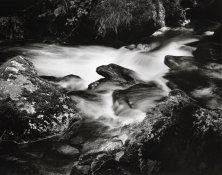
Flat film does not mean flat print. See attached image. Shot in Wales on a sunny day on XP2, printed on MGIV-FB at grade 3. I also have a negative of the scene on TMY without any hope to get it on paper.
Ralph, I think I know that spot! What an amazing photograph--very nicely done!
Ken

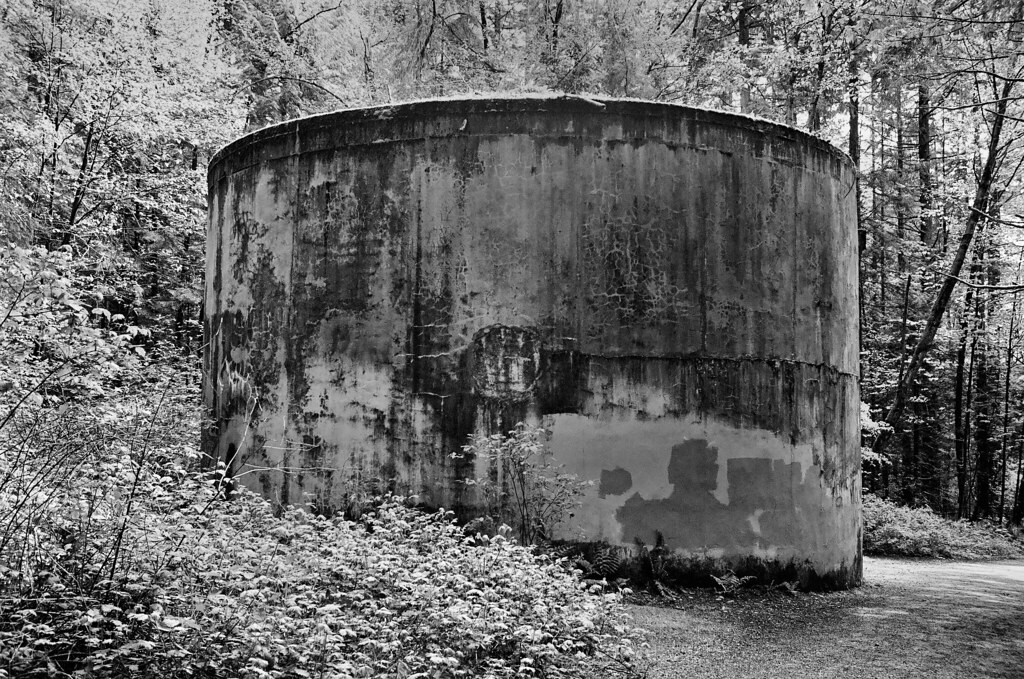
This is from a 35mm XP2 negative:
| Photrio.com contains affiliate links to products. We may receive a commission for purchases made through these links. To read our full affiliate disclosure statement please click Here. |
PHOTRIO PARTNERS EQUALLY FUNDING OUR COMMUNITY:  |