
• Welcome to Photrio!
    Registration is fast and free. Join today to unlock search, see fewer ads, and access all forum features.
    Click here to sign up

Burning in on Alt Processes

Filling In

H
Filling In

  • 1
  • 2
  • 21
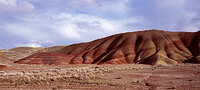
Painted Hills # 3.jpg

H
Painted Hills # 3.jpg

  • 4
  • 0
  • 74

Recent Classifieds

Forum statistics

Threads
203,208
Messages
2,851,383
Members
101,722
Latest member
Hafi_dd
Recent bookmarks
0

philldresser

Subscriber
Allowing Ads
Joined
Feb 4, 2003
Messages
1,413
Location
Norwich, UK
Format
Multi Format
OK this is probably a very basic question but what methods (if any) are you using to do local burning or dodging on Contact printed alt-process prints.

I have struggled with this on a particular negative but have yet to find a way of focussing the UV light in a controlled manner as you can with an enlarger light source.

Phill
 
Make a mask to sandwich with the negative or in some other way place in register and give it more exposure.

I suppose if you were using sunlight and a relatively slow process, you could shade the print frame with your body or hands and burn in much like you would with an enlarger and projected negative.

Dodging would be a similar process.
 
An attraction of albumen printing and other printing-out processes is that they are self-masking, so they tend not to need much local manipulation. As the shadows begin to appear, development slows down in the shadow areas so the highlights can come in without the shadows becoming blocked--so one option is just to try a printing out process for negs that are too contrasty in the process you're using.

If the prints are too flat, you can intensify the neg.

Other options are contrast masking, and handwork on the neg with pencils and/or dyes.
 
If you are using a point light source like a plate burner then you can dodge and burn just like a projection print. Units like a Nuarc 26 1K are great for this. If you are using a light box like an Edwards Eng. light box, it can be somewhat more difficult because you don't have much room. But it can be done with cutting a mask from rubylith or something similar that will block the UV light.
 
Last edited by a moderator:
Phil,

You don't need to focus the light, you simply need to block it from getting to the paper. Even with a fluorescent unit, you can put cardboard over areas you wish to dodge, and even use wands with a little flag on the end in the same manner as is done with an enlarger.

Think of the negative in the contact print sandwich as the projected image from an enlarger. As long as you can see where the details are on the negative that you wish to dodge, you can block light from getting to them to affect the image in the exact same manner as an enlargement.

If you are talking about a digital negative, put the adjustments in the negative and print them straight.

---Michael
 
Thanks for all the responses so far.

Haven't been into the grey area yet:smile:

I have tried the blocking of light using cardboard on a kallitype (not self masking) but found it very cumbersome mainly due to the cardboard having to be very near the frame as the light source (Tubes) is so diffuse.

I will try and get some rubylith and play around with it

Cheers

Phill
 
OK this is probably a very basic question but what methods (if any) are you using to do local burning or dodging on Contact printed alt-process prints.

I have struggled with this on a particular negative but have yet to find a way of focussing the UV light in a controlled manner as you can with an enlarger light source.

Phill

If you already made a print and determined that some areas need to be dodged or burned in you then you have the potential for a mask right there. Just cut out the areas of the print that neeed to be burned in and place the mask/print over the senstized paper as you expose. To soften the edges of the burn put supports of one to two inches high under the mask/print. You may also need to move the mask around just a bit during exposure to further soften the edges. This method words very well with UV banks of fluorescents because the light is already coming in at a very low angle, which softens the edges aroud the burn area.

This assumes you made the test print on a fairly thick paper. Vellum obviously would not work here.

Sandy King
 
Depending on what process you're doing, yet another approach is to print for the shadows and bleach back the highlights.
 
Though not done often I'll just bite the bullet and stand there shaking the card or cutout like Sandy said. Fortunately constant shaking is not necessary as compared to burning in on faster contact papers.
 
Photrio.com contains affiliate links to products. We may receive a commission for purchases made through these links.
To read our full affiliate disclosure statement please click Here.

PHOTRIO PARTNERS EQUALLY FUNDING OUR COMMUNITY:


Ilford ADOX Freestyle Photographic Stearman Press Weldon Color Lab Blue Moon Camera & Machine
Top Bottom
