• Welcome to Photrio!
    Registration is fast and free. Join today to unlock search, see fewer ads, and access all forum features.
    Click here to sign up

Bulk Loader

A long time ago...

A
A long time ago...

  • 0
  • 0
  • 19
Boy and teddy, 1920's.jpg

A
Boy and teddy, 1920's.jpg

  • 2
  • 2
  • 41

Recent Classifieds

Forum statistics

Threads
201,202
Messages
2,820,393
Members
100,582
Latest member
v1photos
Recent bookmarks
0

mehguy

Member
Joined
Apr 26, 2015
Messages
524
Location
Canada
Format
35mm
I've recently purchased a bulk loader for a very good price (13 dollars free shipping) and thought I'd try to start bulk loading my film. It's used, the counter mechanism seems to be working (although the overall reel counter doesn't seem to work but that's OK). Should I test it if it's light tight before using it?

Also, there are 2 types of film canisters, the metal or plastic. Which one do you guys prefer?
 

MattKing

Moderator
Moderator
Joined
Apr 24, 2005
Messages
54,714
Location
Delta, BC Canada
Format
Medium Format
Older metal ones.
Followed by current plastic ones, if you are careful.
Followed by newer metal ones, with one end cap glued in place.
 

ac12

Member
Allowing Ads
Joined
Apr 27, 2010
Messages
720
Location
SF Bay Area (SFO), USA
Format
Multi Format
Is it a Watson 100?
If it is, the film frame counter results in a longer exposed section at the end of the film, next to the spool. So remember that, and when you shoot, your last frame may not be good because of that.
If it is not cracked, it should be light tight.

I've only used the older metal cartridges.
I have no experience with the plastic ones.
 

Cholentpot

Member
Joined
Oct 26, 2015
Messages
6,918
Format
35mm
I go to a local lab and get all the old cans and reload on those.

Never had a problem.
 

tokam

Subscriber
Allowing Ads
Joined
Nov 7, 2008
Messages
593
Location
Sydney, Aust
Format
Multi Format
I have 3 bulk loaders - LPL Dayroll, Telesar Computrol and Konica Hi-Loader (similar to Kaiser). Whilst these units look similar from the outside they all have a different film gate arrangement to allow the film to pass from the bulk roll through to the 35mm cassette.

1. Telesar Computrol is the simplest and involves no felt light trap to potentially scratch film if grit gets stuck in it. The film path through the gate is exposed and thus visible and cleanable.

2. LPL Dayroll is similar to the Telesar with the addition of a spring loaded felt light trap which must be opened up while you are initially loading bulk film into the loader. I haven't used mine yet but before I go spooling off 18 x 36 exposures into canisters I will roll a short roll, say 12 exp, and process to check for possible scratches. The spring loaded light trap is quite strong. Looks like it can be removed for inspection / cleaning or maybe even replacement of the felt. As a last resort it could be removed and the unit would be equivalent to the Telesar. Will have to have a good look at the Telesar to see if Dayroll minus felt trap would be more likely to fog film.

The counter that indicates the amount of film remaining on the bulk roll is just a spring loaded arm with a wheel that rests against the bulk roll. As the bulk roll in the loader gets smaller in diameter, the arm moves a counter arm visible from outside the loader. Try moving the arm back and forth from within the bulk loader and observing the external counter window. Can't vouch for its accuracy but you will definitely know when the bulk spool is nearly empty.

3. The Konica has a concealed pathway from bulk roll through film gate to the cassette. Looks fairly straightforward to load whereby you thread the film into a chute in the film chamber and then just push it through until the leader appears on the outside ready for attaching to the 35mm spool.

Per MattKing's advice above, I treasure my stash of old Ilford metal cassettes - strong and the end caps lock positively.

Modern plastic cassettes with screw on end cap are also good. Only tricky part for me is that the clearance between the felt lips can be very small and you have to stretch them open a bit to slide the cassette body over the spool and film before you can attach the end cap and commence loading.

Some modern metal cassettes are very thin metal and I have had trouble fitting the end cap on without bending or kinking the cassette body. Just be careful when lining up the end cap with the cassette body and spool. Can also cut your fingers on the thin metal edges if you are not careful.

All of the cassette types I have tried fit in the Telesar loader and I have no doubt that they will also fit into my other loaders.

One last thing. Before you load your bulk roll give the inside of the loader a cleanout. Blow it out with air and then a quick wipe with a damp cloth and let it dry .

Good luck.
 

BMbikerider

Member
Allowing Ads
Joined
Jul 24, 2012
Messages
3,027
Location
UK
Format
35mm
Older metal ones.
Followed by current plastic ones, if you are careful.
Followed by newer metal ones, with one end cap glued in place.

I always use metal when I can get them. Plastic can be a source of static electricity - that almost certainly will promote dust to be attracted to the film. After removing an exposed film from the cassette it must be cleaned out almost to clinical standards to ensure that dust, grit ot other detritus is removed. Also instead of pulling an exposed film out of the cassette, I always remove the central core and feed it onto the reel that way. In about 15 years I can count on one hand the number of scratched films.

As a matter of interest, I have used bulk film for years, mainly on the principal of cost. In my darkroom which is 100% light tight I do not use a bulk loader but have two pins set in a piece of smooth painted wood 44" apart which gives me a full 24 exp refil. I also have a second piece of wood with two pins 60" apart which allows me to get a 36 exp length of film.
 

tokam

Subscriber
Allowing Ads
Joined
Nov 7, 2008
Messages
593
Location
Sydney, Aust
Format
Multi Format
I always use metal when I can get them. Plastic can be a source of static electricity - that almost certainly will promote dust to be attracted to the film. After removing an exposed film from the cassette it must be cleaned out almost to clinical standards to ensure that dust, grit ot other detritus is removed. Also instead of pulling an exposed film out of the cassette, I always remove the central core and feed it onto the reel that way.

+1 on the cleaning of empty cassettes and removing the film on the spool before loading onto the reel. I'm also a bit of a fanatic when it comes to cleaning my changing bag and storage of film developing equipment.

My experiences with scratched films are fairly recent and none were the fault of a bulk loader:
- A roll of retail FP4 in a 63 yo Vitomat B. Turned out that there was a bit of something hard stuck on the pressure plate. Think I've managed to clean this off but haven't tested.
- A roll of retail Tmax 100 in an Agfa Paramat half frame. Haven't investigated as this was a borrowed camera which I returned to owner.
- A roll of retail Delta 100 in a Canon T90 a few monthe ago. Camera all looks good but has not been used since. Must test soon. First time I've seen this from the T90. Bit of a mystery as I normally only open the plastic film tub just prior to loading a camera. i have a couple more rolls of delta 100 purchased at the same time so I'll use them in different bodies and keep a close watch on the results.
 

Agulliver

Member
Joined
Oct 11, 2015
Messages
3,708
Location
Luton, United Kingdom
Format
Multi Format
I've got three types of bulk loader....a Watson 100, a Watson 66, a Prinz 66 (cheap "copy" of the Watson 66, not as good) and a "The Daylight" which is a Lloyds type.

All work, though the Prinz knock-off copy does require more care as the top plate tends to come loose during spooling into the cassette. It isn't held down by it's springs/hinges as well as the genuine Watson. The Lloyds is the easiest.

It's worth having a look for any obvious defects before you load any film. As long as the light trap/gate area haven't been damaged at any point in time it should be OK. Do famialirise yourself with how the loader is operated, watch a couple of Youtube videos for example. It is worth cleaning the inside with a dry cloth, maybe blowing air around it...if yours has the felt light trap, clean the felt carefully...even just sliding some good quality kitchen paper towel and then blowing any residue away is fine.

Personally I use plastic cassettes, and they're not even new...I got a bunch with my first Watson 100 loader second hand and they work fine. I've acquired a few more down the years, all used, some at least 30 years old and they all work fine...don't seem to scratch the film or anything like that. Whatever cassettes you use, attach the film end to the spool with good quality adhesive tape. The last thing you want is to finish your last exposure, and wind (or have the camera motor wind) and find the film detaches from the spool and cassette.

 

Neal

Subscriber
Allowing Ads
Joined
Dec 3, 2004
Messages
2,026
Location
Chicago, West Suburbs
Format
Multi Format
Dear mehguy,

My observations on bulk loading about two dozen 100ft rolls in the last 20 years:

- It's not hard.
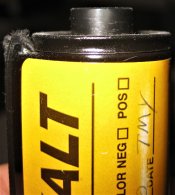
- All cartridges work but I prefer the ones shown. To date I have re-used my cartridges at least 3 times each and there had never been a problem with any of them.
- Cleaning all of the dust from everything is the key to bulk loading happiness. I like the Falcon Dust Off cans.
- Bulk load the entire roll into cartridges at one time. It doesn't take long and when you need a roll it's ready to go.
- Work inside a changing bag or tent. You never have to worry about accidentally exposing anything or if that last photo on the roll is good. It's not hard. I put the various components in ceramic bowls (they are heavy and don't tip easily) and work on the coffee table while I watch television. It never takes more than one half hour show. Yes, when it's hot and humid it takes a bit more effort but not more time.
- Scotch magic tape works great.

Good luck,

Neal Wydra
 

Attachments

  • BulkLoadCartridge.jpg
    BulkLoadCartridge.jpg
    581.2 KB · Views: 114

Harry Stevens

Member
Allowing Ads
Joined
Dec 18, 2014
Messages
424
Location
East Midland
Format
Multi Format
I would like a pdf that told me how many 12,24.36 exposure rolls I can expect from the different film lengths....Anybody??:smile:

As for me well it's plastic and used canisters and I own one Watson and one Watson copy and I love bulk loading but I fear it will become uneconomical....Thanks Kodak.
 

Agulliver

Member
Joined
Oct 11, 2015
Messages
3,708
Location
Luton, United Kingdom
Format
Multi Format
Isn't a 36 exposure film about 5 feet long? Most retailers will say you can get 19 36 exposure rolls from a 100 foot load. I have squeezed this plus a 20th which might be anything from 20 to 30 exposures...depending on technique (see below).

It also depends on how long your header and tail are. Using Watson loaders you have a few inches at the beginning and end that get fogged...unless you load in darkness. The Lloyds type loaders end up with less wasted film.

For more economy I use Foma and Ilford films for bulk loading, I'm trying a Kentmere brand 400 now which is not as good as HP5+ but it's cheaper and still nice...and can be pushed to 800. Also occasionally I get a second hand or expired roll.

For value...I bought a barely used Watson 66 with perhaps a whole 100 feet of FP4 in it. It's old and expired but perfectly good...total cost £7 including post.
 
Photrio.com contains affiliate links to products. We may receive a commission for purchases made through these links.
To read our full affiliate disclosure statement please click Here.

PHOTRIO PARTNERS EQUALLY FUNDING OUR COMMUNITY:


Ilford ADOX Freestyle Photographic Stearman Press Weldon Color Lab Blue Moon Camera & Machine
Top Bottom