• Welcome to Photrio!
    Registration is fast and free. Join today to unlock search, see fewer ads, and access all forum features.
    Click here to sign up

Blue negative after developing

Recent Classifieds

Forum statistics

Threads
202,080
Messages
2,834,749
Members
101,101
Latest member
howlingsun
Recent bookmarks
0

fbfotografie

Member
Allowing Ads
Joined
Feb 2, 2012
Messages
9
Location
Tilburg
Format
Medium Format
I just developed my first black and white negative. Well sort of. The film is currently drying but the negative is blueish. Something must have gone wrong.

Details:

500ml Patterson Developing tank
Rodinol 1+100 (5ml on 500ml) developer
Adofix as fixer (1+9)
Water as stopbad
Semi-stand developing, agitation during the first minute, then 10 agitations at the 30min mark. Removal of the developer after 60min. 3 washing/stopping cycles with clear water (incl. agitation). Then 4min fix (continuous agitation). Washing with water for an additional 8min.

Before I continue with the next film, can somebody tell me what I did wrong? Thanx!
 
Joined
Jan 21, 2003
Messages
15,715
Location
Switzerland
Format
Multi Format
If it's Foma film in 120 format it's supposed to be blue.
With any other film that would be slightly strange.

As an aside: why are you doing standing development anyway, risking uneven development, before you have learned to process the way your products were designed to? It's usually considered a technique for extreme situations.
 

Mainecoonmaniac

Member
Allowing Ads
Joined
Dec 10, 2009
Messages
6,297
Format
Multi Format
Have the same problem with Arista EDU 120. My Xtol that I replenish is also blue/green from souping the film. As far as I know, It hasn't caused any problems. I think it's the anti-halation dye.
 
OP
OP

fbfotografie

Member
Allowing Ads
Joined
Feb 2, 2012
Messages
9
Location
Tilburg
Format
Medium Format
If it's Foma film in 120 format it's supposed to be blue.
With any other film that would be slightly strange.

As an aside: why are you doing standing development anyway, risking uneven development, before you have learned to process the way your products were designed to? It's usually considered a technique for extreme situations.

I am scanning my film and found that the best way to do this is stand developing.

Thanx for the information..feel somewhat stupid..
 
Joined
Jan 21, 2003
Messages
15,715
Location
Switzerland
Format
Multi Format
Have the same problem with Arista EDU 120. My Xtol that I replenish is also blue/green from souping the film. As far as I know, It hasn't caused any problems. I think it's the anti-halation dye.

Doesn't it look cool, though? I love that turquoise color and almost want to keep a few rolls around just for the color. :smile:
 
Joined
Jan 21, 2003
Messages
15,715
Location
Switzerland
Format
Multi Format
I am scanning my film and found that the best way to do this is stand developing.

Thanx for the information..feel somewhat stupid..

Don't feel stupid. I remember first time I processed a roll of Foma 120 film, and I had the same reaction as you.

So you get better results with standing development when you scan your film? Interesting. Perhaps it compresses the tone scale enough that the scanner has no problems seeing the full range...

Either way, there's no reason you can't do that while agitating normally, and eliminate the risk of uneven development. But, I'll leave you alone... :smile: Have fun!
 

JohnMeadows

Member
Allowing Ads
Joined
Jul 27, 2010
Messages
314
Location
Toronto, Ont
Format
Medium Format
I remember too my suprise and seeing the colour of the developer as it came out of the tank (I use one-shot). At Christmas time I recall thinking that it was the perfect Christmas film, as the developer came out a bright cheery green, a lovely colour for that time of year :smile:
 

r-brian

Member
Joined
Feb 25, 2003
Messages
721
Location
Albuquerque, NM
Format
DSLR
I developed a roll of the Arista in DiXatol ( a staining developer) once. The yellow-brown stain on the blue base gave me green negatives. Decided not to try that again.
 
Joined
Jan 21, 2003
Messages
15,715
Location
Switzerland
Format
Multi Format
I developed a roll of the Arista in DiXatol ( a staining developer) once. The yellow-brown stain on the blue base gave me green negatives. Decided not to try that again.

Did you try to print it? I ran some Foma 400 through PMK Pyro, with green stain also, and it printed like a dream on graded paper.
 
OP
OP

fbfotografie

Member
Allowing Ads
Joined
Feb 2, 2012
Messages
9
Location
Tilburg
Format
Medium Format
The film is dry and beautifull! :wink: Lost 2 negatives during drying (see drying streaks) so I DO need wetting agent :wink:.
On stand developing I quote Steve Sherman:

'Thirty plus years of negative making for the wet darkroom process tells me that the Semi-Stand / Reduced Agitation development is the closest thing to a magic bullet there is. When executed properly, ( yes there is an increased chance of development artifacts) less than 10% in my experience, the technique Maximizes FILM SPEED, Maximizes HIGHLIGHT COMPRESSION and Maximizes MID TONE MICRO CONTRAST. The three most sought after components of negative making and film development.

This technique will allow the skilled technician to photograph in ANY lighting conditions during ANY time of day and obtain a satisfactory and easily printable negative.

HOWEVER, the single most important component to the success of a negative, ( I would suggest no matter what means you produce the final positive outcome ) is the quality of the light in which the negative was exposed!'


But I would also try the normal route in the future.

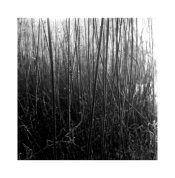
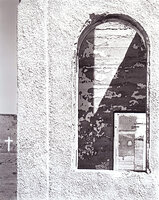
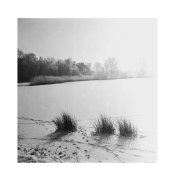
Added some of the resulting images.
 

Attachments

  • BW1-Sneeuw5bk.jpg
    BW1-Sneeuw5bk.jpg
    278.7 KB · Views: 128
  • BW1-Sneeuw7bk.jpg
    BW1-Sneeuw7bk.jpg
    400.3 KB · Views: 130
  • BW1-Sneeuw2bk.jpg
    BW1-Sneeuw2bk.jpg
    319.2 KB · Views: 127

dehk

Member
Allowing Ads
Joined
Aug 4, 2010
Messages
881
Location
W Michigan
Format
Multi Format
Sometimes you need Stand Development, but most of the time just regular development. I'll leave that for you to experiment :wink:
 

Mainecoonmaniac

Member
Allowing Ads
Joined
Dec 10, 2009
Messages
6,297
Format
Multi Format
I used stand development with Arista EDU 400 for a one hour exposure. I used HC-110 diluted 1-100 in stand development for an hour. The negs were OK. Arista and Foma film have very bad reciprocity effects, but the film is gorgeous.
 
Joined
Jan 21, 2003
Messages
15,715
Location
Switzerland
Format
Multi Format
I know the work of Steve Sherman, and it works great for him. No reason it can't work great for you too. I've done a lot of it myself.

You will have to find out for yourself which works best, and therein lies the fun of this. Know this, however, most reports on uneven development have something to do with standing development. And, Steve shoots sheet film while you shoot rolls. There's a difference in magnification factor and the edge effects you get from Rodinal. If you're happy with those edge effects in roll film, especially when printed large, then go for it. Don't let me stop you, by any means. I'm just trying to give you both sides of the argument. Kind of like my own devil's advocate of sorts.

The film is dry and beautifull! :wink: Lost 2 negatives during drying (see drying streaks) so I DO need wetting agent :wink:.
On stand developing I quote Steve Sherman:

'Thirty plus years of negative making for the wet darkroom process tells me that the Semi-Stand / Reduced Agitation development is the closest thing to a magic bullet there is. When executed properly, ( yes there is an increased chance of development artifacts) less than 10% in my experience, the technique Maximizes FILM SPEED, Maximizes HIGHLIGHT COMPRESSION and Maximizes MID TONE MICRO CONTRAST. The three most sought after components of negative making and film development.

This technique will allow the skilled technician to photograph in ANY lighting conditions during ANY time of day and obtain a satisfactory and easily printable negative.

HOWEVER, the single most important component to the success of a negative, ( I would suggest no matter what means you produce the final positive outcome ) is the quality of the light in which the negative was exposed!'


But I would also try the normal route in the future.

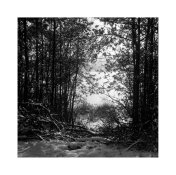
Added some of the resulting images.
 

Brian C. Miller

Member
Allowing Ads
Joined
Dec 13, 2010
Messages
486
Location
Everett, WA
Format
Large Format
On stand developing I quote Steve Sherman:

'Thirty plus years of negative making for the wet darkroom process tells me that the Semi-Stand / Reduced Agitation development is the closest thing to a magic bullet there is. ...'

You might want to try William Mortensen's technique of refrigerated development. Mortensen would pour in the developer, give the can a good shake, and then put it in the fridge. Time was three to five days, and agitation was, "when I think about it."

I tried it with Fuji Acros 100, and Ilford Ilfosol 3. I used cold water straight from the tap, mixed it up, poured it in, gave the can a shake, and chucked it into the fridge. I gave it a shake in the morning and evening, for five days. I think I left it in too long. The results were good, but a bit dense. Next time I'll try three days.
 
Photrio.com contains affiliate links to products. We may receive a commission for purchases made through these links.
To read our full affiliate disclosure statement please click Here.

PHOTRIO PARTNERS EQUALLY FUNDING OUR COMMUNITY:


Ilford ADOX Freestyle Photographic Stearman Press Weldon Color Lab Blue Moon Camera & Machine
Top Bottom