
• Welcome to Photrio!
    Registration is fast and free. Join today to unlock search, see fewer ads, and access all forum features.
    Click here to sign up

Blue Cyan Shadows

Filling In

H
Filling In

  • 1
  • 2
  • 39
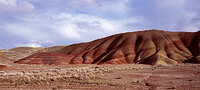
Painted Hills # 3.jpg

H
Painted Hills # 3.jpg

  • 4
  • 0
  • 86

Recent Classifieds

Forum statistics

Threads
203,208
Messages
2,851,434
Members
101,726
Latest member
Peter1111
Recent bookmarks
0

Bob Carnie

Subscriber
Allowing Ads
Joined
Apr 18, 2004
Messages
7,735
Location
toronto
Format
Med. Format RF
I am working on a rather large personal printing project and pretty well have figured out the whole magilla, except for one vexing problem.

I need a cold toner that is permanent for the shadow areas. The results I have now are what I like but the blue end is not permanent and over time will fade, the silver will still be there but I am hoping to find a solution to this.


I am using a two bath dev for the solarizations and am Bleach Sepia for the highlights, Gold * peach tone* for the upper midtones and iron blue for the shadows.

I have included two attachments of the look I am currently happy with except that the blue over time will go away.

the sunflower image has more attention at the Bleach sepia gold end.
the wheel image has more attention at the iron blue end.

I like both looks and would be very happy being in this range, any chem geeks out there that have any suggestions on chems to use.

thanks in advance
 
I need a cold toner that is permanent for the shadow areas. The results I have now are what I like but the blue end is not permanent and over time will fade, the silver will still be there but I am hoping to find a solution to this.


I am using a two bath dev for the solarizations and am Bleach Sepia for the highlights, Gold * peach tone* for the upper midtones and iron blue for the shadows.

Bob, I gave you the answer 3 years ago :D

alpha-Napthol is a blue colour coupler, details and link on APUG

Ian

Bob, in what way do you consider the iron blue toner, which creates the Prussian Blue pigment also typical for Cyanotypes, not "permanent"? I know cyanotypes can have a tendency to bleach a bit under light, but this is largely reversible by dark storage and access to air. In addition, the issue seems quite diverse, and possibly related to impurities of remains of sensitizer in cyanotypes (not present in your blue toned images), see Mike Ware's documents about this.

Overall, cyanotypes seem not to bad in terms of "archivability", and I don't really see how a dye based toner would improve over it, considering the reputation of non-reversible fading of color photos in general?... Prussian blue is also a well regarded oil painting pigment, although admittedly, oil paint layers are of a different order in terms of thickness and amount of pigment present.

Lastly, even Tim Rudman, has used blue toner in some of his remarkable images (I like yours by the way!)
 
Marco

As you may gather, I am a printer and not a chemist. To my thinking if the dye can wash off then its not like the sepia , gold or even selenium in the way it works.
It sits on top of the paper as a stain and to my thinking suspect.
I plan to make a dedicated edition series of three prints of each image and then move on to a whole different series. So right now the only vexing area is the blue/cyan in the shadows that I like but want to make sure I have covered all possiblities and make these prints as permanant as I can.

I need to think this over as I really prefer the ironblue in the shadows over selenium.

Bob, in what way do you consider the iron blue toner, which creates the Prussian Blue pigment also typical for Cyanotypes, not "permanent"? I know cyanotypes can have a tendency to bleach a bit under light, but this is largely reversible by dark storage and access to air. In addition, the issue seems quite diverse, and possibly related to impurities of remains of sensitizer in cyanotypes (not present in your blue toned images), see Mike Ware's documents about this.

Overall, cyanotypes seem not to bad in terms of "archivability", and I don't really see how a dye based toner would improve over it, considering the reputation of non-reversible fading of color photos in general?... Prussian blue is also a well regarded oil painting pigment, although admittedly, oil paint layers are of a different order in terms of thickness and amount of pigment present.

Lastly, even Tim Rudman, has used blue toner in some of his remarkable images (I like yours by the way!)
 
Marco

As you may gather, I am a printer and not a chemist. To my thinking if the dye can wash off then its not like the sepia , gold or even selenium in the way it works.
It sits on top of the paper as a stain and to my thinking suspect.

Bob, iron blue, or better said the Prussian Blue pigment that forms its color, can indeed wash off. The process is called "peptization", and differs from dissolving for example sugar in water, in that a solid (the colored pigment) gets washed away with the water, instead of getting dissolved like sugar or salt in water. It is equivalent to washing the sand of your boots after a walk on the beach... The problem here is that the colored pigment like you rightly concluded doesn't really bind to the paper or gelatine in any really reliable way.

You are also right iron blue toner is unlike sepia and selenium toning. The big difference with sepia and selenium is that these last toners chemically react with the silver in the photo paper's gelatine layer, and form a strong molecular bond, that is, the toners components (sulphur for sepia, selenium for selenium toner), directly bind with the silver, much like oxygen and water bind with iron when it rusts. No way you wash this off the paper (unless you melt the entire emulsion layer of the paper), just like you can't wash off rust of the steel hull of a ship...

However, as you can see, the "peptization" of iron blue, requires water (and lots of it). This essentially means your toned image is "safe" from degradation or loss of image color, as long as you do not wash it again after it is toned, (briefly) washed according to toner instructions, and subsequently completely finished and dried.

But why would you want to do that?

I need to think this over as I really prefer the ironblue in the shadows over selenium.

So, all in all, I would say: don't worry about it! It is safe to use the iron blue toner, as long as you can get the results you want.

The only additional advice I can give you, is to do any proper archival washing before the iron blue toning (meaning that one should go last in the toner usage sequence), and keep washing of the iron blue toned print to a minimum, to avoid washing away to much of its color.

Marco
 
Last edited by a moderator:
Thanks Marco and others

As you say these prints will not be washed any further .
I am very happy with the look therefore I think my quest is over.
Now start making the prints and exhibiting
Keep your ears open as these prints may be coming to a gallery near you.


Bob
Bob, iron blue, or better said the Prussian Blue pigment that forms its color, can indeed wash off. The process is called "peptization", and differs from dissolving for example sugar in water, in that a solid (the colored pigment) gets washed away with the water, instead of getting dissolved like sugar or salt in water. It is equivalent to washing the sand of your boots after a walk on the beach... The problem here is that the colored pigment like you rightly concluded doesn't really bind to the paper or gelatine in any really reliable way.

You are also right iron blue toner is unlike sepia and selenium toning. The big difference with sepia and selenium is that these last toners chemically react with the silver in the photo paper's gelatine layer, and form a strong molecular bond, that is, the toners components (sulphur for sepia, selenium for selenium toner), directly bind with the silver, much like oxygen and water bind with iron when it rusts. No way you wash this off the paper (unless you melt the entire emulsion layer of the paper), just like you can't wash off rust of the steel hull of a ship...

However, as you can see, the "peptization" of iron blue, requires water (and lots of it). This essentially means your toned image is "safe" from degradation or loss of image color, as long as you do not wash it again after it is toned, (briefly) washed according to toner instructions, and subsequently completely finished and dried.

But why would you want do that?


So, all in all, I would say: don't worry about it! It is safe to use the iron blue toner, as long as you can get the results you want.

The only additional advice I can give you, is to do any proper archival washing before the iron blue toning (meaning that one should go last in the toner usage sequence), and keep washing of the iron blue toned print to a minimum, to avoid washing away to much of its color.

Marco
 
I am very happy with the look therefore I think my quest is over.
Now start making the prints and exhibiting

Yes, the look is great, I especially like the left one with bicycle crank, but they are both beautiful in this "finish". Go for it!

Cyanotypes have survived from the dawn of photography, and that is longer than most colour C-prints will...

Keep your ears open as these prints may be coming to a gallery near you.

Ah well, the crank I guess is a give-away... must (well, almost) have been shot in the Netherlands :wink:

Anyway, post any exhibition dates and places here if you know anything definite.
 
I would love to put a show in Copenhagen, one of my best customers is from Denmark, now in London, but hopefully I will exhibit in Europe.
Yes, the look is great, I especially like the left one with bicycle crank, but they are both beautiful in this "finish". Go for it!

Cyanotypes have survived from the dawn of photography, and that is longer than most colour C-prints will...


Ah well, the crank I guess is a give-away... must (well, almost) have been shot in the Netherlands :wink:

Anyway, post any exhibition dates and places here if you know anything definite.
 
Update

I have to say I am at a stalemate with this, I am very happy with the imagery, I have tested the new Harmon rag paper and it works wonderfully for this project. The emulsion is just like Ilford Warmtone but with a beautiful rag finish.
I have bumped up the contrast filtration and am getting the look I want.
the three toners I am using give me a multicoloured look but the iron blue is giving me all kinds of problems, I have gone back to Tims book, I have followed Ian's advice with the iron blue.. but I really am not happy with this blue. It does look great wet but when washed to what I think is safe limits the prints dry down and look desaturated from when wet.

Luckily I spent some time with Christina Anderson, who is a tri colour gum worker, and as some know I am working on multiple hit printing. As well a couple of years back with Kerik with gum over platinum.

So for sake of argument /suggestions / observation / comment I am putting out here an idea that has been bubbling in my head for a long , long time.

Gum over Silver, using digitized negatives to the final print size.
so here is the workflow.

Make the tri toned solarizations on the enlarger to final show size. tone them without the addition of blue.
Hot mount them to aluminum using an acid free Ph nuetral tissue.
Measure the registration marks to within a thousands of an inch** ideas on type of ruler**
output onto fujiclear a contone negative that represents the pre solarized image.
Place this negative using the registration marks in perfect register with the mounted print.
Coat the solarized print with a blue pigment gum coat
expose the negative to the coated print
wash off as normal with any gum over.
hang to dry,probably with heat to avoid water marks.

Questions.. anyone tried this ?, I have used a thousands of an inch ruler before but it only spanned 18 inches I am going to make 40 inch prints, any suggestions on a high quality ruler.
I am thinking that the registration will be very simple , and the fact that the blue image will represent a more real version of the image the results should be very interesting overlaying a solarized section of the print.

Ok so I have a show with my wife , in Toronto this coming may during the Contact Festival , so I am now under the gun to make these suckers, I have enough images but this last little BLUE straw is breaking my back ...

Why Blue, well it complements the yellow warmth of the highlight regions .
It is a wonderful tone and to my humble eyes are wicked prints. Now before anyone comments/ observes that this will be a crap load of work I should point out these prints will be an edition of two , with one artist proof which is the show print. When I am done I am done, I need to move on and the results I can get now please me but the iron blue, bothers me and maybe pigment in gum is the answer..

or blue pigmented carbon over hit.
help
 
Hi Bob, in general gum doesn't work on commercial silver paper; it won't stick. I haven't tried the new paper you mention, but I'd try it first before putting too much time into this idea.

Denise Ross is the master of gum over silver (handcoated); I think she still watches hybridphoto and she'd be able to give you tips if anyone could. Good luck,
Katharine Thayer
 
Thanks for replies

Katharine The new Harmon paper is really textured with warmtone emulsion
much like a rag paper. is in beta test but will be released this first quarter.
Any Idea why gum will not sit no a commercial gelatin fibre paper?

Ray I wondered about the possibility's of carbon as I have seen Sandy Kings carbons some done on bartya paper and they are remarkable.
Osheen a young printer from my shop spent three days with him and we are playing with multiple coating carbon so we will give this a go.
Registration is a piece of cake, I just need a way of accurately measuring the registration bars on the print and then banging out film off my Lambda.
 
Bob, it's a problem of "tooth;" gum needs some fiber or texture or something for the hardened gum to attach to, or it will slide off the surface during the development wash. If the new paper is like a rag paper, maybe there's enough tooth there for gumover; that would be pretty exciting.
 
Hi Katharine

It does have a tooth, if you remember Agfa fine grain matt or some of the Ectalure papers , they were something like this paper, basically a textured paper is made by Hannamuhle and Harmon coats on a Warmtone *chlorobromide* silver emulsion.
It reminds me of papers of the past.. mid 70's that were available, notably Ilfomar with more texture.
I will give it a try in January and up date my blue shadow problem results.

bob

Bob, it's a problem of "tooth;" gum needs some fiber or texture or something for the hardened gum to attach to, or it will slide off the surface during the development wash. If the new paper is like a rag paper, maybe there's enough tooth there for gumover; that would be pretty exciting.
 
Photrio.com contains affiliate links to products. We may receive a commission for purchases made through these links.
To read our full affiliate disclosure statement please click Here.

PHOTRIO PARTNERS EQUALLY FUNDING OUR COMMUNITY:


Ilford ADOX Freestyle Photographic Stearman Press Weldon Color Lab Blue Moon Camera & Machine
Top Bottom
