• Welcome to Photrio!
    Registration is fast and free. Join today to unlock search, see fewer ads, and access all forum features.
    Click here to sign up

bergger,efke,rollei retrò advice me!

Paper Birch.jpg

H
Paper Birch.jpg

  • 0
  • 0
  • 9
Krause 4

H
Krause 4

  • 4
  • 0
  • 48

Recent Classifieds

Forum statistics

Threads
203,058
Messages
2,849,240
Members
101,626
Latest member
Rick_P
Recent bookmarks
0

danzyc

Member
Allowing Ads
Joined
Aug 23, 2007
Messages
139
Format
35mm
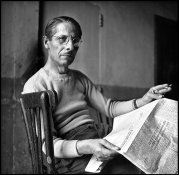
hello people i m posting one shot that my friend have made a lot of years ago shot with rolleiflex and GEVAPAN 100 iso film...
how i can achieve nowadays the same look????
i think that gevapan is agfa apx and agfa apx is now rollei ???!!....

how do you think to the new bergger film compared to efke and rollei retrò?
many thanks
 

Attachments

  • 453705036_78f0ff7bdb.jpg
    453705036_78f0ff7bdb.jpg
    105.4 KB · Views: 235
Efke films have thick emulsion? I thought that thick emulsion films definitely were a thing of the past and not something that still can be bought new.

Anyway, do you mean that certain processes like water-bath development still works well with efke films in the way Ansel Adams described in the Negative?

Cheers

C
 
Probably you will get a very similar look with Efke/Adox 100 film. It is a traditional "thick emulsion" film, made on old machines using old recipes.


Thick emulsion films were products of pre-WWII technology. Au contraire, Adox/Efke films were the first thin emulsion films. What we consider retro nowadays was in fact bleeding-edge in the 1950's.

At any rate, regarding the OP's question, I would suggest: get a Rolleiflex or a Hasselblad for the Zeiss lenses, and a traditional grain film with an upswept curve like Plus-X or Tri-X 320TXP. A developer like Rodinal or HC-110 would work well.

What's noticeable here is not grain/sharpness/blah whatever, but tones. Notice that the light is soft and diffused, coming from a window. The hair has some kind of brylcreem, and the skin is slightly oily. That's your highlights, and you want to keep them brilliant. Certain film/dev combinations enhance the highlights (like those I quoted above), others enhance the midtones (e.g. tri-x in xtol). So you want something that gives good highlight contrast.

Films with good highlight contrast also have less details in the shadows, which gives you nice dark shadows like that picture. In lighting your scene, you thus want to make sure that the light ratio between the illuminated side and the shadow side is not too broad, otherwise you will have a completely black background. Experimentation is key.

 
Last edited by a moderator:
i have a rolleiflex with 75 planar 6 elements.....could i start with efke?
 
the efke is the best "old times" emulsion??

bergger or rollei retro?

thanks
 
If I were you, I would try the Bergger BRF 200. It's a "copy" or a remake of the Kodak Double-X. I love this film. I use it a lot.
You can also try Foma Films. They are pretty good. But Efke is bas quality, because emulsion is very fragile.
 
Efke films have thick emulsion? I thought that thick emulsion films definitely were a thing of the past and not something that still can be bought new.

Anyway, do you mean that certain processes like water-bath development still works well with efke films in the way Ansel Adams described in the Negative?

Cheers

C

As far as I understand what efke/Adox is doing they have probably the most old-fashioned machinery and recipes.

Water-bath development? I have no idea, what's that? Presoak? My only experiments so far, not finished yet, is with Adox 25 in a Pyro developer. Very promising, looks kind of old-fashioned. But I think you will need to try on your own.
 
Thick emulsion films were products of pre-WWII technology. Au contraire, Adox/Efke films were the first thin emulsion films. What we consider retro nowadays was in fact bleeding-edge in the 1950's.

At any rate, regarding the OP's question, I would suggest: get a Rolleiflex or a Hasselblad for the Zeiss lenses, and a traditional grain film with an upswept curve like Plus-X or Tri-X 320TXP. A developer like Rodinal or HC-110 would work well.

What's noticeable here is not grain/sharpness/blah whatever, but tones. Notice that the light is soft and diffused, coming from a window. The hair has some kind of brylcreem, and the skin is slightly oily. That's your highlights, and you want to keep them brilliant. Certain film/dev combinations enhance the highlights (like those I quoted above), others enhance the midtones (e.g. tri-x in xtol). So you want something that gives good highlight contrast.

Films with good highlight contrast also have less details in the shadows, which gives you nice dark shadows like that picture. In lighting your scene, you thus want to make sure that the light ratio between the illuminated side and the shadow side is not too broad, otherwise you will have a completely black background. Experimentation is key.

Interesting... does the "thick vs. thin" subject from today's point of view mean the T-grain films are super-thin? As far as I know one target of emulsion research was to save on silver, for obvious cost reasons.

Regarding the highlights, in the scan the highlights are quite burnt. This can also be an effect of the scanning process.
 
My big reproach on Efke films is the bad quality control. You have often pinholes and scratches in emulsion.
I have tried Efke 25 in PMK following Ed Buffaloes' recommandations. It's nice.
Concerning the Efke's machinery, the coating machine is very old : she was built in 1949...
 
Interesting... does the "thick vs. thin" subject from today's point of view mean the T-grain films are super-thin? As far as I know one target of emulsion research was to save on silver, for obvious cost reasons.

Regarding the highlights, in the scan the highlights are quite burnt. This can also be an effect of the scanning process.

AFAIK, t-grains can cover a larger surface for less silver than traditional "thin" emulsions, so I suppose they could be called super-thin...
 
My big reproach on Efke films is the bad quality control. You have often pinholes and scratches in emulsion.
I have tried Efke 25 in PMK following Ed Buffaloes' recommandations. It's nice.
Concerning the Efke's machinery, the coating machine is very old : she was built in 1949...

WHEN did you have that problem? Some years ago I heard about it, tried about 15 rolls in the last weeks, and there were no such problems.
 
WHEN did you have that problem? Some years ago I heard about it, tried about 15 rolls in the last weeks, and there were no such problems.

Some folks have problems with Efke, some don't; it's hit or miss. when I shoot Efke, I shoot two, if not three of each shot. Not an efficient way of shooting. Great film, poor QC.
 
Shot today with any modern film a good printer could achieve exactly the same look in the print. There's some burning in of the background around the head, very tell-tale it shouldn't show.

Ian
 
I am afraid I'll have to disagree with you...

The "look" of this image comes from:

a. the lighting (30%)

b. the format of the neg (10%)

c. the lens on the cam (15%)

d. the film developer used (10%)

e. the paper used for printing (30%)

f. the paper developer used (5%)

If you try to use the same lighting, with a Rolleiflex and a Planar (or Sonnar), develop your film in a tanning developer and print on a REAL fixed grade chlorobromide paper you'll probably get the result you want, whichever film you use. The problem is how you'll get your hands on a paper like the one I describe, since they're almost extinct...
 
If I were you, I would try the Bergger BRF 200. It's a "copy" or a remake of the Kodak Double-X. I love this film. I use it a lot.
You can also try Foma Films. They are pretty good. But Efke is bas quality, because emulsion is very fragile.

Actually, everything I've read about BRF 200 indicates it's supposed to be a copy of Super-XX.

The movie film "Eastman 5222" is Double-X - quite usable for stills - "short ends" are available inexpensively from film stock distributors (35mm only, though).
 
I think the Forte films are the most 'old fashioned' I've tried, I think classic Pan and Bergger are both Forte.
Forte are now sadly no longer making film, but there is a lot around, Personally to get that look I'd use Forte in 120.
Mark
I have a little test on my blog
Fortepan 100
Still trying nail a good setting but rating at EI 64 and developing for 8 mins in Rodinal is getting there for me.
 
Well, as far as I know, BRF films are a bit different from Forte films. They are close, but not the same.

Forte is now closed, but as for papers, I think Bergger is going to keep producing films, using Harman facilities. So, BRF are going to be available again. But stocks are not depleted yet, I have received yesterday a pack of BRF 200 in 120.
 
Photrio.com contains affiliate links to products. We may receive a commission for purchases made through these links.
To read our full affiliate disclosure statement please click Here.

PHOTRIO PARTNERS EQUALLY FUNDING OUR COMMUNITY:


Ilford ADOX Freestyle Photographic Stearman Press Weldon Color Lab Blue Moon Camera & Machine
Top Bottom