• Welcome to Photrio!
    Registration is fast and free. Join today to unlock search, see fewer ads, and access all forum features.
    Click here to sign up

Basic Metering

Emi on Fomapan 400

A
Emi on Fomapan 400

  • 0
  • 0
  • 8
Venice

A
Venice

  • 0
  • 0
  • 55

Recent Classifieds

Forum statistics

Threads
201,795
Messages
2,830,259
Members
100,952
Latest member
pcwelch
Recent bookmarks
0

Corey Fehr

Member
Allowing Ads
Joined
Mar 15, 2017
Messages
108
Location
Wisconsin
Format
35mm
Super simple question with many different scenarios:

How do you choose what to meter?

We didn't get into this much in class, we simply did one assignment where we metered shadows, and then adjusted the exposure for middle gray.
Simple enough.
But obviously, I'm not always going to meter the shadow.

Do you then pick the darkest thing in the photo you want to have detail? (In harmony with "metering with the shadows"), or simply pick whatever you want with details?
 

BrianShaw

Member
Allowing Ads
Joined
Nov 30, 2005
Messages
16,984
Location
La-la-land
Format
Multi Format
I generally use incident metering to avoid this kind of confusion.
 
OP
OP
Corey Fehr

Corey Fehr

Member
Allowing Ads
Joined
Mar 15, 2017
Messages
108
Location
Wisconsin
Format
35mm
I generally use incident metering to avoid this kind of confusion.

Pardon my ignorance, but what's the difference? I know there's reflective and incident metering, but wouldn't you have to adjust it either way? And still select *something* to meter?
 
OP
OP
Corey Fehr

Corey Fehr

Member
Allowing Ads
Joined
Mar 15, 2017
Messages
108
Location
Wisconsin
Format
35mm
I still need to know what to meter...

For example. You have a brightly lit, let's say, playground. Very few shadows. Where do you place the meter or select what to meter, and why?
 
OP
OP
Corey Fehr

Corey Fehr

Member
Allowing Ads
Joined
Mar 15, 2017
Messages
108
Location
Wisconsin
Format
35mm
With all due respect, I'm asking because I genuinely want to understand the principles, even if I don't put them to use right away.

So please no "fake it" responses.
 

Sirius Glass

Subscriber
Joined
Jan 18, 2007
Messages
50,814
Location
Southern California
Format
Multi Format
Incident meters are especially good for dark on dark or light on light exposures. Sometimes hard to do with distant subject.
Reflectance meters, especially metrixed ones, are good for general photography. One needs to take the reading with little or no sky readings to get the best readings. For some distance subjects it is useful to use a spot meter.

I kept this short and concise for easy learning and use. As you gain more experience, the use of gray cards and readings off ones palm can be introduced, but I stormily recommend starting simply and building with experience.
 

MattKing

Moderator
Moderator
Allowing Ads
Joined
Apr 24, 2005
Messages
55,163
Location
Delta, BC Canada
Format
Medium Format
A really good question.

1) I use incident metering a lot.
2) If using a reflective meter, I try to visualize (or if in a Minor White mood, pre-visualize) before I meter, then decide what I want to emphasize, then estimate my exposure based on experience and judgment, and then try to confirm or adjust that estimate with meter readings.
3) Where possible, I walk closer and gather information with my reflective meter. If I had anything more than the spot function in a couple of my cameras, I would probably get less exercise.
4) Most importantly, I either remember my process and results, or take notes, and then consider all that when I go to print the results. It is that feedback loop that makes the most difference.

It sounds more complex than it is.
EDIT: Loupe corrected to loop.
 
Last edited by a moderator:
OP
OP
Corey Fehr

Corey Fehr

Member
Allowing Ads
Joined
Mar 15, 2017
Messages
108
Location
Wisconsin
Format
35mm
Incident meters are especially good for dark on dark or light on light exposures. Sometimes hard to do with distant subject.
Reflectance meters, especially metrixed ones, are good for general photography. One needs to take the reading with little or no sky readings to get the best readings. For some distance subjects it is useful to use a spot meter.

I kept this short and concise for easy learning and use. As you gain more experience, the use of gray cards and readings off ones palm can be introduced, but I stormily recommend starting simply and building with experience.

We *have* to use reflective meters for this class. So what do I meter if there are no shadows?

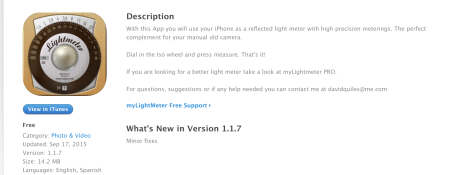
Perhaps I should specify that we're currently using what I guess would be a "spot meter"; the MyLightMeter app.

So very simply-how do I select what to meter with this?
 
OP
OP
Corey Fehr

Corey Fehr

Member
Allowing Ads
Joined
Mar 15, 2017
Messages
108
Location
Wisconsin
Format
35mm
A really good question.

1) I use incident metering a lot.
2) If using a reflective meter, I try to visualize (or if in a Minor White mood, pre-visualize) before I meter, then decide what I want to emphasize, then estimate my exposure based on experience and judgment, and then try to confirm or adjust that estimate with meter readings.
3) Where possible, I walk closer and gather information with my reflective meter. If I had anything more than the spot function in a couple of my cameras, I would probably get less exercise.
4) Most importantly, I either remember my process and results, or take notes, and then consider all that when I go to print the results. It is that feedback loupe that makes the most difference.

It sounds more complex than it is.

Thank you! This helps a lot.
 
OP
OP
Corey Fehr

Corey Fehr

Member
Allowing Ads
Joined
Mar 15, 2017
Messages
108
Location
Wisconsin
Format
35mm
Your questions as a newbie are coming too fast. Do what you can do. There's plenty of time to get old learning all this. Don't let your head explode now. I'm 60, and after 50 years of this, it can still explode my mind if I let it.

I just like to take in information and learn. Case and point. I'm allowed to do so.
 

BrianShaw

Member
Allowing Ads
Joined
Nov 30, 2005
Messages
16,984
Location
La-la-land
Format
Multi Format
Meter a highlight, and meter a shadow. Split the difference. That's the easiest way to get started.

Or pick a middle tone and measure that.
 
OP
OP
Corey Fehr

Corey Fehr

Member
Allowing Ads
Joined
Mar 15, 2017
Messages
108
Location
Wisconsin
Format
35mm
What kind of a meter are you using: spot or general coverage?

I believe it is spot metering.

I'm attaching a photo for clarity or for correction.
 

Attachments

  • Screen Shot 2017-03-19 at 10.49.37 PM.png
    Screen Shot 2017-03-19 at 10.49.37 PM.png
    375.4 KB · Views: 180

MattKing

Moderator
Moderator
Allowing Ads
Joined
Apr 24, 2005
Messages
55,163
Location
Delta, BC Canada
Format
Medium Format
Does your course work and the other demands of life permit you enough time to go out and experiment a lot with film and exposure and metering, and then try printing a representative portion of the results? If so, that is the best way to set up that "feedback loop" (not loupe, as I originally posted).

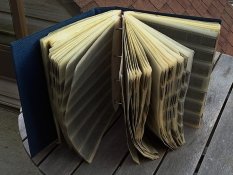
Here is some evidence of my (mis-spent) youth:

negatives-APUG.jpg

EDIT: and as far as the smart phone meters are concerned, some seem better than others.
 

BrianShaw

Member
Allowing Ads
Joined
Nov 30, 2005
Messages
16,984
Location
La-la-land
Format
Multi Format
I believe it is spot metering.

I'm attaching a photo for clarity or for correction.
Ok. I deleted my question because you answered it earlier and I did not see your answer.

I played with that app once. I seem to recall it being more general coverage than spot.

Pick a representative part of the scene and measure that part.
 

Sirius Glass

Subscriber
Joined
Jan 18, 2007
Messages
50,814
Location
Southern California
Format
Multi Format
I just like to take in information and learn. Case and point. I'm allowed to do so.

Absolutely. None of us was born with this knowledge, we had to learn it from someone. Please feel free to ask questions, because there are no bad questions. If you feel self contentious about some questions or subject, just send a PM to one of use.

I use reflectance meters for almost everything. The meters are built into my 35mm slrs and the Hasselblad. I use a hand held meter for the 35mm cameras without meters and the 4"x5" cameras. The hand held meters have incidence meters with I will use, as I said for dark on dark [a dark cat in a dimly lighted area, or scenes with snow [If I use a reflectance reading I get the contours of the snow but faces, clothes, buildings, trees are much too dark. I used only reflectance meters for over fifty years before I owned an incidence meter.
 
OP
OP
Corey Fehr

Corey Fehr

Member
Allowing Ads
Joined
Mar 15, 2017
Messages
108
Location
Wisconsin
Format
35mm
Does your course work and the other demands of life permit you enough time to go out and experiment a lot with film and exposure and metering, and then try printing a representative portion of the results? If so, that is the best way to set up that "feedback loop" (not loupe, as I originally posted).

Here is some evidence of my (mis-spent) youth:

View attachment 175467

Ok. I feel better now. :wink:

I have a relatively busy schedule, but not so much that I can't make time to learn more. I've kept records of every exposure for every roll of film I have.
 
  • MattKing
  • MattKing
  • Deleted
  • Reason: Off topic.

BrianShaw

Member
Allowing Ads
Joined
Nov 30, 2005
Messages
16,984
Location
La-la-land
Format
Multi Format
I don't take computerized devices out when out with my cameras. It's MY time. Leave the computers and alcohol at home.
That's you. Let others live as they choose. The iPhone meter app is quite useful and accurate. It's not the tool but the craftsman.
 

Luckless

Member
Joined
Feb 9, 2016
Messages
1,367
Location
Canada
Format
Multi Format
Metering with thought to what details I'm looking for is what I use in weird or complex lighting. Whether I am focusing on what is in the shadows or what is in the highlights depends on what I'm looking at and what I happen to care about for a given scene. Sometimes the lighting is simple and narrow, and metering is easy. Other times I have to accept that I'm going to blow out highlights or lose texture in the blacks. Sometimes I will adjust things to deliberately hide something in the blacks or whites.


A handheld incident meter will read the light falling on the scene, which in theory is the 'correct' metering. It, and 'sunny 16', will cover you on the majority of shots you're likely to take. - Place it "At the subject", such as under a persons chin if you're doing a portrait. (Do remember to double check you're not casting a shadow on it yourself. A fun and silly mistake to make when tired.) For situations with more dramatic lighting, you need to decide what is important? Do you want to 'look into the shadows' of a scene, in which case you would put the meter's dome in shadow, or do you care about what is in the light? You can take a number of readings to get a better feel of the light if needed, and adjust to something more in the middle.


Since you need to rely on a reflective meter for the assignment: do remember that the meter is a tool for measuring light, but it is still up to you to decide on an exposure. If you have nothing but bright things in the scene with little in the way of shadow, then you may find yourself having to pull back down from what the meter suggests. It doesn't know if you're pointing at a lump of coal or an arc-lamp, and it doesn't care and will assume the scene is generally average. Spend time with your metering tools, and stop to think about what the meter can see before accepting its numbers on face value.

Picking up a target with black-grey-white on it may be a helpful tool to better understand what you're getting out of your meter.

If you are really unsure as to which is the best exposure, then bracketing your shots is also a very useful tool. Tricky lighting is, well, tricky. You don't want to burn through your film of course, but taking 2-3 shots and deciding which exposure has the details you are truly happy with after the fact can be useful in many cases.

Good luck, have fun.

 
OP
OP
Corey Fehr

Corey Fehr

Member
Allowing Ads
Joined
Mar 15, 2017
Messages
108
Location
Wisconsin
Format
35mm
Metering with thought to what details I'm looking for is what I use in weird or complex lighting. Whether I am focusing on what is in the shadows or what is in the highlights depends on what I'm looking at and what I happen to care about for a given scene. Sometimes the lighting is simple and narrow, and metering is easy. Other times I have to accept that I'm going to blow out highlights or lose texture in the blacks. Sometimes I will adjust things to deliberately hide something in the blacks or whites.


A handheld incident meter will read the light falling on the scene, which in theory is the 'correct' metering. It, and 'sunny 16', will cover you on the majority of shots you're likely to take. - Place it "At the subject", such as under a persons chin if you're doing a portrait. (Do remember to double check you're not casting a shadow on it yourself. A fun and silly mistake to make when tired.) For situations with more dramatic lighting, you need to decide what is important? Do you want to 'look into the shadows' of a scene, in which case you would put the meter's dome in shadow, or do you care about what is in the light? You can take a number of readings to get a better feel of the light if needed, and adjust to something more in the middle.


Since you need to rely on a reflective meter for the assignment: do remember that the meter is a tool for measuring light, but it is still up to you to decide on an exposure. If you have nothing but bright things in the scene with little in the way of shadow, then you may find yourself having to pull back down from what the meter suggests. It doesn't know if you're pointing at a lump of coal or an arc-lamp, and it doesn't care and will assume the scene is generally average. Spend time with your metering tools, and stop to think about what the meter can see before accepting its numbers on face value.

Picking up a target with black-grey-white on it may be a helpful tool to better understand what you're getting out of your meter.

If you are really unsure as to which is the best exposure, then bracketing your shots is also a very useful tool. Tricky lighting is, well, tricky. You don't want to burn through your film of course, but taking 2-3 shots and deciding which exposure has the details you are truly happy with after the fact can be useful in many cases.

Good luck, have fun.
Great information, thank you for taking the time to type this out.

Collectively, I've learned a lot of valuable information on this forum, and I appreciate everyone's insight and patience.
 

BrianShaw

Member
Allowing Ads
Joined
Nov 30, 2005
Messages
16,984
Location
La-la-land
Format
Multi Format
Most "average scenes" are incredibly easy to meter if using color negative or b&w film. They have quite a broad exposure latitude.

What film are you metering for...
 
OP
OP
Corey Fehr

Corey Fehr

Member
Allowing Ads
Joined
Mar 15, 2017
Messages
108
Location
Wisconsin
Format
35mm
Most "average scenes" are incredibly easy to meter if using color negative or b&w film. They have quite a broad exposure latitude.

Got it. That makes sense.

What kind of metering is the "MyLightMeter" app considered?
 

Luckless

Member
Joined
Feb 9, 2016
Messages
1,367
Location
Canada
Format
Multi Format
Another useful trick that I almost forgot: Learn the exposure value of your palm. Rather hard to forget it when you head out, and it tends to stay as a fairly reliable reference when using reflective meters if you want to double check and establish a frame of reference.
 
OP
OP
Corey Fehr

Corey Fehr

Member
Allowing Ads
Joined
Mar 15, 2017
Messages
108
Location
Wisconsin
Format
35mm
Another useful trick that I almost forgot: Learn the exposure value of your palm. Rather hard to forget it when you head out, and it tends to stay as a fairly reliable reference when using reflective meters if you want to double check and establish a frame of reference.

This is great.
It reminds me of using fingers and arms to measure proportion in drawing.
"Use your body".
 

BrianShaw

Member
Allowing Ads
Joined
Nov 30, 2005
Messages
16,984
Location
La-la-land
Format
Multi Format
I'd consider it general coverage. General coverage is 30 degree angle of view. The app may be less than that; I can't recall. I took it off my phone when it started pestering me for money. Spot is generally 1 or 5 degree angle of coverage... looking at a very small part of the scene.
 
Photrio.com contains affiliate links to products. We may receive a commission for purchases made through these links.
To read our full affiliate disclosure statement please click Here.

PHOTRIO PARTNERS EQUALLY FUNDING OUR COMMUNITY:


Ilford ADOX Freestyle Photographic Stearman Press Weldon Color Lab Blue Moon Camera & Machine
Top Bottom