• Welcome to Photrio!
    Registration is fast and free. Join today to unlock search, see fewer ads, and access all forum features.
    Click here to sign up

Ballroom weather

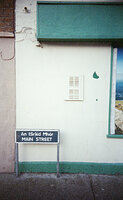
An tSráid Mhór

A
An tSráid Mhór

  • 0
  • 0
  • 27
IMG_1285.jpeg

D
IMG_1285.jpeg

  • 0
  • 0
  • 30

Forum statistics

Threads
203,124
Messages
2,850,185
Members
101,689
Latest member
Sagittarius
Recent bookmarks
0

FrankB

Member
Allowing Ads
Joined
Apr 27, 2003
Messages
2,143
Location
Northwest UK
Format
Medium Format
I'm heading to the neighbourhood of Toronto, Ontario around Easter, so I'm looking for tips on metering B&W negative film in snow, snow, thick, thick snow! :smile:

(I'm setting up another thread elsewhere for tips on what to shoot in the area.)

Thanks in advance,

Frank
 
When is Easter this year? Unless it's REAL early don't count on much snow. Maybe some grey sludge-)) You want Buffalo if you want snow-)))
 
Easter is the end of March. We may have some snow we may not. If we don't then I'm pretty sure I can meter well enough to get by, but I don't have a lot of experience with snow...
 
End of March you might have a snow storm to deal with. You might have nothing but green grass. You might find snow banks. It really depends. But odds are against a lot of snow in or near the city.
 
We're going to be about an hour and a half outside, near Rice Lake, but will be mobile throughout the area.

We're getting kind of sidetracked here. On the off chance that there is snow in my future :smile:, I'd appreciate tips from those that know on metering for those conditions with B&W negative film.

Thanks in advance,

Frank
 
I recently took some pictures in the snow, a first for me. What I found is that you probably don't want to actually meter snow itself in sunny conditions. I picked out something else in the scene to meter, like a tree stump. Since the snow tends to bounce light and make things seem overly bright I also opened up one stop in case I underexposed due to the reflections. Underdeveloping the negatives a bit will also help tame the contrast.

Now in cloudy conditions you might want to meter the snow to get the placement right. I found that I was getting really flat negs when it was cloudy due to a lack of scene contrast. So you may want to overdevelop these kind of negatives or print on a higher grade paper to account for that.
 
I don't shoot in the snow a lot, but I tip I got once was to open up 2 stops for sunlit snow (or basically snow that isn't in the shade). It's a very unscientific procedure, but it has worked for me... but of course it depends on the situation.
-Grant
 
Reflective meter? The snow will reflect more light then a grey card. Figure two stops. So if you're metering mostly snow open up two stops. Get yourself a large sheet of white paper and meter that. Maybe not be perfect but good enough for pratice.
 
Good Evening,

Sounds like a good application for an incident meter. Much simpler than trying to compensate with a reflective reading.

Konical
 
If you going to be by Rice Lake, you'll be in/real close to the city of Peterborough. You could easily have snow there at Easter. More than Toronto will at any rate. lots of nice areas out there for landscape. It's considered one of the cottage country areas. Parts of Peterborough will also be good for urban landscape and people studies. A nice area to check out is Bancroft about 1.5-2 hours north. Or farther east and south along the St.Lawerence river. What type of photography are you looking to do , or what ever catches your eye?
I found just metering then opening 2 stops for lots of snow with bright sun works good. If overcast, one stop should suffice. If your in a mixed lighting situation (ie open forest on a sunny day with lots of snow) your on your own. Just kidding, meter a tree trunk or what ever you feel would be a mid tone in the scene, add an orange filter (if your doing B&W of course) and open 1/2 to 1 stop. no filter? open 1 - 1.5 stop. and bracket!

 
Generally two stops for a scene with lots of snow. Use a yellow or orange filter, brings out the subtleties the shadows in the snow and helps separate sky from snow. If in doubt meter a grey card or something close. Bracket. Generally what roqueish said.
 
Hi Frank. Here's about the best description I've read; it's from page 33 of "The New Zone System Manual" (revised edition) by White - Zakia - Lorenz. (First names are Minor - Richard - Peter). These are their Zone System descriptions that refer to snow:

"Zone VI...Caucasian skin in sunlight, but not glare or highlights. Snow in shadow when both sun and shadow are in the same picture. Clear North sky with orthochromatic film. Poured concrete buildings in overcast light.

Zone VII...TEXTURED BRIGHTS. Light skin entirely in diffuse light. Average snow in raking sun; light gray concrete; bright colors. "Whites" with textures and delicate values. Sense of substance remains tactile.

Zone VIII...Last vestiges of texture. Glaring surfaces; snow in flat light; whites without texture."

Hope this helps...have a good trip and feel free to hug a Canadian...Sleeman's is a good beer too!

Murray
 
Snow texture is best photographed in cross light. I meter with a spot meter and set exposure 1 1/2 to 2 stops more as the snow is white, not grey.

I use an incident meter for overall readings.

Overcast conditions make poor snow pictures unless it is actually snowing. Then try some with 1/8 sec shutter.
 
You want snow we got snow now. All the snow you might ever want. :rolleyes:
 
Many thanks for all the assistance!
 
Photrio.com contains affiliate links to products. We may receive a commission for purchases made through these links.
To read our full affiliate disclosure statement please click Here.

PHOTRIO PARTNERS EQUALLY FUNDING OUR COMMUNITY:


Ilford ADOX Freestyle Photographic Stearman Press Weldon Color Lab Blue Moon Camera & Machine
Top Bottom