• Welcome to Photrio!
    Registration is fast and free. Join today to unlock search, see fewer ads, and access all forum features.
    Click here to sign up

Backward exposure method

Recent Classifieds

Forum statistics

Threads
203,197
Messages
2,851,142
Members
101,716
Latest member
Parartesan
Recent bookmarks
0

Dan0001

Member
Allowing Ads
Joined
Nov 22, 2005
Messages
84
Location
Farmington Hills MI USA
Format
Multi Format
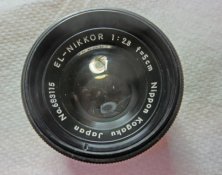
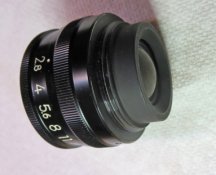
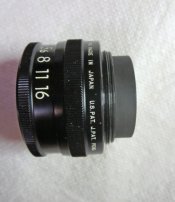
I recently acquired a very vintage El-Nikkor, 5cm F2.8, enlarging lens with no click stops. Otherwise the diaphragm works and optically works fine. This got me to thinking about something I read about that some professional darkroom workers, especially those who worked for newspapers, did their enlarging by having a fixed time and did their exposure estimation by sight by adjusting the diaphragm. Obviously it takes some practice. I wonder in these circumstances, with a continuously variable diaphragm in a lens, that it is more desirable than one with click stops. Logically it seems so. Does anyone do this method?
 
I don't, but knew Air Force civilians who had decades of experience who could, not often that they needed to expose a test strip. Although not sure how long it took to develop a practice eye, these guys had worked 40 hours a week for decades.
 
The continuous diaphragm adjustment gives fractional stops of exposure control -- you can do the same by not using f-stop timing for your test strips (if you expose 3, 6, 9, 12, 15, 18 seconds, you're going up by 1, appr. 1/2, appr. 1/3, just over 1/4 and just under 1/4 stop, vs. 3, 4, 6, 8, 11, 15 giving nice appr. 1/2 stop increments). Most darkroom workers who learned when I did were already incrementing test strips in fixed time, rather than f-stop intervals (I first heard of f-stop timing in the oughties, and wondered why I'd never run across it before, though it was probably around in the 1970s when I was learning this stuff the first time). Fixed intervals is easier (set darkroom timer, run timer for each interval as you move the mask), but f-stop in half stop increments is more likely to save you a test, maybe two.

My own preference would be for (at least optional) click stops on the diaphragm -- that way I don't need to crane my neck and/or bump my head (potentially requiring refocus) to get close enough to read the scale in safelight conditions. Almost all click-stop diaphragms can still be intentionally set between clicks, if needed, but it's much easier to stop down from focusing/cropping to exposure setting if you can just "f/4, four clicks, f/16", light off, set the paper, start the timer.

 
You can just line up the number with the indicator dot. The later generation Schneider lenses had a 'click defeat' lever which is useful when using a below-the lens meter.

The issue i'd be concerned with is that high likelyhood someone took the lens apart and lost the ball bearing or spring. Who knows what else happened or what else is not re-assembled correctly. Can you send it back?

Screen Shot 2020-07-03 at 10.44.50 AM.png
 
Last edited:
This was from an estate auction...got it for just $6! I have a better El-Nikkor so this one will be a backup. I bought it out of curiosity because of it's vintage See pics.ELnikkor1.jpg ELnikkor2.jpg ELnikkor3jpg.jpg
 
Interesting point about not having click stops. As I recall matters doesn't the Ilford EM10 enlarging meter, once calibrated, rely on you being able to adjust the aperture seamlessly for total accuracy? If this is the case then such a lens as the OP possesses does have a valuable attribute

pentaxuser
 
Pentaxuser: Your right about the Ilford EM10...I actually have one but have never used it. Now I have an excuse to use it!
 
Figures you ask a question about technique and most of the responses gravitate to gear. Anyway I have been printing for over 50 years and I learned long ago, for non split grade printing, to work from a fixed time and just adjust the aperture for best overall exposure. You can learn the technique pretty quickly and it sure saves you a lot of time and wasted test strips. Generally you can also figure out what burning and dodging you need to do while looking at the negative before hand. Have fun learning. It also makes the printing experience more "organic" and less mechanical in nature. Become one with the negative grasshopper lol.
 
All of the exposure meters I've use are timer preferred in terms of standard time then adjust the aperture for shadow details. Had not thought about, but off the top of head does not seem that method will work for those who VC spilt print.
 
You can just line up the number with the indicator dot. The later generation Schneider lenses had a 'click defeat' lever which is useful when using a below-the lens meter ...
As do my Minolta CE Rokkors. Both the 50 mm f2.8 and the 80 mm f5.6 have a ring that pulled down releases the f stop clicks.


...
 
The issue i'd be concerned with is that high likelyhood someone took the lens apart and lost the ball bearing or spring.
You can get ball bearings of various sizes by breaking apart computer fans of various models: case fan, cpu fan, bios fan, etc. Be sure to check if sleeve or ball bearing to avoid disappointments. This worked for me.
 
Photrio.com contains affiliate links to products. We may receive a commission for purchases made through these links.
To read our full affiliate disclosure statement please click Here.

PHOTRIO PARTNERS EQUALLY FUNDING OUR COMMUNITY:


Ilford ADOX Freestyle Photographic Stearman Press Weldon Color Lab Blue Moon Camera & Machine
Top Bottom