
• Welcome to Photrio!
    Registration is fast and free. Join today to unlock search, see fewer ads, and access all forum features.
    Click here to sign up

B&W Film Processing Issue

Recent Classifieds

Forum statistics

Threads
202,094
Messages
2,835,044
Members
101,112
Latest member
kinwahlok
Recent bookmarks
1

Kona

Member
Allowing Ads
Joined
Oct 22, 2011
Messages
2
Format
35mm RF
Hi,

I have a problem with my recently home-processed B&W film. I've been DIY processing for a year now and haven't had this problem yet.

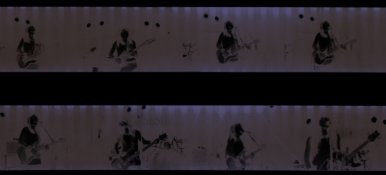
I have attached a jpg of what the negatives look like and a jpg of a frame inverted into a positive.

I took a roll of concert photos with Delta 400 (pushed to 800) in my Leica M6. I then processed using Ilford DD-X for 10.5 minutes at 68ºF 20ºC agitating four inversions every minute (Ilford's instructions). I used 20ºC tap water as a stop bath of 5-6 fills and dumps (Patterson tank). I then used a freshly diluted AGFA fixer for fixing for 4 minutes.

After processing, I first noticed that the negatives do not have a distinct frame line as if each photo bleeds into the next. Also there is streaking around the sprocket holes. Plus their seems to be fogging inf the middle of the picture.

Can anyone tell me what possibly happened and/or give me some suggestions on how to prevent it in the future.

Thanks! :smile:
 

Attachments

  • Shonen_NEG.jpg
    Shonen_NEG.jpg
    112.8 KB · Views: 255
  • Shonen_POS.jpg
    Shonen_POS.jpg
    425.3 KB · Views: 286

Bill Burk

Subscriber
Allowing Ads
Joined
Feb 9, 2010
Messages
9,479
Format
4x5 Format
After processing, I first noticed that the negatives do not have a distinct frame line as if each photo bleeds into the next.

I'll let others tackle the streaks... But the question about framelines is easy.

Concert pictures just do that, because the background is dark.
 

Roger Cole

Member
Allowing Ads
Joined
Jan 20, 2011
Messages
6,069
Location
Atlanta GA
Format
Multi Format
Deleted what I first posted after looking at your film scan and not just the positive.

Yeah, try re-fixing and see what that does.
 

Photo Engineer

Subscriber
Allowing Ads
Joined
Apr 19, 2005
Messages
29,018
Location
Rochester, NY
Format
Multi Format
Looks like it might be bromide drag around those sprocket holes. This can be too much or too little agitation. If it is bromide drag in the developer, then you cannot fix the problem.

PE
 

Roger Cole

Member
Allowing Ads
Joined
Jan 20, 2011
Messages
6,069
Location
Atlanta GA
Format
Multi Format
The comment I deleted was "surge marks" and I advised agitation was probably too regular. IF that's the issue, rotate the tank about 1/3 turn as you invert, don't invert too rapidly, and if you're doing 4/minute I'd do 2/30 seconds instead of 4 at 60 seconds.

But I had only looked at the positive scan. When I look at the negative scans they do indeed look very much like they might not have been fixed completely in those clear areas.

I don't know this Agfa fixer. If it's a conventional fixer 4 minutes is probably not enough. If it's a rapid fix that should be fine.
 

Rick A

Subscriber
Allowing Ads
Joined
Mar 31, 2009
Messages
10,038
Location
Laurel Highlands
Format
8x10 Format
One thing you might consider, treat your fixer just like you would the developer for agitation, maybe even longer agitation time. I agree with PE about it looking like bromide drag.
 
OP
OP

Kona

Member
Allowing Ads
Joined
Oct 22, 2011
Messages
2
Format
35mm RF
Thanks!

Thanks Bill, I haven't shot a concert before and it didn't occur to me that most of the frame is as dark as the film base.

I just tried re-fixing one 6 frame strip for 10 minutes with agitation as Nicolas suggested and it worked! It made the emulsion less opaque.

Follow up question: Do Delta and T-Grain emulsion films have to fix longer than Tri-X?

Thanks again for all the quick responses. It saved my only roll of pictures I shot that night of Shonen Knife.
 

mopar_guy

Member
Allowing Ads
Joined
Sep 12, 2009
Messages
1,176
Location
Washington,
Format
Multi Format
To answer your question, yes, you should fix T-grain films longer than Tri-x. Also fixer capacity is less with a film like T-Max.
 

ulysses

Member
Allowing Ads
Joined
Mar 13, 2007
Messages
162
Location
Jacksonville
Format
35mm
Take a piece of film leader and fix in room light. Time how long it takes to clear. Then fix the film for twice that long.

This is what I have done for many years. Recently I developed 3 rolls of Freestyle's Arista Premium 100 (widely believed to be Plus-X). The leader clips cleared in 2 min, but the film in the tank did not clear completely in 6 (I knew I was getting toward the end of this liter of fixer and extended the fix time from my usual 4-5 min.) This was Ilford Hypam, which I've just recently started using. I had been looking for a good rapid fixer to replace Kodafix or Kodak Rapid Fixer, both of which sulfate too quickly, hence the change to Hypam, which otherwise has been satisfactory. The lesson for me is to start keeping track of the rolls I process in a batch of fixer, and toss it before "clear the leader" test would indicate. Live and learn. For the record, I just mixed up a fresh liter of Hypam and re-fixed the offending rolls, which now look fine.

Ulysses
 

cmacd123

Subscriber
Allowing Ads
Joined
May 24, 2007
Messages
4,331
Location
Stittsville, Ontario
Format
35mm
The leader clips cleared in 2 min, but the film in the tank did not clear completely in 6 (I knew I was getting toward the end of this liter of fixer and extended the fix time from my usual 4-5 min.)
Ulysses

When ever a pour fixer back in the bottle, I grab a 1 oz measures worth and put in two drops of "hypo-check" if I see any cloudiness, I repeat the fixing with fresh fixer and also replece the bottle of working solution. (actually I mix a mew batch and use it to re-fix the film that is still in the tank).

One of the reasons I tend not to use the "t" series films is that they seem to take twice as long to fix, - when I do use them I often will start with fresh fixer.
 

ulysses

Member
Allowing Ads
Joined
Mar 13, 2007
Messages
162
Location
Jacksonville
Format
35mm
One of the reasons I tend not to use the "t" series films is that they seem to take twice as long to fix, - when I do use them I often will start with fresh fixer.

Agreed, but oddly enough, I hadn't processed and T-grain films with this fixer. I mostly shoot HP5+ and Arista Premium 100 (Plus-X) these days. It would appear that the fixer reached something like exhaustion during the processing of the three rolls in question. I doubt anything would have detected that. According to Ilford the capacity of Hypam is 24 rolls (120 or 135-36) per liter. It's likely that I was quite near that. In the future, I'll keep better track. I may also start using a stop bath, which I don't normally do with film.

Ulysses
 

nworth

Member
Allowing Ads
Joined
Aug 27, 2005
Messages
2,228
Location
Los Alamos,
Format
Multi Format
Looks like it might be bromide drag around those sprocket holes. This can be too much or too little agitation. If it is bromide drag in the developer, then you cannot fix the problem.

PE
Probably right. But when I've seen streaks from the sprocket holes before (I've produced the a few times), they have been dark. These are light.
 

Photo Engineer

Subscriber
Allowing Ads
Joined
Apr 19, 2005
Messages
29,018
Location
Rochester, NY
Format
Multi Format
Bromie inhibits development. Thus when it "drags" across the film it causes light streaks in the negative and dark streaks in the print. This is what I see here and that is why I suggested bromde drag.

PE
 

nworth

Member
Allowing Ads
Joined
Aug 27, 2005
Messages
2,228
Location
Los Alamos,
Format
Multi Format
Makes sense. Dark streaks could be caused by locally increased agitation.
 
Photrio.com contains affiliate links to products. We may receive a commission for purchases made through these links.
To read our full affiliate disclosure statement please click Here.

PHOTRIO PARTNERS EQUALLY FUNDING OUR COMMUNITY:


Ilford ADOX Freestyle Photographic Stearman Press Weldon Color Lab Blue Moon Camera & Machine
Top Bottom