• Welcome to Photrio!
    Registration is fast and free. Join today to unlock search, see fewer ads, and access all forum features.
    Click here to sign up

B&W contact print from Color negative film?

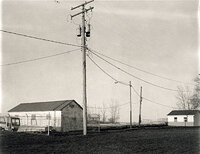
Fusion Energy

A
Fusion Energy

  • 2
  • 0
  • 52
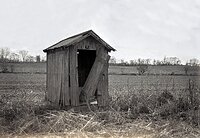
The Outhouse

A
The Outhouse

  • 2
  • 3
  • 61

Recent Classifieds

Forum statistics

Threads
203,473
Messages
2,855,318
Members
101,858
Latest member
FreeRanger
Recent bookmarks
0

Freediver

Member
Allowing Ads
Joined
Jan 22, 2020
Messages
13
Location
Woodstock ga
Format
Medium Format
Wondering if this is possible as I found a cheap supply of color film for a specific odd large format, but I have no real interest in RA4 contact prints. Can you do this? Or would the base of the film cause significant problems with contrast and tones? Thanks all
 
Printing b&w from color negatives is often slow because of the orange base, but with contact printing this is of course not a problem per se. Contrast of color negatives is also low, but you could of course choose to develop them as b&w to begin with and then you can aim for more normal b&w contrast.
So in short, it'll work!

But...might be a waste of color sheet film especially if it's still good. Why not sell this off to a large format photographer and use the money to buy some b&w film in your preferred format? Anyway, I'm sure you've thought about this already.
 
If you have an enlarger and either a color head or filters, use the magenta filter to increase the contrast of the contact print.
 
Just find someone selling their stock of Panalure paper. This is the later RC version:


Numerous sellers on eBay offer it, as well as the earlier fiber-base type. Even amazon lists some, albeit at an exorbitant price:

Sal can I take it that all of the above stuff carries the usual adjective with it in the same way as any other unopened 30 years-old box of paper does? The word is New" :D :D

pentaxuser
 
To make it really work you need a panchromatic paper (as for instance Panalure, or a current paper). But then you even have the chance to use colour contrast filtering as with a b&w camera-film.
 
I found conventional multigrade paper produces a very acceptable print for my negatives. Even though Panalure was in production in the 1980s, it was difficult to obtain, so I rarely used it back then. (How much easier film photography is now due to the internet!)
I agree with the others that presently, there is no good option if you need perfect rendering of the cyan/red.
 
Well, there is that panchromatic paper from Ilford. Though only offered in rolls.
 
Occasionally, no matter how many times we told them, students would use a color print film accidentally and of course develop it in out D-76 (using the ASA and brand of film to figure out development times, I guess). They could make B&W prints, but not quite up to their B&W standards -- but they usually did not put in the effort, and re-photographed with the proper film and a lesson well learned. Experimenting with B&W development as koraks suggested, might yield interesting and usuable results.

Processed as color negatives, one could start to predict the effects on the colors in the scene as they translate onto color neg film, and use that to create one's images on B&W paper. Walls of graffiti might take on a stronger graphic feel, for example.
 
Photrio.com contains affiliate links to products. We may receive a commission for purchases made through these links.
To read our full affiliate disclosure statement please click Here.

PHOTRIO PARTNERS EQUALLY FUNDING OUR COMMUNITY:



Ilford ADOX Freestyle Photographic Stearman Press Weldon Color Lab Blue Moon Camera & Machine
Top Bottom