
• Welcome to Photrio!
    Registration is fast and free. Join today to unlock search, see fewer ads, and access all forum features.
    Click here to sign up

Ansco Plentachrome 120

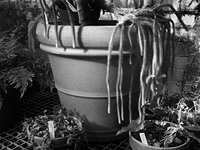
Ferns

H
Ferns

  • 0
  • 0
  • 17
between takes

H
between takes

  • Tel
  • Mar 21, 2026
  • 2
  • 0
  • 35

Recent Classifieds

Forum statistics

Threads
202,868
Messages
2,846,774
Members
101,578
Latest member
Reaton
Recent bookmarks
1

TheGreatGasMaskMan

Member
Allowing Ads
Joined
Jul 2, 2017
Messages
858
Location
Michigan, United States
Format
Multi Format
I still need to decide what I want to do with it, but I recently got my hands on a 1956 expired Ansco Plentachrome 120 film. the problem is, it's so old, there's no ASA listed on the box, nor is there any development time listed on the massive dev. chart. my question is, does anyone know what the original ASA of the film is, and if there's another source for finding development times? My assumption is, this would be about an ASA 100 film, so I'd rate it at 10-12. and if I can't find any conclusive development times, it's going to get an hc110 stand development.
 
The only listing my Photographic Encyclopedia 1962 list in 120 is Ansco Chrome 50. How are you going to develop it, as a black and white.
E
 
I still need to decide what I want to do with it, but I recently got my hands on a 1956 expired Ansco Plentachrome 120 film. the problem is, it's so old, there's no ASA listed on the box, nor is there any development time listed on the massive dev. chart. my question is, does anyone know what the original ASA of the film is, and if there's another source for finding development times? My assumption is, this would be about an ASA 100 film, so I'd rate it at 10-12. and if I can't find any conclusive development times, it's going to get an hc110 stand development.

It's Plenachrome, not Plentachrome, and it's probably about ISO 64. B&W film.
 
Plenachrome is an orthochromatic film, with an iso of 50
 
My mistake, I assumed that a chrome was a reference to a color transparency film, double checked my reference, not listed by 62. So ASA 1956, rate at ISO 10.
 
The reason to down-rate the film speed is to get the low values of the negative separated from the (fogged) film base. Since you don't know the fog level, expose even more generously, bracket your exposures, and develop normally. This means long exposures when printing proofs or enlargements, not really a problem; scanning those dense negs, well I have no idea.
 
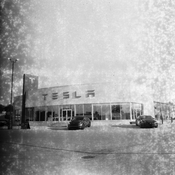
I had a potential idea for this roll- Load it in my modified Kodak Monitor and photograph some brand new Teslas and Jaguars, maybe also finally use that 1946 expired Plus x I've had for a few years now too
 
I'm not sure when this Plenachrome expired but I probably rated it around 6 or less. I Semi-stand developed it in Rodinal for 1 hour. Clearly it didn’t age well.

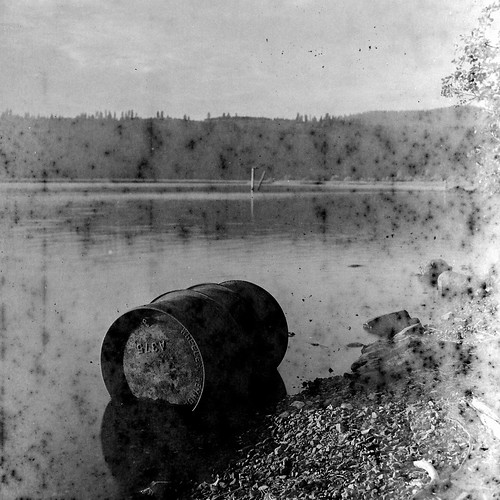
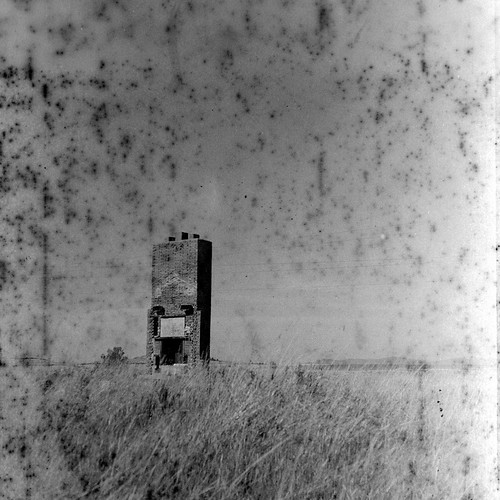
These were shot with a Mamiya C-3.
Drum in a Lake by Bryan Chernick, on Flickr

Chimney on the Palouse by Bryan Chernick, on Flickr

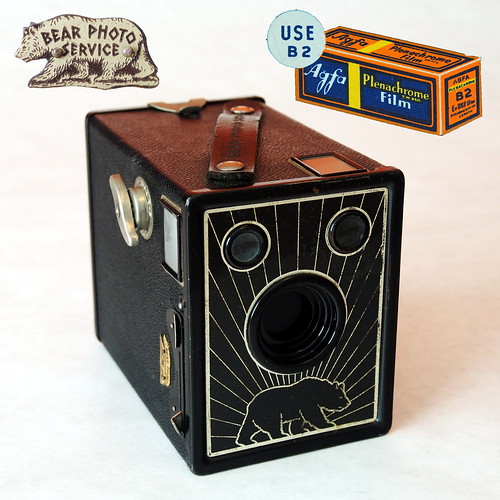
This Bear Photo Special is a re-branded Ansco/Agfa Cadet B-2. It was made in the 1940’s. It has a Plenachrome label inside showing what kind of film to use, B-2 is the same as 120.
Bear Photo Special by Bryan Chernick, on Flickr
 
little update- the Plenachrome's been shot and developed (Iso 6 and given an hc110 stand development) and I've got usable images, but it's probably going to be a couple weeks before I get them scanned and shared
 
Plenachrome was Agfa's corresponding film to Kodak's Verichrome, so that ISO 6 and stand was a great choice!
 
OK, freshly scanned from the camera store- here's what I got back:
mcapc001-jpg.376921
mcapc002.jpg
mcapc004.jpg
mcapc005.jpg
mcapc006.jpg
mcapc007.jpg
mcapc008.jpg
mcapc009.jpg
mcapc010.jpg
mcapc011.jpg
mcapc012.jpg

Missing one because it's a family photo, and I don't want to share personal stuff like that online.
also, I had to do a double take when looking at these- turns out, the dust like specs are a legitimate part of the negative...
 

Attachments

  • mcapc001.jpg
    mcapc001.jpg
    1.5 MB · Views: 209
Fascinating.
Those aren't likely to be dust specs. Most likely they are the result of the film's emulsion being pressed into contact with the backing paper for 70 years!
Interactions between film emulsion and backing paper with 120 film is one of the challenges for all films where backing paper is involved.
 
The photo of the gargoyle/statue is outstanding....the 'texture' really makes the shot. 👍
 
Boy, the people who produced that film would be spooked by those images. Right out of an old episode of The Twilight Zone.
Nice cars! Pretty amazing results. I bet 70 year old digital cameras will be less likely to provide images.
Very nice!
 
Photrio.com contains affiliate links to products. We may receive a commission for purchases made through these links.
To read our full affiliate disclosure statement please click Here.

PHOTRIO PARTNERS EQUALLY FUNDING OUR COMMUNITY:


Ilford ADOX Freestyle Photographic Stearman Press Weldon Color Lab Blue Moon Camera & Machine
Top Bottom