
Reflected meters read the subject, and place whatever they are reading at 1/2 stop (give or take a bit) below middle grey. Incident meters read the light source and place middle grey at middle grey.
You do not make the one or two stop alteration with an incident meter, because there is no need to do so. Only wicked reflected meters need to be monkeyed with so much to get the "proper" exposure. With incident meters, when you point your dome at the main light that is illuminating the subject, any subject illuminated by that light source that has a middle tone in reality is rendered as a middle tone in a normal print or transparency; everything else falls where it falls in relation to that middle tone.
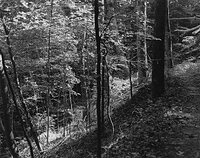
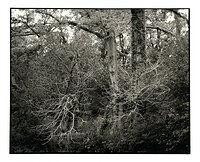
In contrasty light, when an incident meter is used to place middle grey at middle grey (which, again, is what they do), some dark parts of the composition may fall outside of the ability of the film to capture detail and/or texture there. It is then that you overexpose (and usually underdevelop) your film. In flat light, you can do the opposite, or just overdevelop without overexposing.
In your case, since you are using a reflected meter, I would bring a grey card in your bag. To use it, place it in the same light that your subject is in, and in the same plane in relation to the light. Move your camera in to fill the viewfinder with the card, which you should keep shadowless. Set your camera expose for the reading from the card, and then open up 1/2 f stop, and you have the same results as an incident meter. Think about what I said in my first paragraph about what each type of meter does to understand why this is. You'll see that this is because by metering something that actually is middle grey with a reflected meter, you are placing middle grey at middle grey. (There is some technical reason for adding the extra 1/2 stop, but I cannot explain it very well, so I will allow someone else to do it.) As you can also see, this is what an incident meter does. So, an incident meter would keep you from having to use the grey card.
You do not make the one or two stop alteration with an incident meter, because there is no need to do so. Only wicked reflected meters need to be monkeyed with so much to get the "proper" exposure. With incident meters, when you point your dome at the main light that is illuminating the subject, any subject illuminated by that light source that has a middle tone in reality is rendered as a middle tone in a normal print or transparency; everything else falls where it falls in relation to that middle tone.
In contrasty light, when an incident meter is used to place middle grey at middle grey (which, again, is what they do), some dark parts of the composition may fall outside of the ability of the film to capture detail and/or texture there. It is then that you overexpose (and usually underdevelop) your film. In flat light, you can do the opposite, or just overdevelop without overexposing.
In your case, since you are using a reflected meter, I would bring a grey card in your bag. To use it, place it in the same light that your subject is in, and in the same plane in relation to the light. Move your camera in to fill the viewfinder with the card, which you should keep shadowless. Set your camera expose for the reading from the card, and then open up 1/2 f stop, and you have the same results as an incident meter. Think about what I said in my first paragraph about what each type of meter does to understand why this is. You'll see that this is because by metering something that actually is middle grey with a reflected meter, you are placing middle grey at middle grey. (There is some technical reason for adding the extra 1/2 stop, but I cannot explain it very well, so I will allow someone else to do it.) As you can also see, this is what an incident meter does. So, an incident meter would keep you from having to use the grey card.
