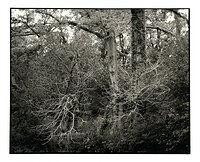
You could produce a dryplate ambrotype using collodion, with coffee or tannin as a preservative, and developing it in pyro. Works fine, but really slow.
I was up to visit Rob Gibson's studio in Gettysburg over the weekend, and was looking at how neat the ambrotypes are. I've got some 5x7 dry plate holders I'd be interested in learning with, and I just don't want to go through the hassle of getting another entirely new camera, with all the attendant wet plate gear.
For whatever it's worth, the ambrotype effect (scattering from the silver image showing as positive against an absorptive black background) is perfectly operant with gelatin emulsions; I know of no reason you couldn't make ambrotypes with dry gelatin plates (some purists may claim the gelatin emulsion won't look just like the collodon, and they might be right, but developing with collodion chemistry would be a good start).
From what I hear, though, don't trust the Rockland Colloid "tintype" developer; it's bad about as often as it's good, and their (gelatin) tintype emulsion (which would also work for ambrotype) is too expensive to waste that frequently...
I'd imagine that it'd work. Some of my regular negatives (Tri-X, etc.) that are underexposed show the "ambrotype" posibtive effect when placed on a black background. You could definetely do this well if you tried to refine it ...
Photrio.com contains affiliate links to products. We may receive a commission for purchases made through these links. To read our full affiliate disclosure statement please click Here.