• Welcome to Photrio!
    Registration is fast and free. Join today to unlock search, see fewer ads, and access all forum features.
    Click here to sign up

Am I in trouble?

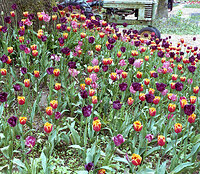
Tractor & Tulips

A
Tractor & Tulips

  • 0
  • 0
  • 0
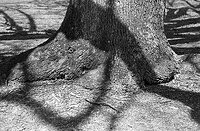
Tree with Big Shadows

Tree with Big Shadows

  • 2
  • 0
  • 67

Forum statistics

Threads
203,455
Messages
2,855,016
Members
101,851
Latest member
Si_Voltage
Recent bookmarks
0

Ektagraphic

Member
Allowing Ads
Joined
Feb 3, 2009
Messages
2,928
Location
Massachusetts
Format
Medium Format
Hi guys- I was out shooting yesterday and I didn't realize that my camera was set for spot metering. (Nikon N80) I just went about shooting photos of some flowers a lighthouse and some landscapes where the meter was probably metering the sky. Will my photos be okay? Has this ever happened to you?--Patrick
 
I always have my camera (at least the ones with internal metering) on spot metering, but you have to be aware of it to use it properly.

It will probably be hit or miss. If the subject is a midtone in the middle of the frame, then you're probably okay. If not, then maybe not. If you were shooting neg, you can do more in the darkroom than if you were shooting slides.
 
If you go by the spot meters reading of sky you will get a nice blue sky... unless it was cloudy.
 
As for the flowers I shot, if the meter was pointed at the flower what would come of it?
 
In trouble? No.

Finish the roll and have it processed. That is the only way to tell.

Steve
 
You might want to try ColorPos on the film. It's from the guy who makes ColorNeg. I gave my F601 to a budding little photog (9 yrs old) with some old FujiChrome 100 in it. When I got it back, I went "Oh Well" until I scanned it. Most of the shots she made without the flash came to life with ColorPos+raw scans. I was impressed as I mostly shoot negs.
 
As for the flowers I shot, if the meter was pointed at the flower what would come of it?

Then it would be properly exposed :tongue:

If the meter was picking up the sky, then you may have the detail in the slide still, just underexposed.

I've accidentally underexposed a few frames of Kodachrome about 2.5 stops, and while it projected badly, it scanned with all the detail.
 
Yes, your exposures are in trouble, unless a near-mid tone was in the very center of every composition.

What the hell is "shooting slide"?
 
What the hell is "shooting slide"?

Placing slides standing on the edge along a fence. Please verify that nothing living or important is in the background.

Back off about 50 feet [~15 meters]

Take a pistol, aim it at the first slide, pull the trigger slowly. When a hole appears in the slide, repeat the process with the next slide until all the slides have been shot or you are out of ammunition.

Steve
 
Placing slides standing on the edge along a fence.

Back off about 50 feet [~15 meters]

Take a pistol, aim it at the first slide, pull the trigger slowly. When a hole appears in the slide, repeat the process with the next slide until all the slides have been shot or you are out of ammunition.

Steve

Steve, even that is "shooting slides", with an s...unless of course you just shoot one of them!
 
Placing slides standing on the edge along a fence. Please verify that nothing living or important is in the background.

Back off about 50 feet [~15 meters]

Take a pistol, aim it at the first slide, pull the trigger slowly. When a hole appears in the slide, repeat the process with the next slide until all the slides have been shot or you are out of ammunition.

Steve

Do bullets come in 4x5?
 
Do bullets come in 4x5?

No, and neither do slides most of the time. If it is not rigged up for projection, it is not a "slide", but a "transparency".
 
Many years ago I pointed a Canon T90 spot meter at bright noon-lit snow under a blue sky and wondered why it looked so pasty on Kodachrome..........

Many think that you select the spot meter, point it anywhere at the scene and everything will be fine. This is certainly not so. Luck happens though, and you might just get a stroke of it.

Like any other meter, a spot meter will base it's observation on a baseline 18% mid-tone grey. It does not know (or care) if the scene is much brighter or darker than that. If you point it at a big blue sky, a white snowfield, or a black cat, what do you imagine might happen?? Well, none of those are actually 18% grey, are they? I chiefly add +1.3 to a snow scene (+0.3 if overcast).

Correct use of a spot meter is to seek out a tone in the scene being viewed that approximates the ubiquitous 18% grey midtone and meter from that, lock it in then shoot. A spot meter is useful for very strong backlight but will most likely need your over-ruling input. There are a few cameras about that allow multi-spot/averaging (i.e. Olympus OM4). The skill of the photographer will ultimately determine the best result with spot metering.

Get in the habit of reviewing your camera's settings before starting the shoot, but there is no harm in observing the results of your error as a valuable learning experience, remembering also that reversal film will show exposure errors from whichever meter is in use more acutely than neg. stock.

 
The shots ended up all coming out perfectly exposed.
 
Photrio.com contains affiliate links to products. We may receive a commission for purchases made through these links.
To read our full affiliate disclosure statement please click Here.

PHOTRIO PARTNERS EQUALLY FUNDING OUR COMMUNITY:


Ilford ADOX Freestyle Photographic Stearman Press Weldon Color Lab Blue Moon Camera & Machine
Top Bottom