
• Welcome to Photrio!
    Registration is fast and free. Join today to unlock search, see fewer ads, and access all forum features.
    Click here to sign up

Agfa Paper fixer question

Recent Classifieds

Forum statistics

Threads
203,179
Messages
2,850,979
Members
101,715
Latest member
Silio D'Aprile
Recent bookmarks
0

JMC1969

Member
Allowing Ads
Joined
Apr 7, 2008
Messages
642
Location
Jacksonville
Format
Multi Format
Thank you for looking.

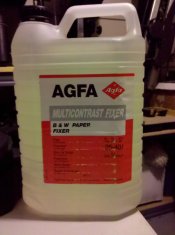
I have acquired a 5l bottle of unopened Agfa Multicontrast B&W paper fixer. I would like to use it for film as well as paper, so I thought I would split it into 2 separate containers. Actually, 4 containers ( 1 new each, 1 used each until spent). I have a couple of questions regarding mixture and of the "quick and easy clip test for film". I have read about the test here in a few threads, but have no real experience w/ actually doing it.

1st the clip test - I left about 5-6 frames unexposed on the end of a roll of 35mm Delta 100 to use as the test area. I intend on loading my reel, clipping the end and capping the tank in darkness of course. The questions are, does the clip test piece need to be exposed to light? Does the test need to be done under the safety of a safe light or can it be done w/ lights on?


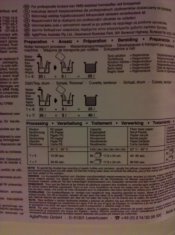
Mixture question - the bottle states two different dilutions for tray or drum, which are 1+4 or 1+7. I'm not sure why the two different solutions are giving and it doesn't explain. Which is best for RC paper? Fiber Paper? and what does that mean for a dilution when using it with film?

Thanks again and I am providing a couple of pics in case they are needed to be familiar w/ the particular fixer.
 

Attachments

  • IMG_20110421_171040.jpg
    IMG_20110421_171040.jpg
    258 KB · Views: 137
  • IMG_20110421_171101.jpg
    IMG_20110421_171101.jpg
    324.5 KB · Views: 151
Clip Tests are best done in the daylight - you can see more easily what the heck is going on.

A friend gave me a better clip test

Take a piece of film and put a drop of the test fixer on it to make a small circle of clearing film - leave to go almost fully clear

Then immerse the rest of the film in the fixer - and because the small circle clears first you can now have a clear piece of film to compare the rest of the film against


1+4 or 1+7 are both fine for RC - 1+4 is quicker and 1+7 more economical - the choice is yours

For FB Paper it is better to use the stronger fixing solution - as it allows less time for contaminants to penetrate the paper base.

Film is more silver rich than paper so clearing times are longer - but because the film base is chemically inert like just RC Paper - its the same speed v economy question

Martin
 
Concerning the clip test, it can be done in daylight, on a scrap piece of film. It is best to do it with the film you intend to develop. The following is a copy of a post I made two days ago:

We need a "sticky" here on APUG which sets out how to do a clearing test.

Here is how to test for the correct fixing time.

Take a piece of undeveloped film (a one inch piece of the leader will work fine).

Put a small drop of your fixer on the emulsion side and lay it down flat. Watch it until the area under the drop appears clear or close to clear.

Put that piece of film leader into a container with a little bit of your fixer (enough to submerge it), begin timing and agitate it regularly.

The film will start to clear. When it has cleared enough that you cannot tell where the drop had been, note how much time has elapsed - that is the clearing time. You need to fix the film for between two and three times the clearing time. For example, if the clearing time is one minute, than your total fixing time should be at least two minutes, and preferably three minutes.

If possible, it is best to split that total time into two, and do the first half in one batch of fix, and the second half in another batch of fresh(er) fix. If you do do this, a total fixing time of twice the clearing time should suffice.

If you reuse your fix (and you probably should) you will find that the clearing times get longer with reuse. I discard used fix after the clearing time has increased to 1 1/2 the original time.

You can do your clearing time test at the same time as you fix the roll of film. That way you know that when the test piece of film is cleared, your roll of film is between 1/2 and 1/3 fixed.
 
Thanks for the reply Martin, I had read about the starter drop method and had planned on doing so, I just was unaware if the test could be done in daylight. Thank you for answering that. It may be obvious to some, but my head is a little thicker over that part of the brain and I needed clarification. So maybe I can step down to 3 containers if I mix the 1+4 as it will work w/ both film and paper and then keep a separate container for each "used"
 
Thanks Matt, I think I read this earlier, and it is appreciated. Mostly a question on the conditions the test is done under. Answered! Thank You :smile:
 
I also ended up w/ 4 - 5l bottles of the Agfa Multicontrast B&W paper developer. Can I assume that this is referring to the fact that this developer can be used w/ a variety of different "graded" papers? Be it Fiber or RC? Or is it referring to "it should be used w/ Multicontrast RC type papers"?
 
I also ended up w/ 4 - 5l bottles of the Agfa Multicontrast B&W paper developer. Can I assume that this is referring to the fact that this developer can be used w/ a variety of different "graded" papers? Be it Fiber or RC? Or is it referring to "it should be used w/ Multicontrast RC type papers"?

For the most part, paper developer is paper developer. They're all pretty much the same. Yes, you can use it for any kind of paper you have. Me? I use Dektol for almost everything - even X-ray and duplicating films for making enlarged negatives. Works every time.
 
Thanks for the reply Martin, I had read about the starter drop method and had planned on doing so, I just was unaware if the test could be done in daylight. Thank you for answering that. It may be obvious to some, but my head is a little thicker over that part of the brain and I needed clarification. So maybe I can step down to 3 containers if I mix the 1+4 as it will work w/ both film and paper and then keep a separate container for each "used"

You need to keep the Film and Paper Fixers separate, even if they are at the same concentration

Used Film Fixer had iodine compounds in it, that are very difficult to wash out of paper, so it is strongly recommended you keep the two fixers separate.

Martin
 
You need to keep the Film and Paper Fixers separate, even if they are at the same concentration

Used Film Fixer had iodine compounds in it, that are very difficult to wash out of paper, so it is strongly recommended you keep the two fixers separate.

Martin

My plan was to have 1 container of new (un-used) 1+4, 1 container of used (to be used again) film fixer, and 1 container of used (to be used again) paper fixer.
 
I have no idea why they call it a paper fixer. It is a liquid fixer concentrate based on ammonium thiosulfate. I would use it 1+4 (film strength) for film and paper. The rule for fixing is 'strong but short' not 'weak and long'.

I'm starting to wonder that myself. Thanks for the comments/help Ralph
 
You need to keep the Film and Paper Fixers separate, even if they are at the same concentration

Used Film Fixer had iodine compounds in it, that are very difficult to wash out of paper, so it is strongly recommended you keep the two fixers separate.

Martin

Absolutely! One way to do so is getting into the habit of using film fixer one-shot.
 
Photrio.com contains affiliate links to products. We may receive a commission for purchases made through these links.
To read our full affiliate disclosure statement please click Here.

PHOTRIO PARTNERS EQUALLY FUNDING OUR COMMUNITY:


Ilford ADOX Freestyle Photographic Stearman Press Weldon Color Lab Blue Moon Camera & Machine
Top Bottom