


Marco B
Member
Hi all,
Although I have done combination tonings before, I seldom if ever got a good "split-tone" effect. A "split-tone" print is a print that after toning in two or more different toners, shows a clear gradient in color, for example from a cool blueish or purple black in the shadows, to a warm sepia tone in the highlights. Hence a "split-in-tones"... I only recently achieved such a true split tone using selenium and sepia on Ilford MGIV FB, but most combination toning attempts let to a more or less uniform color in the final print, although results can still be smashing and the tone shift of applying the second toner beautiful.
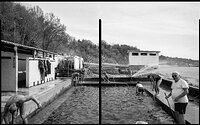
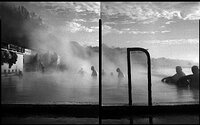
To show the difference between a true split tone, and a "normal" non-split combination toning, here are two of my recent examples posted in the galleries.
The first is on standard Ilford MGIV FB paper (non-warmtone), and shows a true split, with shadows being a cool purple black, and the highlights a warm sepia. The second example is on Ilford MGIV RC deluxe paper and shows a non-split overall brown color. Both prints underwent a selenium and sepia toning (using a two bath ferricyanide / thiourea sepia toner).


Notice the vast difference in the appearance of the prints. Both were toned to completion. The results got me thinking, and I would like to share my thoughts here on how to get a true split and hope others with more experience can share their thoughts:
1) To get a really good split tone, the first prerequisite is a toner that tones highlights and shadows at a different speed (A different percentage of the silver in the highlights and shadows is toned in X amount of time). Why is this so important? If the amount of toning is uniform across the entire image and silver density, there clearly can not be a split tone, as it will mean that all areas of the print receive the same amount of toning, and hence more or less result in the same color.
A good example of such toner is selenium, as this is known and tends to tone shadows much faster than highlights. I think gold toner does something similar, but am not sure. Most sepia toners on the contrary, seem to tone quite uniform across all densities (Yes, I am aware it appears highlights go first in the bleach, but I think this is mainly due to the simple fact there is the least silver there, and it takes longer for the shadows to be completely bleached).
2) Only one of the two toners applied needs to have the above property of differential toning speed. As the second toner will "fill up" the non-toned areas left over, it does not have to show the same differential toning property.
3) In combination with above two statements, it is best to apply the toner having the differential toning speed first for the maximum split-tone effect. If a toner with a more or less uniform toning effect is used first, the remaining left-over non-toned silver for the second differential toner will already be more or less uniformly distributed, and hence a far less good split tone, if at all, will result.
In practice this means selenium or gold first, than sepia (or the other second toner you have in mind like copper red or so). I have seen slight "split-tone" effects using them the other way around, but not as pronounced as with the recommended order. In addition, the at least partial break up of the silver particles into smaller ones in the bleach of a bleach / redevelop sepia toner, might prevent the formation of larger selenium or gold toned silver particles, large enough to give a distinct "cool" tone in the (shadow) areas they tone. But this is speculation...
4) Some papers will simply not (or hardly) split tone. Look at the above two examples, both had selenium toning first, than sepia. Yet the FB based paper showed the split tone, but the RC not.
5) RC based papers seem harder to split tone. I don't have much experience attempting RC based tonings, but so far, I have the feeling it is more difficult to achieve a split tone on them. For example, look at the above two images, both being MGIV and I guess more or less the same emulsion, but one FB and the other RC. The FB variant shows the split, the RC variant not. Maybe it has to do with plastic layer beneath the RC emulsion, making the silver more readily available for the toner to work on and preventing the differential toning effect, versus the silver and emulsion in FB paper being more "embedded" in the paper fibres, and hence less readily available for toning. Or something to do with baryta layer beneath the FB emulsions influencing the toning process.
6) Papers showing a strong response to toning (fast toning, big color shift, usually warmtone paper, although not always classified as such) tend to be less suited for split-toning.
I have not been able to achieve, or found it difficult, to achieve a split tone on some of the easily toned papers like "Ilford MGFB Warmtone". I am not saying this is a general rule, but from the few papers I have ever used up to now ("Ilford MGIV FB", "Ilford MGIV RC", "Ilford MGFB Warmtone", "Ilford MGRC Warmtone", "Kentmere Fineprint VC", "Kentmere VC Select"), the only one that gave a truely good split-tone was the fibre based "Ilford MGIV FB" paper, a paper being difficult or slow to tone, with limited color shifts.
I think I have read that "warmtone" papers generally have smaller silver grains, probably one of the reasons they are so susceptible to toning, but this may prevent the proper formation of a "cool" shadow tone in attempts to do split-toning.
Please note these are just preliminary observations. I still have limited experience with attempts on doing split-tone or combination tonings on different papers, so I definitely invite others to share their thoughts and experiences on the subject of achieving true split-tones in combination toning with two or more toners on one print. Also your recommendations on papers and procedures are heartily welcomed.
Although I have done combination tonings before, I seldom if ever got a good "split-tone" effect. A "split-tone" print is a print that after toning in two or more different toners, shows a clear gradient in color, for example from a cool blueish or purple black in the shadows, to a warm sepia tone in the highlights. Hence a "split-in-tones"... I only recently achieved such a true split tone using selenium and sepia on Ilford MGIV FB, but most combination toning attempts let to a more or less uniform color in the final print, although results can still be smashing and the tone shift of applying the second toner beautiful.
To show the difference between a true split tone, and a "normal" non-split combination toning, here are two of my recent examples posted in the galleries.
The first is on standard Ilford MGIV FB paper (non-warmtone), and shows a true split, with shadows being a cool purple black, and the highlights a warm sepia. The second example is on Ilford MGIV RC deluxe paper and shows a non-split overall brown color. Both prints underwent a selenium and sepia toning (using a two bath ferricyanide / thiourea sepia toner).
Notice the vast difference in the appearance of the prints. Both were toned to completion. The results got me thinking, and I would like to share my thoughts here on how to get a true split and hope others with more experience can share their thoughts:
1) To get a really good split tone, the first prerequisite is a toner that tones highlights and shadows at a different speed (A different percentage of the silver in the highlights and shadows is toned in X amount of time). Why is this so important? If the amount of toning is uniform across the entire image and silver density, there clearly can not be a split tone, as it will mean that all areas of the print receive the same amount of toning, and hence more or less result in the same color.
A good example of such toner is selenium, as this is known and tends to tone shadows much faster than highlights. I think gold toner does something similar, but am not sure. Most sepia toners on the contrary, seem to tone quite uniform across all densities (Yes, I am aware it appears highlights go first in the bleach, but I think this is mainly due to the simple fact there is the least silver there, and it takes longer for the shadows to be completely bleached).
2) Only one of the two toners applied needs to have the above property of differential toning speed. As the second toner will "fill up" the non-toned areas left over, it does not have to show the same differential toning property.
3) In combination with above two statements, it is best to apply the toner having the differential toning speed first for the maximum split-tone effect. If a toner with a more or less uniform toning effect is used first, the remaining left-over non-toned silver for the second differential toner will already be more or less uniformly distributed, and hence a far less good split tone, if at all, will result.
In practice this means selenium or gold first, than sepia (or the other second toner you have in mind like copper red or so). I have seen slight "split-tone" effects using them the other way around, but not as pronounced as with the recommended order. In addition, the at least partial break up of the silver particles into smaller ones in the bleach of a bleach / redevelop sepia toner, might prevent the formation of larger selenium or gold toned silver particles, large enough to give a distinct "cool" tone in the (shadow) areas they tone. But this is speculation...
4) Some papers will simply not (or hardly) split tone. Look at the above two examples, both had selenium toning first, than sepia. Yet the FB based paper showed the split tone, but the RC not.
5) RC based papers seem harder to split tone. I don't have much experience attempting RC based tonings, but so far, I have the feeling it is more difficult to achieve a split tone on them. For example, look at the above two images, both being MGIV and I guess more or less the same emulsion, but one FB and the other RC. The FB variant shows the split, the RC variant not. Maybe it has to do with plastic layer beneath the RC emulsion, making the silver more readily available for the toner to work on and preventing the differential toning effect, versus the silver and emulsion in FB paper being more "embedded" in the paper fibres, and hence less readily available for toning. Or something to do with baryta layer beneath the FB emulsions influencing the toning process.
6) Papers showing a strong response to toning (fast toning, big color shift, usually warmtone paper, although not always classified as such) tend to be less suited for split-toning.
I have not been able to achieve, or found it difficult, to achieve a split tone on some of the easily toned papers like "Ilford MGFB Warmtone". I am not saying this is a general rule, but from the few papers I have ever used up to now ("Ilford MGIV FB", "Ilford MGIV RC", "Ilford MGFB Warmtone", "Ilford MGRC Warmtone", "Kentmere Fineprint VC", "Kentmere VC Select"), the only one that gave a truely good split-tone was the fibre based "Ilford MGIV FB" paper, a paper being difficult or slow to tone, with limited color shifts.
I think I have read that "warmtone" papers generally have smaller silver grains, probably one of the reasons they are so susceptible to toning, but this may prevent the proper formation of a "cool" shadow tone in attempts to do split-toning.
Please note these are just preliminary observations. I still have limited experience with attempts on doing split-tone or combination tonings on different papers, so I definitely invite others to share their thoughts and experiences on the subject of achieving true split-tones in combination toning with two or more toners on one print. Also your recommendations on papers and procedures are heartily welcomed.
Last edited by a moderator:


