
• Welcome to Photrio!
    Registration is fast and free. Join today to unlock search, see fewer ads, and access all forum features.
    Click here to sign up

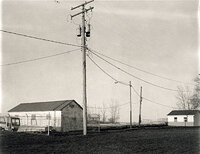
achieving a flat image

Fusion Energy

A
Fusion Energy

  • 0
  • 0
  • 19
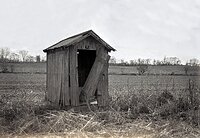
The Outhouse

A
The Outhouse

  • 1
  • 1
  • 27

Recent Classifieds

Forum statistics

Threads
203,468
Messages
2,855,258
Members
101,856
Latest member
znoody
Recent bookmarks
6

floradeborah

Member
Allowing Ads
Joined
Jun 21, 2009
Messages
21
Location
London / Mil
Format
Medium Format
Hello everyone!

I'm trying to take some portraits that should look like paintings, something that has a very flat feeling.

I tried to browse online, but when I look for how to achieve this effect I can only find how to not get a flat image instead :D

Maybe there are some filters that could do the job?

Any advice would be of great help! thank you!
 
Use flat lighting. Pull (downrate your film and reduce development time) if shooting B&W - you'll need to test this.
 
Flat as in tonality? Or in terms of depth perception?

Tonally flat is easy. First it's the lighting (lots of fill), then it's the film/dev choice (you'd want lowish contrast index and maybe even an expired film), then it's the print grade and the type of print e.g. silver or Pt/Pd or whatever- and the emulsion can be handcoated for a really strong painterly effect if you wish. So there are many points in the workflow where you can affect the tones.
 
Try a film like Portra 160NC or Astia 100F, preferably medium format or larger, and soft light, if I understand what you're after. Could you point to some examples of the look you're trying to achieve?
 
Maybe you should mention a painter you mean. Do you mean like Samuel FB Morse or Egon Scheile or what.
I think it is possible you are talking of the way painters don't represent large white highlights like you see from certain light sources in photography. If that is the case you might try using a small light source and a polarizer filter.
Dennis
 
Painters never represent DOF or lens distortion either, so you might want to use a long, high quality lens, keep your film plane straght up-and-down, and use a small aperture for infinite dof.
 
Painters never represent DOF or lens distortion either...

Bite your tongue! Look at the work of Vermeer and contemporaries, much analysed by Hockney and others. For the past 350 years or so, quite a few*** painters have emulated limited DOF. You won't really see how much of a revolution for painting that was until you look into the pre-Vermeer work.


***But not all of course...
 
In Vermeer the use of a plane of focus is quite striking, but can be hard to see unless you are looking at the originals or very good reproductions.
 
Thank you guys! You are being very helpful :smile: I'm going to try to use a long lens and see what happen.

This is the kind of image that I'd like to try to shoot:

http://harryallen.info/wp-content/uploads/2008/12/rossetti_verticordia.jpg

colors are there, but everything seems flat. I don't know how to explain exactly, but I'd like to get some kind of magical effect, that will make the image not looks like a photograph.

I'm looking for some photographs that looks like this, will write again soon with some link if I can find something :smile:
 
Well if you want that then you should consider handpainting a b&w print. Otherwise you could run encaustic wax over a colour print.

That colour palette is very vibrant. The colours remind me of 64T (tungsten-balanced colour slide film) with studio lights. Notice the reduced colour palette, by that I mean the transitions are not subtle, the primaries are very strong... and there are deep shadows setting off the colours, i.e. not much apparent fill. This is all more typical of slide than print film. The reds really remind me of 64T.

But yes, you'll get more 'compression' with a long focal length. The longest I've used, for medium format, is 360mm; that compresses features quite a lot. For LF you can of course go much longer.
 
Dear Floradeborah;
The painting you linked to, is a study in contradictions. First, from the subject's position the main light is just slightly to the right of dead center and slightly above eye level, yet there is a distinct jaw line shadow on that side which in reality would be much more subtle if any. That's just the lighting now comes the plane of focus. From looking at the painting, the sharpest focus is on the foreground with the subject being ever so slightly softer in focus and then the background flowers are again in sharper focus than the subject....a virtual optical impossibility with film. Remember when we discuss the genius of Vermeer, that he used a Camera Obscura, to help him determine DOF in the use of the perspective that he wished to convey. If you wish to convey a feeling of flatness to a portrait, the use of a telephoto or long lens and the distance to the subject and the aperture at which the exposure is made all work to visually compress the plane of focus and thus a feeling of perspective compression (flatness). Good luck and keep us posted.
Denise Libby
 
Hello everyone!

I'm trying to take some portraits that should look like paintings, something that has a very flat feeling.

I tried to browse online, but when I look for how to achieve this effect I can only find how to not get a flat image instead :D

Maybe there are some filters that could do the job?

Any advice would be of great help! thank you!

I disagree with your opinion that paintings have a flat feeling. It depends on the painting, of course! One can make a painting that is as flat or as contrasty as one likes...and as far a physical flatness, photographs win that prize every time. Nothing is much more flat than a photo, and certainly not a painting!

What qualities of what specific paintings are you trying to incorporate? Are you using color or b/w?
 
Painters never represent DOF or lens distortion either, so you might want to use a long, high quality lens, keep your film plane straght up-and-down, and use a small aperture for infinite dof.

Can you be serious?

Painters do lots of things.

Long lenses can "distort" just as much as any other lens, and certainly more easily than a normal lens. (This is why so many of us love them so danged much.) It is really distance from the subject that determines how "distorted" something looks. Whether a lens is wide, normal, or long just affects the angle of view.

Put your camera on a tripod, and take a shot with a normal lens. Make it a shot with a foreground subject about 10-15 feet away. Then put a wide lens on and take a shot. Then a long lens. For each shot, focus on the foreground subject. Crop the wide and normal shots to the same composition as the long shot, and you will see that the "distortion" of the subject in all three shots is identical.

So, when it comes to either utilizing or trying to minimize distortion, the length of the lens you use is not as important as your distance from your subject. Select your distance to control distortion, and then your FL to control your composition from your decided-upon distance.
 
thanks again guys, and sorry for my late answer, I just moved flat and don't have internet at the house yet.

I found some photographs that I think may represent what I'm looking for as for the flatness (not the overall look and concept of course :smile: )
http://paulabauab.files.wordpress.com/2010/01/sarahmoon15.jpg
Dead Link Removed

they are both from Sarah Moon.

I'm also in love with those kind of images:
http://www.flickr.com/photos/mydarlingdinosaur/4518258235/in/pool-vintage_portraiture
as someone suggested before it should be handpainted right?
 
OMG that last one on flickr is hideous, sorry :wink:

If you are interested in high-end handpainting, let me suggest you look at the work of Dead Link Removed (whom I 'discovered' in View Camera magazine).

I also fell in love with Sarah Moon's work in the past year and haven't seen anything else quite like it- very individual and interesting. It's quite hard to find her work online; I have a little Thames & Hudson / Photofile book on her and that is a great intro that reveals a lot of different exploratory techniques.
 
Thank you guys! You are being very helpful :smile: I'm going to try to use a long lens and see what happen.

This is the kind of image that I'd like to try to shoot:

http://harryallen.info/wp-content/uploads/2008/12/rossetti_verticordia.jpg

colors are there, but everything seems flat. I don't know how to explain exactly, but I'd like to get some kind of magical effect, that will make the image not looks like a photograph.

I'm looking for some photographs that looks like this, will write again soon with some link if I can find something :smile:

Look at the composition: there's a single plane on which all the objects are located. If you want to do that with photography, you have two choices:

* Either put everything on the same physical plane
* Or position carefully your elements so that they make compositionally balanced areas, without depth cues (converging lines, receding horizon, etc).

Obviously, using a long lens (100mm+ in 35mm) can help.

Interestingly enough, a while ago I struggled with making pictures that did NOT look flat:
atwar.jpg

ektar120-1.jpg


Flatness can of course make very interesting results:
earlynight.jpg
 
Photrio.com contains affiliate links to products. We may receive a commission for purchases made through these links.
To read our full affiliate disclosure statement please click Here.

PHOTRIO PARTNERS EQUALLY FUNDING OUR COMMUNITY:


Ilford ADOX Freestyle Photographic Stearman Press Weldon Color Lab Blue Moon Camera & Machine
Top Bottom
