
• Welcome to Photrio!
    Registration is fast and free. Join today to unlock search, see fewer ads, and access all forum features.
    Click here to sign up

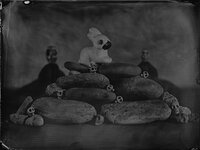
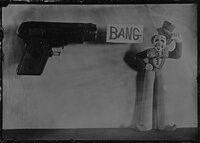
Achieve colors like wetplate collodion

Recent Classifieds

Forum statistics

Threads
202,968
Messages
2,848,232
Members
101,564
Latest member
Nessa777
Recent bookmarks
1

SadChild

Member
Allowing Ads
Joined
Jul 3, 2007
Messages
32
Format
35mm
Hello,

Is it possible to achieve effect of wetplate collodion on an ordinal photo paper? I mean cream highlights and neutral blacks? Maybe you did this with specific paper+developer or +toner.

I've tried lith printing - it is close, but dev times are so long.

Thanks in advance.
 
The effect of wet plate has to do with it's spectral sensitivity, how it "sees". You will be hard pressed to achieve the same thing in printing, although it could be done to some degree. Best to start with the negative. Look into ortho film for a start. Wet plate is the best way to achieve the look of wet plate.
 
Sorry, but JBrunner is off on his reply. The color of the highlights and blacks of a wet plate has nothing to do with the spectral sensitivity of the wet plate process.

That said, I don't have a suggestion to get the same colors in B&W printing paper.
 
Sorry, but JBrunner is off on his reply. The color of the highlights and blacks of a wet plate has nothing to do with the spectral sensitivity of the wet plate process.

That said, I don't have a suggestion to get the same colors in B&W printing paper.

Perhaps not the "colors" per se, but I will maintain that the unique look of wet plate is largely a function of blue sensitivity. I believe that look is what the OP is refering to. If it is not, then what I wrote can be disregarded. If he's looking for the wet plate "look", it is spot on.
 
The best way to fake the look of wet plate without actually shooting wet plate would be to print on a paper that already has a warm tone base (I think the closest equivalent would be Foma Chamois finish, second maybe Ilford MG V Warmtone). Then, shoot an Ortho film or at least throw a blue filter in front of your lens with a panchromatic film. Wet plate has a very narrow spectral sensitivity confined mostly to the blue end of the spectrum, and it also has a very narrow contrast range, maybe 3-4 stops. Another option would be to do platinum printing on a warm base watercolor paper.
 
The best way to fake the look of wet plate without actually shooting wet plate would be to print on a paper that already has a warm tone base (I think the closest equivalent would be Foma Chamois finish, second maybe Ilford MG V Warmtone). Then, shoot an Ortho film or at least throw a blue filter in front of your lens with a panchromatic film. Wet plate has a very narrow spectral sensitivity confined mostly to the blue end of the spectrum, and it also has a very narrow contrast range, maybe 3-4 stops. Another option would be to do platinum printing on a warm base watercolor paper.

This sounds like the photographic equivalence of the descriptions that roll off the tongues of neo-French cuisine chefs describing their latest masterpiece. And it makes me want to see with my eyes how this recipe might work!

mmMMm :D
 
Hello,

Is it possible to achieve effect of wetplate collodion on an ordinal photo paper? I mean cream highlights and neutral blacks? Maybe you did this with specific paper+developer or +toner.

I've tried lith printing - it is close, but dev times are so long.

Thanks in advance.


hi there

you might consider using paper negatives, instead of film.
or if you have access to a LF camera ...
overexpose, and then let stand in a dilute developer until bulletproof ...
contact print your film with a 1 or 0 filter ... your results will look more
like wet plate than lith printing or using chamois paper ...

but all that said, the best way to get images that look like wet plate images
is by making wet plate images .. there's nothing like the real thing ...

have fun!
john
 
Once you have your negative process figured out, you might try overprinting your positive about 2 stops (or more) on warmtone paper, and then bleach it back to the tones you like. It still won't look exactly like wet plate collodion tintypes, but it won't look "normal" either. It's tough to try to reproduce a unique process using a different approach. The process is the process.

Peter Gomena
 
How 'bout shooting ortho/lith film, printing that to normal paper and then carbon toning. A paper neg would also give some of that look.

By the way, I shot some type 55 through a UV (403) filter and got some 'olde world' looks... complexions look downright leathery to my eye, but if that's your thing....

UVgal.jpg


Now ain't that a beauty? :surprised: Many other films shot through a 403 will give a similar look, in direct light.

On the other hand if you like the look of collodion then go ahead and dive into the process! I think it's impossible to separate the effect of the process on you from the images that you achieve: you may well be able to emulate a look, but the experience of doing it 'for real' can transform how you think. And that will affect composition. The effect of the whole process on composition is far more important, I think, than the 'look' for its own sake.
 
Last edited by a moderator:
Hello,

Is it possible to achieve effect of wetplate collodion on an ordinal photo paper?

What kind of wetplate process are you talking about? Albumen prints from wetplate glass negatives a la Julia Margaret Cameron? That should be pretty easily to duplicate on modern papers. I've made some portrait negatives on Ilford Pan F+ developed in ABC pyro which are nearly bulletproof. I printed them on a grade 1 paper and they look something like a wetplate picture to my eye.

Ambrotypes? Tintypes? Not so easy to duplicate, although I would start with orthochromatic film if you can find any. Short of that Efke PL25 or PL50 (or whatever they're called now), the so-called "orthopanchromatic" films, might come close.
 
Last edited by a moderator:
Check into chromoskedasic pseudo-solarization. Playing around with thiocyanates and developers used in the process, I once got some results that fogged the paper to cream colors similar to those you could get in a tintype. You'd have to adjust things to get the fogging color effect in the highlights without the reversal, but I think it could be done at least in terms of color.

However, nothing on paper will ever come close to the look of an emulsion on metal or glass as you'd find in wetplate. The surface imparts a distinct look to ambrotypes and tintypes.
 
For the print, hypo-alum toner may be the closest. The earlier points about the look of the photo are important, though. The early photos, such as wetplate, were made with materials that had little sensitivity beyond blue. They have a very special look, especially with portraits. You can imitate (but not duplicate) it with modern materials by using a blue (No. 47) filter or by scanning a color shot and using only the blue channel to make a black and white negative.
 
It's old thread but it just interested me. I am going to take some mountain landscapes and would like to go as close at possible to wet plate collodion image look. I will be shooting with 6x9 camera, using a few Protar VIIa lenses (I am not sure if RR lenses would be better choice?) with blue filters, and Adox CHS 25/50 and FP4+ films (developed in Adox APH09). Do you think it's good stuff to aim the goal, will apreciate any of your advice.
 
Photrio.com contains affiliate links to products. We may receive a commission for purchases made through these links.
To read our full affiliate disclosure statement please click Here.

PHOTRIO PARTNERS EQUALLY FUNDING OUR COMMUNITY:


Ilford ADOX Freestyle Photographic Stearman Press Weldon Color Lab Blue Moon Camera & Machine
Top Bottom
