
Here is an old article I wrote years ago on the history on infrared flash photography. It is not up to date, but it was up to date at the time I wrote it. I had some more samples of Weegee's IR flash work, but they got removed due to broken links. If a photo looks fuzzy or distorted, click on it.

January 8, 2016
Article Dedication in honor of Araki & Bill ‘Zippy’ Griffith
<><><><>

Photo by Daniel D. Teoli Jr.
Graflex 4×5 Speed Graphic press camera with GE 5R Infrared Flashbulb.
The Speed Graphic was a mainstay of Weegee. Loaded with 3 zinc ‘D’ batteries and a film holder, it weighs nearly 9 pounds!
The camera fondlers are spoiled nowadays. They complain their cameras that weigh a pound are too heavy. The old press photogs were real he-men lugging this thing around all day.

Daniel D. Teoli Jr. Archival Collection
Two of the founding fathers of IR flash photography were Weegee and Kohei Yoshiyuki. From my limited research, they were the only two photogs in history that have done any meaningful projects with IR flash photography. see footnote ( a)
Here is some of their work with IR flash…
Weegee...
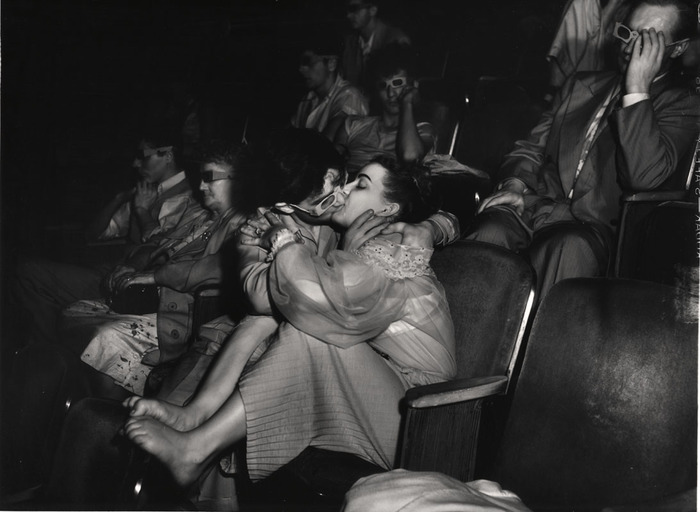
Lovers at the Palace Theatre – Weegee
Source: ICP
There are many variations of this photo showing Weegee took various poses of the couple. The dates for this shot vary all over the place…1940, 1943 and 1945. Weegee said he prided himself in reality based photography, but he was not getting what his client wanted for movie theatre shots. So Weegee staged some of the infrared movie theatre shots….”helping realism along” as he wrote in his autobiography.
Weegee talks about his infrared flash photography on pages 117-118 of his book Weegee by Weegee. He said he picked up a female model with a “peek-a-boo dress” and a male model from the Art Students’ League. He brought them to a theatre and told them “Don’t look at the camera and don’t laugh. Just make love.”

Weegee reenacting how he did his infrared flash theatre photography. He disguised himself as an ice cream vendor.
Here is another version…

Weegee’s account of his infrared work is confusing. Many of Weegee’s early infrared photos date from the early 1940’s. He would have used a Speed Graphic 4 x 5 press camera in that era. In his autobiography he said he hid his camera in the ice cream tray, which sounds more like the 1950’s when he used small format cameras. It is pretty hard to hide a press camera.
While the photo of Lovers at the Palace Theatre fits the bill for his staged infrared theatre photos, it was dated in the 1940’s. From his books timeline description his staged infrared theatre photos were done in the early 1950s. So, there is no telling which infrared shots are candid and which are staged when it comes to Weegee.

I’ve been in a number of theatres and have not seen any love scenes as yet. I keep looking. Until then let me offer Weegee this IR theatre homage…part of my yawning series.

Photo by Daniel D. Teoli Jr.
The next photo is by Yoshiyuki…from his project ‘The Park’

Yoshiyuki’s project centered around taking IR flash photos at 3 parks in Japan (Chuo, Yoyogi, and Aoyama parks) where people would go to have sex (both hetero and homo) and voyeurs would stay in the shadows to watch them. (Sometimes the voyeurs would see how far they could push things and try to sneak into the action!)
In a 1979 interview Yoshiyuki said that just as he started to test Toshiba infrared flashbulbs, they were discontinued. Yoshiyuki replaced the discontinued bulbs with Kodak (infrared) flashbulbs.
A quote from the 1979 interview done by Nobuyoshi Araki and Kohei Yoshiyuki:
Kohei Yoshiyuki
“I found out that Toshiba made flashbulbs- infrared flashbulbs. Before I had a chance to use more than a few of them, they were discontinued. Then I looked around for filters, and ended up using two tricolor separation filters. After a while I heard that Kodak had some flashbulbs, so I used them. At that time infrared flash units didn’t exist. Sunpak came out with them after I took these pictures.”
I have done extensive research on infrared flashbulb history and have never been able to find any information on Kodak making infrared flashbulbs or any flashbulbs for that matter.
I contacted flashbulb historian, dealer and expert Bill Cress about Kodak infrared flashbulbs.
Bill’s reply: “Kodak did not make bulbs, if anything they may have had some private labeled by others but not made by them.”
Chuck Baker, another historian and collector concurred stating; “As far as I know Kodak did not make their own flashbulbs.”
I polled the Flashbulb Collectors Page, a Yahoo Group, on this subject. Unanimous consensus was Kodak never made any flashbulbs whether they be infrared or visible light.
Private label or not, nothing ever shows up in the historical record or on the second-hand market for Kodak flashbulbs either in the visible light spectrum or infrared. While it is possible that the Japanese had access to products not available in the USA, it is only conjecture.
Yoshiyuki started his Park project before IR strobes were on the market. But as he approached the mid-point and end of his project, IR strobes were readily available from Sunpak. The bottom line is; it is a mystery as to what infrared flashbulb or strobe Yoshiyuki was actually using for his Park project.
The General Electric #5R, #22R and Sylvania Blackout 2 and Blackout 25 were the most common infrared flashbulbs of that era. The most popular infrared flashbulb of these four was the GE 5R.
In the December 1947 issue of Popular Photography, Weegee said he used “midget infrared flashbulbs.” He goes on to say in the April 1956 issue of Popular Mechanics that he used 5R infrared flashbulbs.

Photo by Daniel D. Teoli Jr.
Infrared flash photography was developed during WWII as a means of taking photos in complete darkness also known as ‘blackout.’ I don’t know how much the 5R’s cost in the early 1940’s when they were first commercially marketed, but a package from the 1960’s was priced at $3 a dozen.
A trade announcement in the May 1949 edition of Popular Photography said Sterling Howard Corp of N.Y.C. was selling infrared flashbulb coating kits to turn white light flashbulbs into infrared flashbulbs. The list price for the gelatin & dye kit was $4.75.
https://people.rit.edu/andpph/text-infrared-basics.html
Actually there was a flash. But it was made up almost entirely of infrared light, which is invisible. Yet the lamp illuminated the subject quite enough for a clear picture. This is infrared flash photography or “blackout” photography. The special flash bulb is coated with a Lacquer which transmits a maximum of infrared rays while holding back nearly all the visible rays.
It must be used only with infrared film and in total or nearly total darkness. Slow shutter speed (1/25 to 1/50) and wide lens opening (f/4 to f/8) are required. The phenomenon of blackout photography will work only at very short distances-usually 10 to 15 feet. But at close quarters it will produce a surprisingly satisfactory photographic record.
This procedure might have numerous military uses. An example would be in taking a vital picture when a brilliant glare of white light would tip off your presence to the enemy. There are also less ominous circumstances which would make the use of the conventional flash impractical or impossible.
http://www.graflex.org/flash/navy/

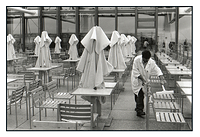
An early blackout infrared flash photo from 1945 of Kodak’s Aero Pan film spooling operation. A single GE 22R infrared flashbulb was suspended above each operator for illumination. Photographed with a 4 x 5 camera with infrared film.
In 1974 Sunpak introduced the first commercial infrared strobe. The Nocto 400.

Photo by Daniel D. Teoli Jr.

Photo by Daniel D. Teoli Jr.

Photo by Daniel D. Teoli Jr.
The Nocto 400 was a revolutionary strobe as it was the first and only commercially produced dedicated infrared flash ever made. It weighed about 886 grams without batteries.
It’s downfall was it produced a visible bright reddish / orange glow when it fired. It had a high and low setting and ran off of A.C. or 4 ‘C’ batteries. The low setting produced a slightly lower glow that was only visible if you looked directly at the head. The high setting produced a visible orange glow that would reflect off the object if it was within a few feet and had a reflective nature. The recycle time was 7 seconds on high and 1.5 seconds on low powered by the AC cord. The guide number calculator had a range of 57 feet for the high setting.
A few years later Sunpak introduced the model 622 which incorporated interchangeable heads – one head being a dedicated infrared flash head.

Photo by Daniel D. Teoli Jr.
A technical tidbit…
On Flickr, member ‘t6b9p’ wrote :
“…the Sunpak 622 IR head is actually fitted with two IR filters. An inner 0.2mm flexible IR filter with 50% transmission at 730nm and a hard outer filter that has 50% transmission at 850nm.”
I took apart a Sunpak 622 IR head and sure enough there are two filters as ‘t6b9p’ reported.

Photo by Daniel D. Teoli Jr.
The spec sheet lists the following information for the 622 Pro IR head:
Peak Spectrum: 840 NM
Guide Number: 30/100
Angle of illumination: 65 degree horizontal by 45 degree vertical.
Coverage: 35mm lens on 35mm camera
Weight 3.8 oz / 100 g
The beauty of the Sunpak was its systemized design that allowed rapid change of 7 dedicated strobe heads:
Standard Head
Zoom Head
Wide Head
Ring Head
Infra-Red Head
Diffusion Head
Bare bulb Head

Photo by Daniel D. Teoli Jr.
A vintage 622 with IR head installed and the zoom head.
The Sunpak 622 was a monster to lug around. While the head is light, the weight of the entire flash unit is very heavy at 1109 grams without batteries. Recycle time with 4 alkaline batteries was 12 seconds on full power and almost instantaneous at low power.
This is a very powerful strobe that is said to be roughly 250 watt seconds. Although the flash head still emits a reddish glow it seems a little less than the Nocto 400 emitted. The dual filter array does a good job in keeping this strobe stealthy.
http://www.cameramanuals.org/flashes_meters/sunpak_auto622_pro.pdf

Photo by Daniel D. Teoli Jr.
Sunpak Nocto 400 compared to Sunpack Auto 622 with IR head.
If you would like to use one of these vintage film era IR strobes on your digital cam you will need Safe-Sync adapter.
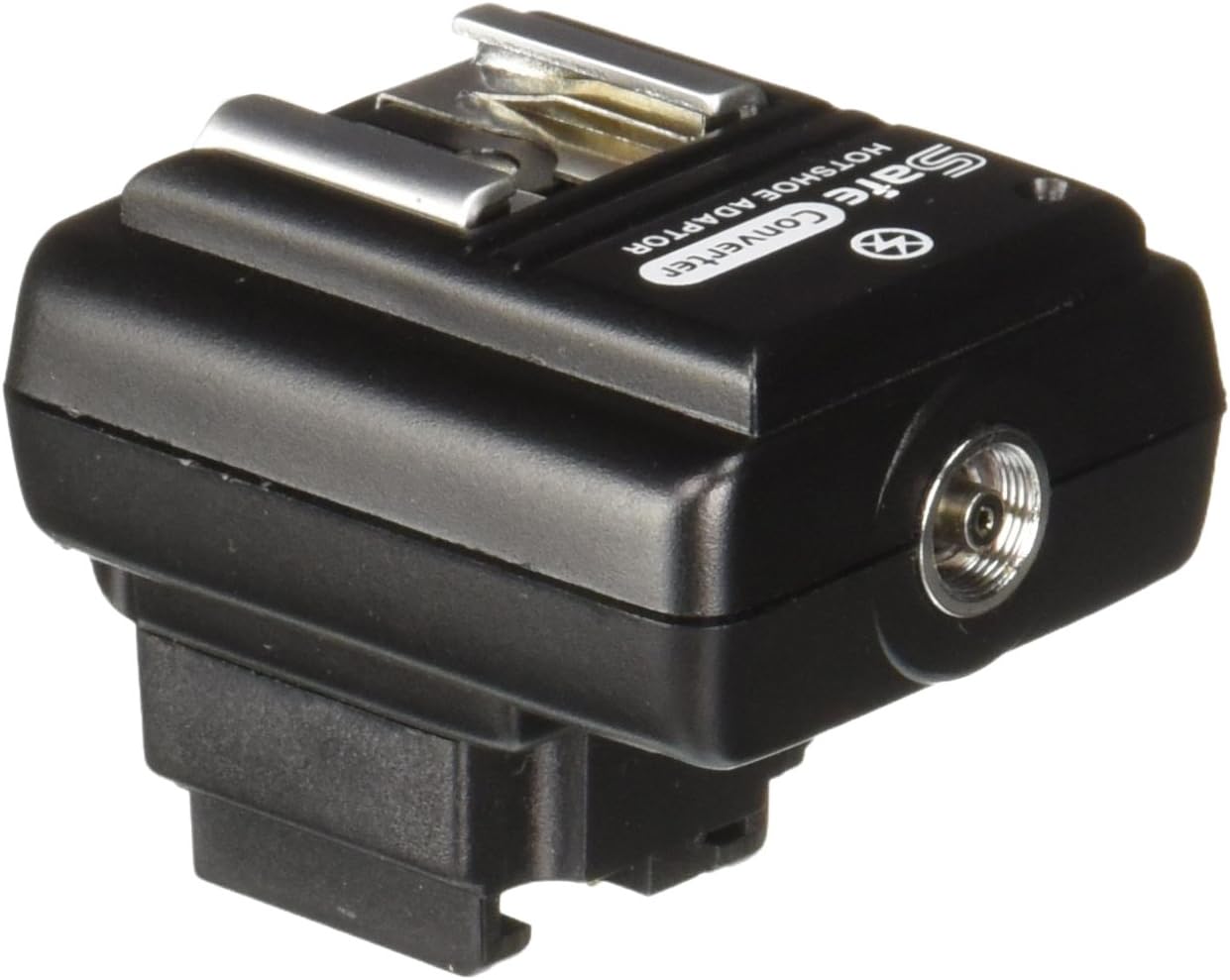
Amazon
In the 2000’s, third party cottage industries came out with IR flash adapters that slid over small, modern strobes and commercial strobes modified for dedicated IR use.
An interesting aspect of infrared flash photography is how it highlights the veins of the body. Dr. Lou Gibson did a number of experiments in this area.
http://medicalphotography.com.au/Article_04/09.html
A little history on infrared flash photography was taken in part from my forthcoming artist’s books:
Piercing Darkness
Practice & Techniques of Infrared Flash Photography
Footnote: (a)
Ikko Kagari also did some work with IR flash in his project ‘Crowded Train’ on the practice of ‘chikan’ (groping women on the train or subway) in Japan. I think it is from the 1980’s but not sure. And maybe book title is wrong. Very underground and not easy to find the right info as it varies from source to source.
<><><><>

10 Minutes after Midnight (Candid)
Infrared flash photo by Daniel D. Teoli Jr.
**End of Article**
----------------
At one time, from what I gather, I was the world leader in infrared flash photography. Of course it was not hard to do. The few others that had revived the process weren't very good at it. And one never knows everything that is being done worldwide, so who can say. I have not kept up with street photography or IR flash photography. My health went downhill after covid, and I could not pound the pavement like I used to do. Some days I was lucky to just go to the market. I pretty much stick with working archival material now and have retired from still photography with the exception of snapshots and still photography dealing with the archive.
When I first got into still photography, I wanted to be a fashion / commercial photographer. Over time I learned I had no skill at it, at least nothing special. So, I found areas that I am skilled at and never regretted it. I took the studio photos in this article and hated doing it. I don't like doing commercial photography. But I had no other sources for the material, so I was stuck with the job. Some of those photos may be fuzzy in the article. That is just how the photo host I used degraded them over the years.

When you do street photography...you go through lots of shoes.
Photo: D.D.Teoli Jr.
Here are some of my infrared flash photos. Everything is candid.

Piercing Darkness book - Ohio 2015
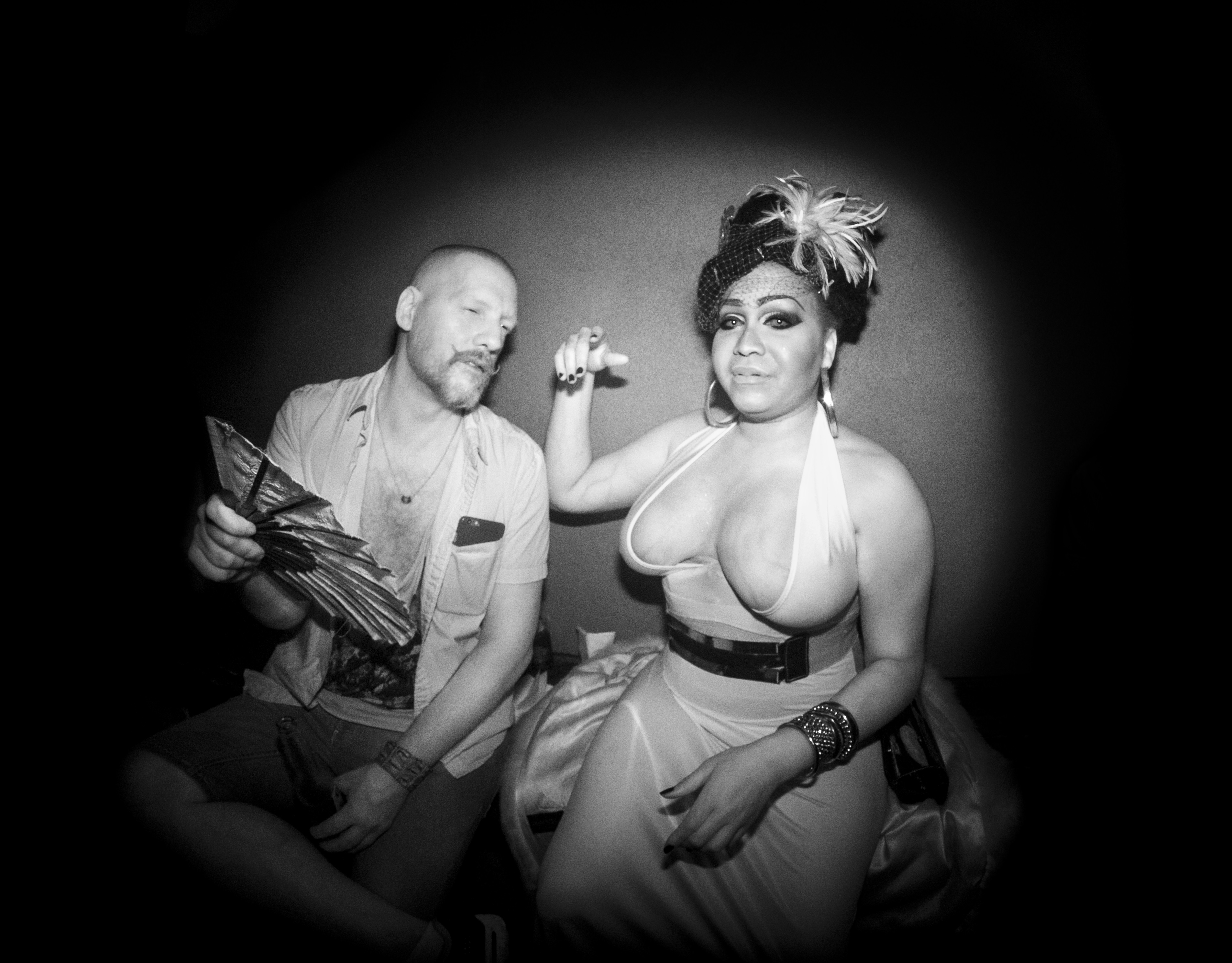
Transwoman and Friend - North Hollywood, CA 2015
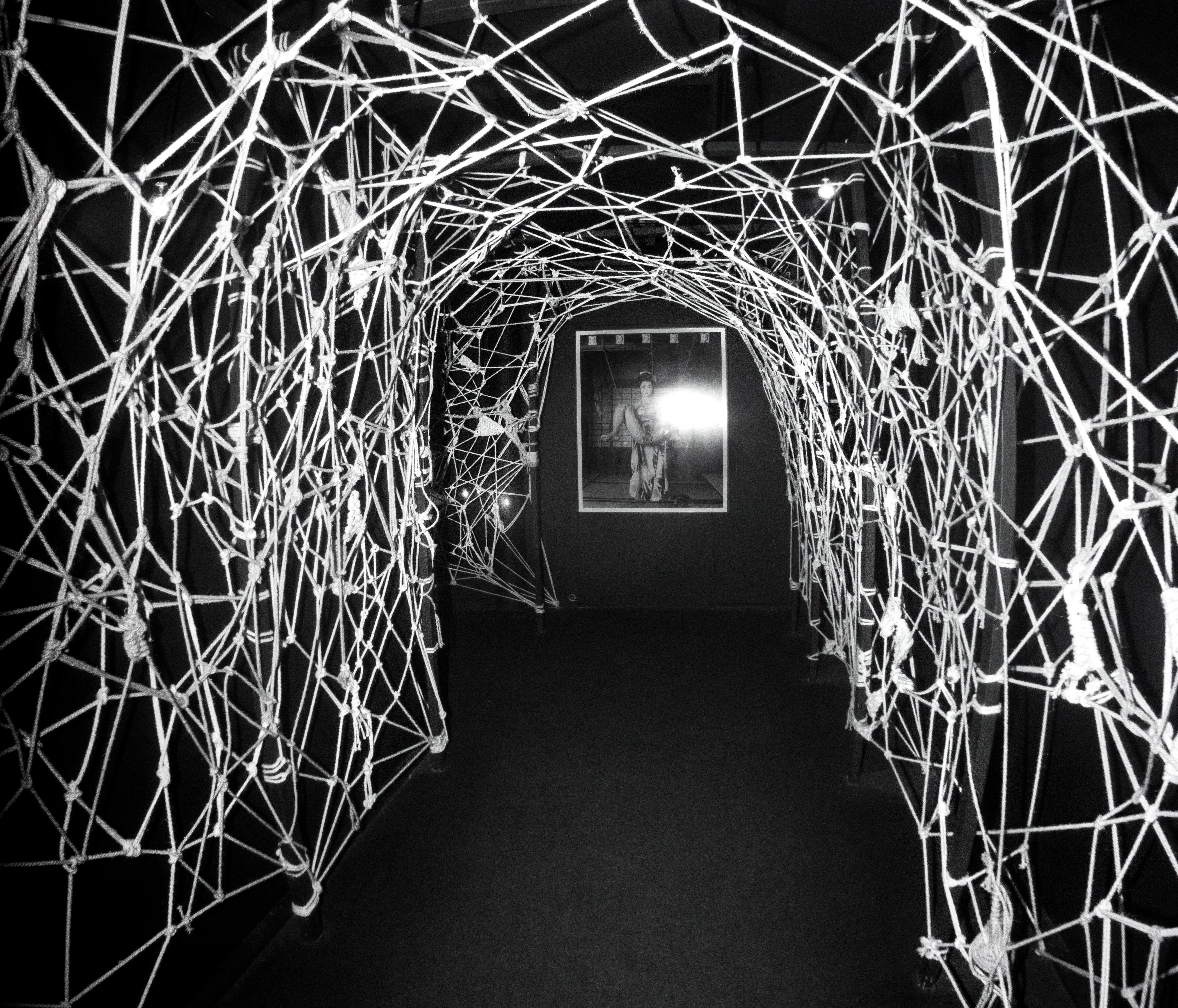
Araki exhibit / Midori ropework - Museum of Sex, NYC 2018

Homeless Couple - Hollywood Blvd 2015
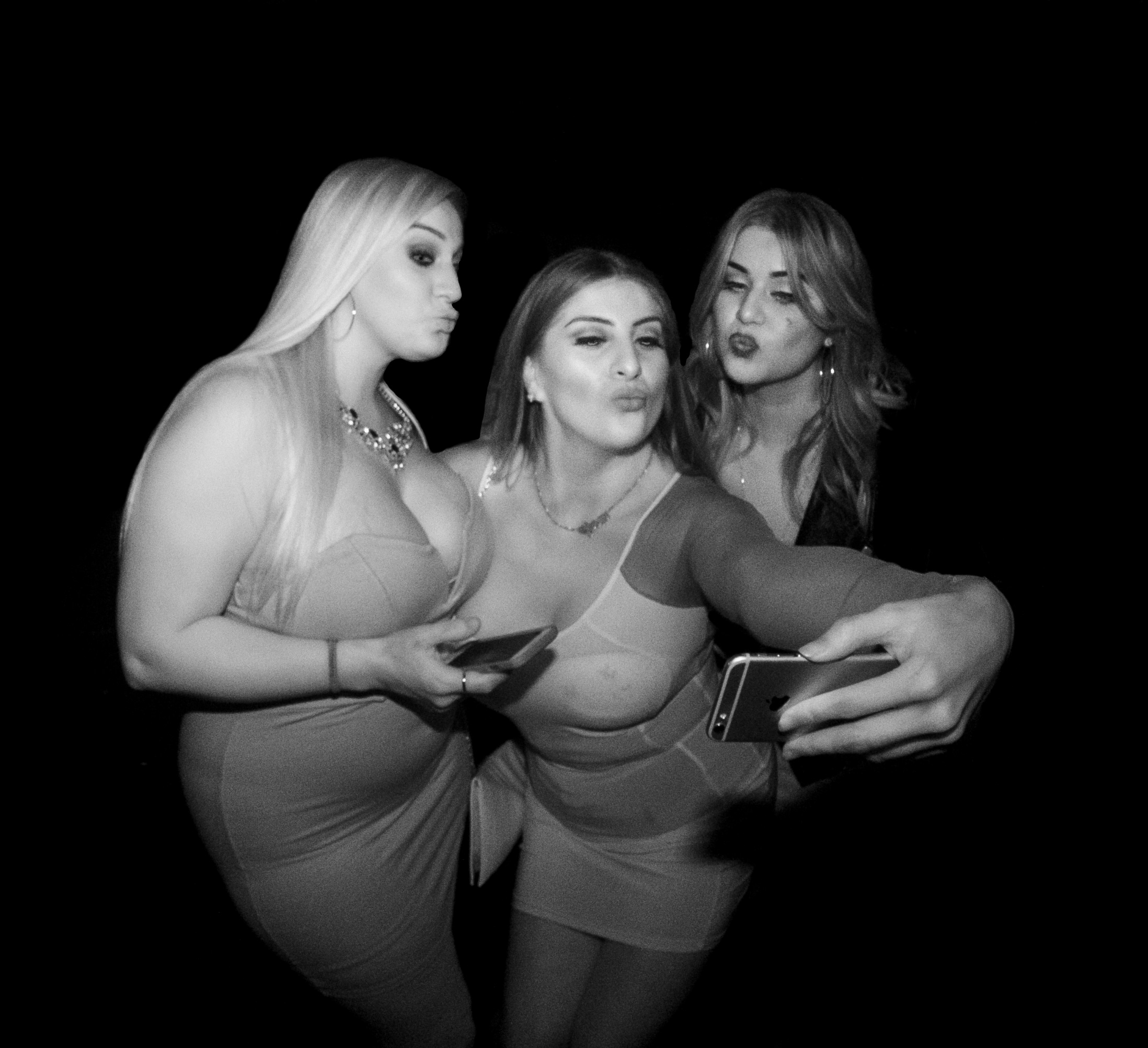
Pucker Up! - Hollywood Blvd 2015
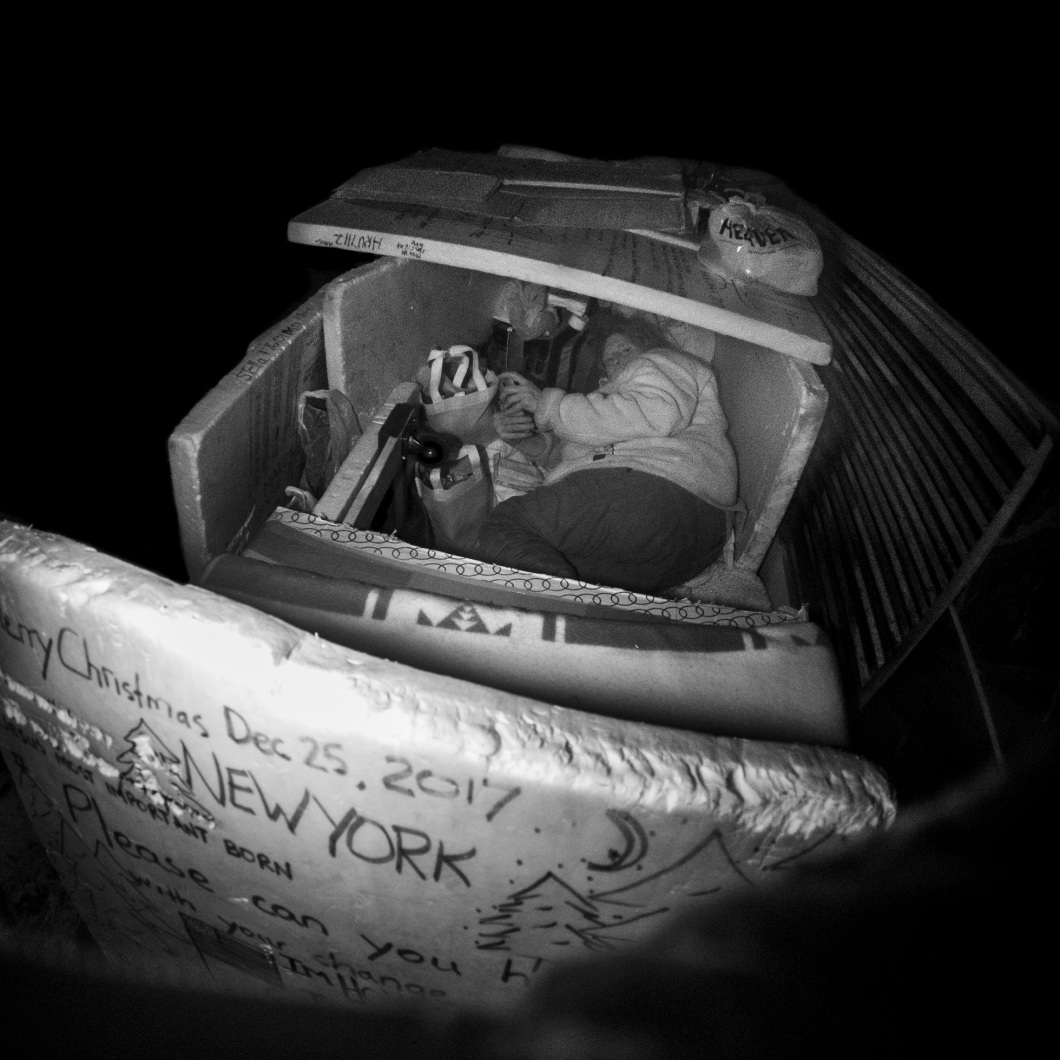
Living in a cardboard box - NYC 2017
You want to produce good work? Don't take off for holidays...shoot year-round.
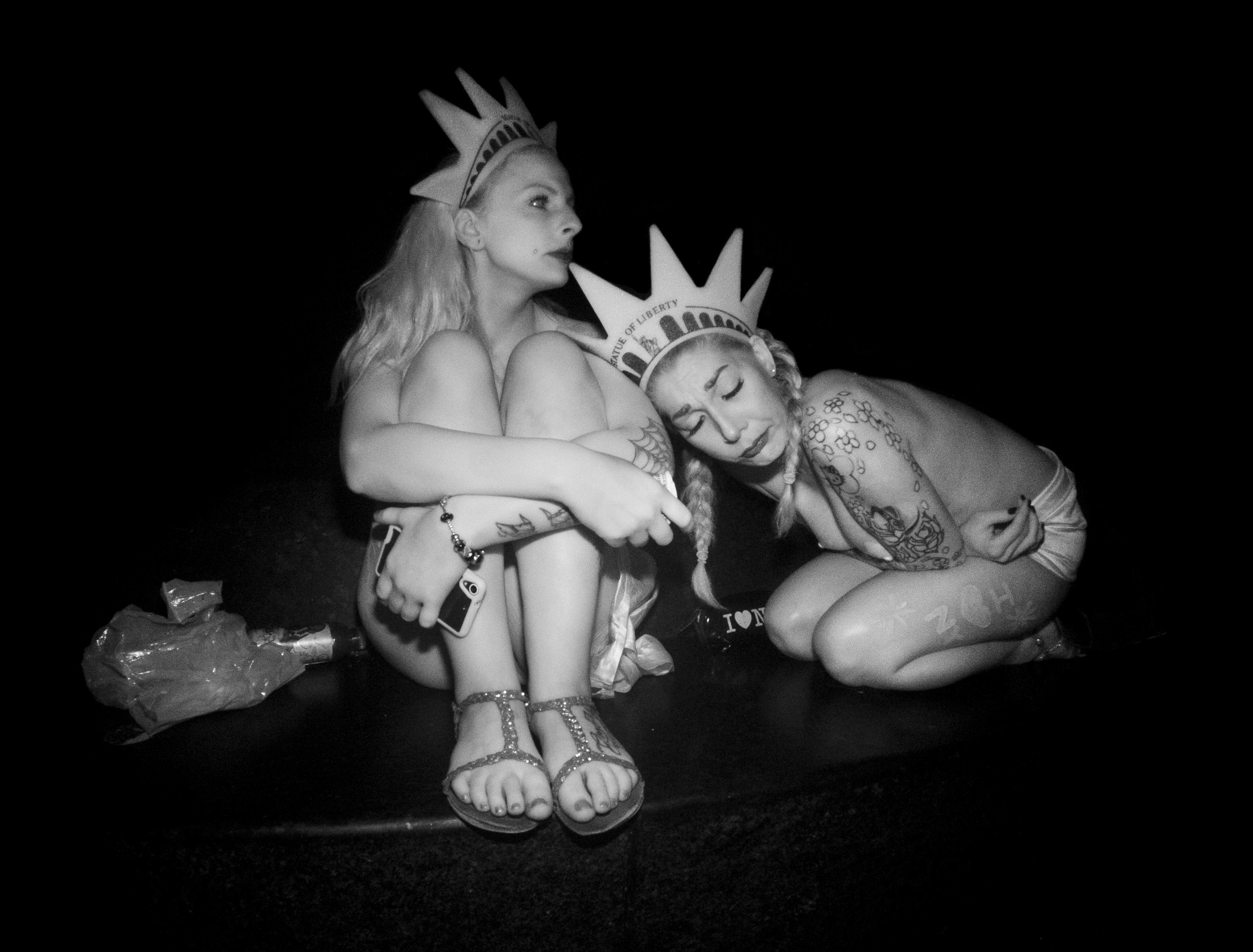
Sad Buskers - NYC 2016

Dancer - OH 2015

Piercing Darkness book

This is raw IR flash. You can't overexpose it or the highlights burn out.

This is post processed IR flash.
From The Americans...60 years after Frank book - Las Vegas 2016

Hollywood 2016

Homeless man selling a candy bar - Las Vegas 2016

Selection from Wide Open book - NYC 2016
I liked to take photos of people yawning and pointing. They help out with boredom when on the street and you can practice fast shooting. When you are on the street, have multiple projects and you will always find reasons to press the button. They may not be masterpieces, but they are good for practice and to keep you warmed up and ready. If you are no good at fast shooting...practice shooting your TV screen. It helps with timing and comp.
Here is the deal...
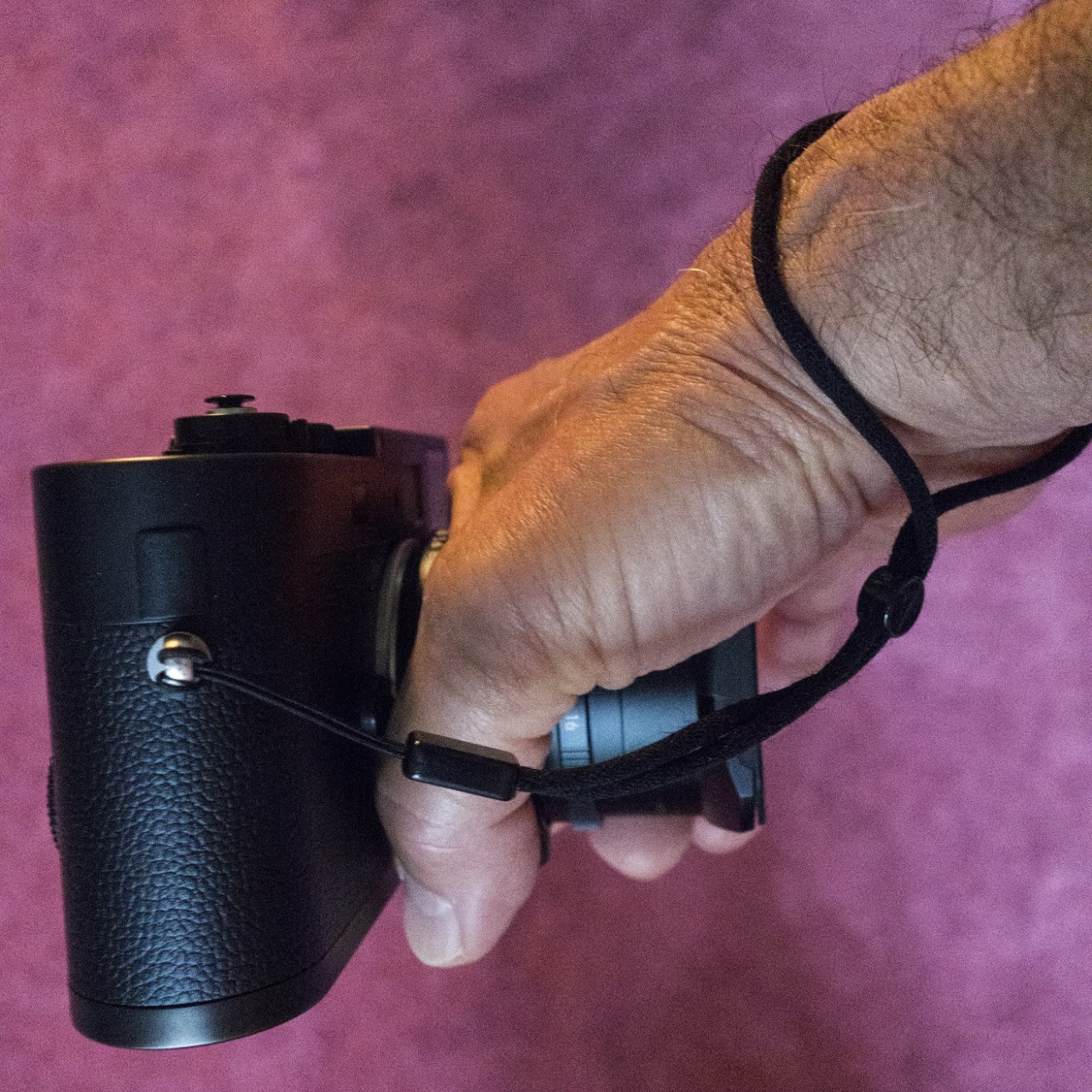
You pound the pavement, keep your camera in hand and on the ready, keep your eyes open and you will find stuff to shoot!

Downtown L.A. c.1971

NYC
I've got thousands of IR photos I never went through. Plus, tens of thousands of non-IR photos from back in the day that need looking at. The archival work took over and there is just no time for it all. If I just worked on the cine' film archive I would we swamped.

Here is Bruce Glidden from 2016. Ran into him on the street in NYC. Not IR flash...just IR. Point is, if you pound the pavement there are tons of things to shoot.

There is the yawner! Did you notice her?
Subway NYC

Times Square Food Stand - NYC 2016

I got dual pointers here!
NYC

From the earliest days of photography, people have been interested in candid photography. IR flash offers the ultimate tool for candid photographers.
Source: Internet

This was an early IR flash photo I took. c. 2014. I had been working on IR flash for a number of years and getting nowhere. But one day...things clicked!

OH 2015

This was the first yawning photo I took in a casino in 2015. That started my yawning project.
I got an interesting IR photo of a pointer but can't put it up. Just too much for the forums. Same with much of my other IR flash work. I was an underground social documentary photographer. That means I had no limits. And no limits do not always work on the internet.
I hope you found this useful and interesting.
<><><><>
Daniel D. Teoli Jr. Archival Collection
Daniel D. Teoli Jr. Small Gauge Film Archive
Daniel D. Teoli Jr. Advertising Archive
Daniel D. Teoli Jr. VHS Video Archive
Daniel D. Teoli Jr. Popular Culture Archive
Daniel D. Teoli Jr. Audio Archive
Daniel D. Teoli Jr. Social Documentary Photography

January 8, 2016
A little history on infrared flash photography…
Article Dedication in honor of Araki & Bill ‘Zippy’ Griffith
<><><><>

Photo by Daniel D. Teoli Jr.
Graflex 4×5 Speed Graphic press camera with GE 5R Infrared Flashbulb.
The Speed Graphic was a mainstay of Weegee. Loaded with 3 zinc ‘D’ batteries and a film holder, it weighs nearly 9 pounds!
The camera fondlers are spoiled nowadays. They complain their cameras that weigh a pound are too heavy. The old press photogs were real he-men lugging this thing around all day.

Daniel D. Teoli Jr. Archival Collection
Two of the founding fathers of IR flash photography were Weegee and Kohei Yoshiyuki. From my limited research, they were the only two photogs in history that have done any meaningful projects with IR flash photography. see footnote ( a)
Here is some of their work with IR flash…
Weegee...
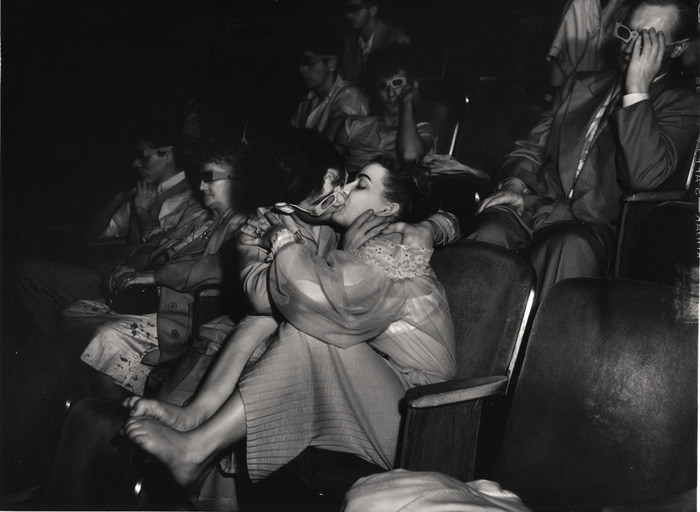
Lovers at the Palace Theatre – Weegee
Source: ICP
There are many variations of this photo showing Weegee took various poses of the couple. The dates for this shot vary all over the place…1940, 1943 and 1945. Weegee said he prided himself in reality based photography, but he was not getting what his client wanted for movie theatre shots. So Weegee staged some of the infrared movie theatre shots….”helping realism along” as he wrote in his autobiography.
Weegee talks about his infrared flash photography on pages 117-118 of his book Weegee by Weegee. He said he picked up a female model with a “peek-a-boo dress” and a male model from the Art Students’ League. He brought them to a theatre and told them “Don’t look at the camera and don’t laugh. Just make love.”

Weegee reenacting how he did his infrared flash theatre photography. He disguised himself as an ice cream vendor.
Here is another version…

Weegee’s account of his infrared work is confusing. Many of Weegee’s early infrared photos date from the early 1940’s. He would have used a Speed Graphic 4 x 5 press camera in that era. In his autobiography he said he hid his camera in the ice cream tray, which sounds more like the 1950’s when he used small format cameras. It is pretty hard to hide a press camera.
While the photo of Lovers at the Palace Theatre fits the bill for his staged infrared theatre photos, it was dated in the 1940’s. From his books timeline description his staged infrared theatre photos were done in the early 1950s. So, there is no telling which infrared shots are candid and which are staged when it comes to Weegee.

I’ve been in a number of theatres and have not seen any love scenes as yet. I keep looking. Until then let me offer Weegee this IR theatre homage…part of my yawning series.

Photo by Daniel D. Teoli Jr.
The next photo is by Yoshiyuki…from his project ‘The Park’

Yoshiyuki’s project centered around taking IR flash photos at 3 parks in Japan (Chuo, Yoyogi, and Aoyama parks) where people would go to have sex (both hetero and homo) and voyeurs would stay in the shadows to watch them. (Sometimes the voyeurs would see how far they could push things and try to sneak into the action!)
In a 1979 interview Yoshiyuki said that just as he started to test Toshiba infrared flashbulbs, they were discontinued. Yoshiyuki replaced the discontinued bulbs with Kodak (infrared) flashbulbs.
A quote from the 1979 interview done by Nobuyoshi Araki and Kohei Yoshiyuki:
Kohei Yoshiyuki
“I found out that Toshiba made flashbulbs- infrared flashbulbs. Before I had a chance to use more than a few of them, they were discontinued. Then I looked around for filters, and ended up using two tricolor separation filters. After a while I heard that Kodak had some flashbulbs, so I used them. At that time infrared flash units didn’t exist. Sunpak came out with them after I took these pictures.”
I have done extensive research on infrared flashbulb history and have never been able to find any information on Kodak making infrared flashbulbs or any flashbulbs for that matter.
I contacted flashbulb historian, dealer and expert Bill Cress about Kodak infrared flashbulbs.
Bill’s reply: “Kodak did not make bulbs, if anything they may have had some private labeled by others but not made by them.”
Chuck Baker, another historian and collector concurred stating; “As far as I know Kodak did not make their own flashbulbs.”
I polled the Flashbulb Collectors Page, a Yahoo Group, on this subject. Unanimous consensus was Kodak never made any flashbulbs whether they be infrared or visible light.
Private label or not, nothing ever shows up in the historical record or on the second-hand market for Kodak flashbulbs either in the visible light spectrum or infrared. While it is possible that the Japanese had access to products not available in the USA, it is only conjecture.
Yoshiyuki started his Park project before IR strobes were on the market. But as he approached the mid-point and end of his project, IR strobes were readily available from Sunpak. The bottom line is; it is a mystery as to what infrared flashbulb or strobe Yoshiyuki was actually using for his Park project.
The General Electric #5R, #22R and Sylvania Blackout 2 and Blackout 25 were the most common infrared flashbulbs of that era. The most popular infrared flashbulb of these four was the GE 5R.
In the December 1947 issue of Popular Photography, Weegee said he used “midget infrared flashbulbs.” He goes on to say in the April 1956 issue of Popular Mechanics that he used 5R infrared flashbulbs.

Photo by Daniel D. Teoli Jr.
Infrared flash photography was developed during WWII as a means of taking photos in complete darkness also known as ‘blackout.’ I don’t know how much the 5R’s cost in the early 1940’s when they were first commercially marketed, but a package from the 1960’s was priced at $3 a dozen.
A trade announcement in the May 1949 edition of Popular Photography said Sterling Howard Corp of N.Y.C. was selling infrared flashbulb coating kits to turn white light flashbulbs into infrared flashbulbs. The list price for the gelatin & dye kit was $4.75.
https://people.rit.edu/andpph/text-infrared-basics.html
BLACKOUT PHOTOGRAPHY
This document was taken from Photography: Naval Training Course, Vol. 1, NAVPERS 10371-A, prepared by Bureau of Navy Personnel, 1951.
A flash lamp pierces darkness about the way a 16- inch gun salvo rends silence. The ordinary flash lamp, that is. There’s one which is decidedly “un ordinary.” A photographer takes a flash picture in pitch darkness. Only a few feet away there is not the slightest hint of it. But what about the flash? There wasn’t any. A flash picture with no flash? Well, for all practical purposes-yes.Actually there was a flash. But it was made up almost entirely of infrared light, which is invisible. Yet the lamp illuminated the subject quite enough for a clear picture. This is infrared flash photography or “blackout” photography. The special flash bulb is coated with a Lacquer which transmits a maximum of infrared rays while holding back nearly all the visible rays.
It must be used only with infrared film and in total or nearly total darkness. Slow shutter speed (1/25 to 1/50) and wide lens opening (f/4 to f/8) are required. The phenomenon of blackout photography will work only at very short distances-usually 10 to 15 feet. But at close quarters it will produce a surprisingly satisfactory photographic record.
This procedure might have numerous military uses. An example would be in taking a vital picture when a brilliant glare of white light would tip off your presence to the enemy. There are also less ominous circumstances which would make the use of the conventional flash impractical or impossible.
http://www.graflex.org/flash/navy/

An early blackout infrared flash photo from 1945 of Kodak’s Aero Pan film spooling operation. A single GE 22R infrared flashbulb was suspended above each operator for illumination. Photographed with a 4 x 5 camera with infrared film.
In 1974 Sunpak introduced the first commercial infrared strobe. The Nocto 400.

Photo by Daniel D. Teoli Jr.

Photo by Daniel D. Teoli Jr.

Photo by Daniel D. Teoli Jr.
The Nocto 400 was a revolutionary strobe as it was the first and only commercially produced dedicated infrared flash ever made. It weighed about 886 grams without batteries.
It’s downfall was it produced a visible bright reddish / orange glow when it fired. It had a high and low setting and ran off of A.C. or 4 ‘C’ batteries. The low setting produced a slightly lower glow that was only visible if you looked directly at the head. The high setting produced a visible orange glow that would reflect off the object if it was within a few feet and had a reflective nature. The recycle time was 7 seconds on high and 1.5 seconds on low powered by the AC cord. The guide number calculator had a range of 57 feet for the high setting.
A few years later Sunpak introduced the model 622 which incorporated interchangeable heads – one head being a dedicated infrared flash head.

Photo by Daniel D. Teoli Jr.
A technical tidbit…
On Flickr, member ‘t6b9p’ wrote :
“…the Sunpak 622 IR head is actually fitted with two IR filters. An inner 0.2mm flexible IR filter with 50% transmission at 730nm and a hard outer filter that has 50% transmission at 850nm.”
I took apart a Sunpak 622 IR head and sure enough there are two filters as ‘t6b9p’ reported.

Photo by Daniel D. Teoli Jr.
The spec sheet lists the following information for the 622 Pro IR head:
Peak Spectrum: 840 NM
Guide Number: 30/100
Angle of illumination: 65 degree horizontal by 45 degree vertical.
Coverage: 35mm lens on 35mm camera
Weight 3.8 oz / 100 g
The beauty of the Sunpak was its systemized design that allowed rapid change of 7 dedicated strobe heads:
Standard Head
Zoom Head
Wide Head
Ring Head
Infra-Red Head
Diffusion Head
Bare bulb Head

Photo by Daniel D. Teoli Jr.
A vintage 622 with IR head installed and the zoom head.
The Sunpak 622 was a monster to lug around. While the head is light, the weight of the entire flash unit is very heavy at 1109 grams without batteries. Recycle time with 4 alkaline batteries was 12 seconds on full power and almost instantaneous at low power.
This is a very powerful strobe that is said to be roughly 250 watt seconds. Although the flash head still emits a reddish glow it seems a little less than the Nocto 400 emitted. The dual filter array does a good job in keeping this strobe stealthy.
http://www.cameramanuals.org/flashes_meters/sunpak_auto622_pro.pdf

Photo by Daniel D. Teoli Jr.
Sunpak Nocto 400 compared to Sunpack Auto 622 with IR head.
If you would like to use one of these vintage film era IR strobes on your digital cam you will need Safe-Sync adapter.

Amazon
In the 2000’s, third party cottage industries came out with IR flash adapters that slid over small, modern strobes and commercial strobes modified for dedicated IR use.
An interesting aspect of infrared flash photography is how it highlights the veins of the body. Dr. Lou Gibson did a number of experiments in this area.
http://medicalphotography.com.au/Article_04/09.html
A little history on infrared flash photography was taken in part from my forthcoming artist’s books:
Piercing Darkness
Practice & Techniques of Infrared Flash Photography
Footnote: (a)
Ikko Kagari also did some work with IR flash in his project ‘Crowded Train’ on the practice of ‘chikan’ (groping women on the train or subway) in Japan. I think it is from the 1980’s but not sure. And maybe book title is wrong. Very underground and not easy to find the right info as it varies from source to source.
<><><><>

10 Minutes after Midnight (Candid)
Infrared flash photo by Daniel D. Teoli Jr.
**End of Article**
----------------
At one time, from what I gather, I was the world leader in infrared flash photography. Of course it was not hard to do. The few others that had revived the process weren't very good at it. And one never knows everything that is being done worldwide, so who can say. I have not kept up with street photography or IR flash photography. My health went downhill after covid, and I could not pound the pavement like I used to do. Some days I was lucky to just go to the market. I pretty much stick with working archival material now and have retired from still photography with the exception of snapshots and still photography dealing with the archive.
When I first got into still photography, I wanted to be a fashion / commercial photographer. Over time I learned I had no skill at it, at least nothing special. So, I found areas that I am skilled at and never regretted it. I took the studio photos in this article and hated doing it. I don't like doing commercial photography. But I had no other sources for the material, so I was stuck with the job. Some of those photos may be fuzzy in the article. That is just how the photo host I used degraded them over the years.

When you do street photography...you go through lots of shoes.
Photo: D.D.Teoli Jr.
Here are some of my infrared flash photos. Everything is candid.

Piercing Darkness book - Ohio 2015

Transwoman and Friend - North Hollywood, CA 2015

Araki exhibit / Midori ropework - Museum of Sex, NYC 2018

Homeless Couple - Hollywood Blvd 2015

Pucker Up! - Hollywood Blvd 2015

Living in a cardboard box - NYC 2017
You want to produce good work? Don't take off for holidays...shoot year-round.

Sad Buskers - NYC 2016

Dancer - OH 2015

Piercing Darkness book

This is raw IR flash. You can't overexpose it or the highlights burn out.

This is post processed IR flash.
From The Americans...60 years after Frank book - Las Vegas 2016

Hollywood 2016

Homeless man selling a candy bar - Las Vegas 2016

Selection from Wide Open book - NYC 2016
I liked to take photos of people yawning and pointing. They help out with boredom when on the street and you can practice fast shooting. When you are on the street, have multiple projects and you will always find reasons to press the button. They may not be masterpieces, but they are good for practice and to keep you warmed up and ready. If you are no good at fast shooting...practice shooting your TV screen. It helps with timing and comp.
Here is the deal...
You pound the pavement, keep your camera in hand and on the ready, keep your eyes open and you will find stuff to shoot!

Downtown L.A. c.1971

NYC
I've got thousands of IR photos I never went through. Plus, tens of thousands of non-IR photos from back in the day that need looking at. The archival work took over and there is just no time for it all. If I just worked on the cine' film archive I would we swamped.

Here is Bruce Glidden from 2016. Ran into him on the street in NYC. Not IR flash...just IR. Point is, if you pound the pavement there are tons of things to shoot.

There is the yawner! Did you notice her?
Subway NYC

Times Square Food Stand - NYC 2016

I got dual pointers here!
NYC

From the earliest days of photography, people have been interested in candid photography. IR flash offers the ultimate tool for candid photographers.
Source: Internet

This was an early IR flash photo I took. c. 2014. I had been working on IR flash for a number of years and getting nowhere. But one day...things clicked!

OH 2015

This was the first yawning photo I took in a casino in 2015. That started my yawning project.
I got an interesting IR photo of a pointer but can't put it up. Just too much for the forums. Same with much of my other IR flash work. I was an underground social documentary photographer. That means I had no limits. And no limits do not always work on the internet.
I hope you found this useful and interesting.
<><><><>
Daniel D. Teoli Jr. Archival Collection
Daniel D. Teoli Jr. Small Gauge Film Archive
Daniel D. Teoli Jr. Advertising Archive
Daniel D. Teoli Jr. VHS Video Archive
Daniel D. Teoli Jr. Popular Culture Archive
Daniel D. Teoli Jr. Audio Archive
Daniel D. Teoli Jr. Social Documentary Photography
Last edited: