
• Welcome to Photrio!
    Registration is fast and free. Join today to unlock search, see fewer ads, and access all forum features.
    Click here to sign up

a darkroom conundrum

Speculative Silence

D
Speculative Silence

  • 0
  • 0
  • 0
Chose vue

A
Chose vue

  • 1
  • 0
  • 39

Recent Classifieds

Forum statistics

Threads
202,110
Messages
2,835,242
Members
101,121
Latest member
artworldmaintenance
Recent bookmarks
0

cr frank

Member
Allowing Ads
Joined
Jul 8, 2003
Messages
24
Location
NOLA
Format
Multi Format
Greetings,
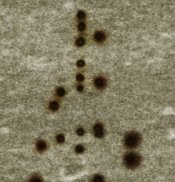
I am posting here with the hope that someone might care to comment on a darkroom conundrum which i am trying to solve. I am finding negs processed during a certain time frame (2002-04) that have opaque spots on the neg. Sometimes a lot, sometimes one or two on a frame. Often the damage will not be consistent frame to frame. One frame ok the next not ok. This is happening on 120 as well as 4x5 sheet film. 30 years of negs prior to this are fine. one caveat ...these negs were stored in my attic for three weeks during Hurricane Katrina and it was VERY hot in that attic. These issues did not show up immediately,
I noticed them after 2005.
Process:
Ilford HP5
Pyrocat HD
15/25/1000
H20 stop bath:1 min
Hypam:3 min
H20(running water):5 min
HCA:5 min
H20 (running water): 30 min
All H20 filtered tap water.

thanks
charles
 

Attachments
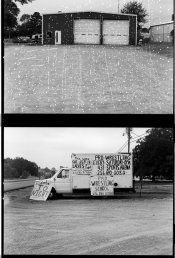
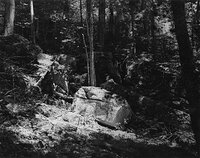
  • wrestler_damage_1.jpg
    wrestler_damage_1.jpg
    216.3 KB · Views: 274
  • wrestler_damage_1-a.jpg
    wrestler_damage_1-a.jpg
    183.8 KB · Views: 250
Last edited by a moderator:

Barry S

Member
Allowing Ads
Joined
Jan 28, 2007
Messages
1,350
Location
DC Metro
Format
Large Format
What do the opaque spots look like? Are they black, white, brownish? High heat and humidity will accelerate the aging process, so I'm wondering about your fixing and washing process. Two minutes of fixing time seems short to me--especially if the fixer isn't always perfectly fresh. What's the hurry? You mention prints in your procedure--is the procedure the same for film--or is that a typo?
 
OP
OP

cr frank

Member
Allowing Ads
Joined
Jul 8, 2003
Messages
24
Location
NOLA
Format
Multi Format
Just posted some jpgs. one is a rgb file of the spots. Fixing is with Hypam 1x4, 3 min., should have also stated processing is done w/Jobo drum on uniroller base.
yes Barry that was a typo..fixed now. fixing and washing is a concern as well as quality of tap water. thanks for the input.
 
Last edited by a moderator:

Barry S

Member
Allowing Ads
Joined
Jan 28, 2007
Messages
1,350
Location
DC Metro
Format
Large Format
Brown spots could definitely be due to incomplete fixing or washing. Your washing process seems ok--especially with the HCA, so I'd wonder about fixing. I've always fixed for a minimum of 5 minutes and washed for at least 45 minutes--and it's served me well for many years.
 

MattKing

Moderator
Moderator
Joined
Apr 24, 2005
Messages
55,377
Location
Delta, BC Canada
Format
Medium Format
I would guess fungus or mould.

The processing regime might have affected how susceptible the negatives were to fungus or mould, without actually causing the damage.
 

Monito

Member
Allowing Ads
Joined
May 16, 2011
Messages
335
Location
Nova Scotia,
Format
Multi Format
Brown suggests iron in the water.

However, many of the brown spots seem to have two punctures side by side within a brown spot. Perhaps they might be insect fangs, or insect egg laying.

Any other evidence of insect presence or damage?
 

Leigh Youdale

Member
Allowing Ads
Joined
Oct 9, 2007
Messages
231
Location
Sydney, Aust
Format
Medium Format
They look very much like the spots on my father's negatives from WWII taken in New Guinea.
In his case they were caused by a fungus that invaded the gelatine layer - nothing to do with washing or fixing - and was feeding on that.
We couldn't identify what it was until we found someone with a decent microscope and then it was blindingly obvious.
 

Barry S

Member
Allowing Ads
Joined
Jan 28, 2007
Messages
1,350
Location
DC Metro
Format
Large Format
Yeah, fungus or mold would be a good possibility--especially in NOLA. Looking at the scan of the full neg, it reminds me of a streaked bacterial culture plate--the pattern of colonies.
 

Gerald C Koch

Member
Allowing Ads
Joined
Jul 12, 2010
Messages
8,131
Location
Southern USA
Format
Multi Format
High humidity, elevated temperature plus tasty gelatine would prove to be fungus heaven.
 
OP
OP

cr frank

Member
Allowing Ads
Joined
Jul 8, 2003
Messages
24
Location
NOLA
Format
Multi Format
Thanks for all the input. Fungus was a definite concern as is local contamination from the tap water. I'm wondering now how to avoid this in future work. One thing is to avoid tap water and start using distilled water only. Which would mean a new washing regime. Don't know how that would play out with the Jobo tank. I'm also wondering if there is a treatment that would inhibit the growth of mold etc?
The inconsistent contamination frame to frame is still a mystery.
 

Diapositivo

Member
Allowing Ads
Joined
Nov 1, 2009
Messages
3,257
Location
Rome, Italy
Format
35mm
Traditional final bath, the old-style one, with "more" formalin, would probably arrest the spreading of the creatures. I would repeat the final bath for all films involved if feasible.

The same cure I would apply to all newly developed films.
 
OP
OP

cr frank

Member
Allowing Ads
Joined
Jul 8, 2003
Messages
24
Location
NOLA
Format
Multi Format
Thats interesting, thanks for the link....
 

hpulley

Member
Allowing Ads
Joined
Oct 6, 2010
Messages
2,207
Location
Guelph, Onta
Format
Multi Format
If we're worried about fungal damage can we run B&W film through a final stabilizer bath, like we do with C-41 and E-6? Old stabilizer has hexamine breaking down to formalin/formeldahyde which provides a good anti-fungal property. Modern 'final rinse' doesn't have that of course.
 

georgegrosu

Member
Allowing Ads
Joined
Oct 15, 2007
Messages
434
Location
Bucharest, R
Format
Multi Format
Formalin has a good anti-fungal property. Treatment should be repeated over time. Damp admosfera make fungal damage in gelatin.
The first image (full frame), I personally do not give me the impression that fungal damage.
No defects in the form of twig or fir, how I know. Defects appear aligned.
You see the defectes on the surface of emulsion or in emulsion thickness?
George
 
OP
OP

cr frank

Member
Allowing Ads
Joined
Jul 8, 2003
Messages
24
Location
NOLA
Format
Multi Format
I see the defects on the surface of the emulsion...but it goes deeper than that. A quick wipe will take the shine off the spots but the neg. prints the same.
 
Last edited by a moderator:

georgegrosu

Member
Allowing Ads
Joined
Oct 15, 2007
Messages
434
Location
Bucharest, R
Format
Multi Format
cr frank, spots are on the surface of the emulsion and they enters the emulsion mass.
These spots do you think appeared after a while or were there after development?
Powder emulsion (the cutting and perforation) and can give in the older films such damage. Accumulation in the developer of such particles can lead to these failures. The spots usually appear chaotic on film.
It is a track that you can think of.
George
 
OP
OP

cr frank

Member
Allowing Ads
Joined
Jul 8, 2003
Messages
24
Location
NOLA
Format
Multi Format
"These spots do you think appeared after a while or were there after development?
Powder emulsion (the cutting and perforation) and can give in the older films such"

The spots were not present immediately after development but developed over time.
Please explain "powder emulsion" this sounds interesting.
thanks for the input...
charles
 

wogster

Member
Allowing Ads
Joined
Nov 10, 2008
Messages
1,272
Location
Bruce Penins
Format
35mm
"These spots do you think appeared after a while or were there after development?
Powder emulsion (the cutting and perforation) and can give in the older films such"

The spots were not present immediately after development but developed over time.
Please explain "powder emulsion" this sounds interesting.
thanks for the input...
charles

I would think powder emulsion, if it was present would be removed during manufacturing after all, 35mm Acetate film was first manufactured in 1909 for motion picture use, you would think that if this was an issue, the manufacturers would have dealt with it, a long time ago.

If it wasn't there immediately, it sounds like a growth, I would take one set of negs, rinse off the negs in stop bath, if it's a mould or fungus that should kill it, then rewash, give them a good examination to see if the spores have eaten very far into the emulsion, if they have eaten through, then the only way to save them is to use d*****l, scan them and then fake the missing image bits.
 

georgegrosu

Member
Allowing Ads
Joined
Oct 15, 2007
Messages
434
Location
Bucharest, R
Format
Multi Format
Charles, after cutting and perforation results dust in film emulsion. This dust can "fall" in the developer.
If you sacrifice some 35 mm virgin film, you have the chance to see with your eyes particles of different forms. Particles form of lint are mostly in the perforation zone.
Perforating machine has a mold with 8 holes on each side and eight pistons. 4 are working and 4 working on adjusting the perforation. Fine dust is formed during the perforation is absorbed with a vacuum.
Dust and swarf from perforation may remain in small quantities on the surface of the film from various causes. Usage pistons may be one of the causes.
Information is a very old book (1955).
Returning to your problem I can not really understand how a film without points after a time to show points (negative black - white in positive).
Are you sure that the eye is far more demanding NOW than when you developed the film and did not you noticed?

stop bath, if it's a mould or fungus that should kill it
The safest is formalin.
George
 

georgegrosu

Member
Allowing Ads
Joined
Oct 15, 2007
Messages
434
Location
Bucharest, R
Format
Multi Format
give them a good examination to see if the spores have eaten very far into the emulsion, if they have eaten through,
If fungus eat the negative emulsion, the points will appear darker in positive.
The picture presented (positive) - points white?
How do you explain this?
George
 

wogster

Member
Allowing Ads
Joined
Nov 10, 2008
Messages
1,272
Location
Bruce Penins
Format
35mm
Charles, after cutting and perforation results dust in film emulsion. This dust can "fall" in the developer.
If you sacrifice some 35 mm virgin film, you have the chance to see with your eyes particles of different forms. Particles form of lint are mostly in the perforation zone.
Perforating machine has a mold with 8 holes on each side and eight pistons. 4 are working and 4 working on adjusting the perforation. Fine dust is formed during the perforation is absorbed with a vacuum.
Dust and swarf from perforation may remain in small quantities on the surface of the film from various causes. Usage pistons may be one of the causes.
Information is a very old book (1955).
Returning to your problem I can not really understand how a film without points after a time to show points (negative black - white in positive).
Are you sure that the eye is far more demanding NOW than when you developed the film and did not you noticed?


The safest is formalin.
George

I would think that 35mm perforating machines would clean the film after, for several reasons, one is that the dust could foul up the machines further along the process, like the spool loaders....

If you have a lot of old style C41 stabilizer that is probably the best source, the newer ones do not contain it. Not sure what the best source for it would be otherwise, especially in the US....
 

wogster

Member
Allowing Ads
Joined
Nov 10, 2008
Messages
1,272
Location
Bruce Penins
Format
35mm
If fungus eat the negative emulsion, the points will appear darker in positive.
The picture presented (positive) - points white?
How do you explain this?
George

The mould/fungus may itself be opaque, which results in white spots, removing it may result in dark spots.

I think the best solution would be to enlarge it onto 4x5 film, process the new film, use spotting dye to fill in the white spots, then contact print this onto another sheet, giving you a 4x5 negative.
 

georgegrosu

Member
Allowing Ads
Joined
Oct 15, 2007
Messages
434
Location
Bucharest, R
Format
Multi Format
Around the 1990, Bell & Howell introduced the rollers retain the dust for printer machine. Something similar to the rollers to clean clothes.
Dust is a problem with film.
I have seen the negative and positive film of dust, rarely.
Depends on your requirement.
What you see in the image presented is a lot.
To me it seems strange alignment of points.

Formalin can buy at veterinary pharmacies(in my country). I make my solutions with individual chemicals.


George
 

wogster

Member
Allowing Ads
Joined
Nov 10, 2008
Messages
1,272
Location
Bruce Penins
Format
35mm
Around the 1990, Bell & Howell introduced the rollers retain the dust for printer machine. Something similar to the rollers to clean clothes.
Dust is a problem with film.
I have seen the negative and positive film of dust, rarely.
Depends on your requirement.
What you see in the image presented is a lot.
To me it seems strange alignment of points.

Formalin can buy at veterinary pharmacies(in my country). I make my solutions with individual chemicals.


George

Most of the dust we deal with in cameras though, has nothing to do with film, it atmospheric dust that settles into the camera when you swap lenses and switch rolls of film. If you want to know how, just ask someone who has a DSLR, those things suck up an incredible amount of dust, from the air.....

Formalin is available from some farm feed stores in Canada as well...
 
Photrio.com contains affiliate links to products. We may receive a commission for purchases made through these links.
To read our full affiliate disclosure statement please click Here.

PHOTRIO PARTNERS EQUALLY FUNDING OUR COMMUNITY:


Ilford ADOX Freestyle Photographic Stearman Press Weldon Color Lab Blue Moon Camera & Machine
Top Bottom