• Welcome to Photrio!
    Registration is fast and free. Join today to unlock search, see fewer ads, and access all forum features.
    Click here to sign up

A bit of advice acheiving a certain look

feeling grey

A
feeling grey

  • 0
  • 0
  • 9
Inconsequential

H
Inconsequential

  • 2
  • 0
  • 28

Recent Classifieds

Forum statistics

Threads
201,797
Messages
2,830,380
Members
100,960
Latest member
Tizwas
Recent bookmarks
0

LonerMatt

Member
Allowing Ads
Joined
Dec 10, 2016
Messages
22
Location
Canberra, AUstralia
Format
35mm
Hey guys,

This is my first post here, just wanted some advice about how to achieve a certain look with Black and White film.

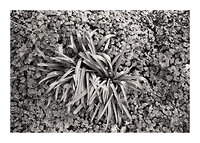
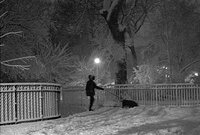
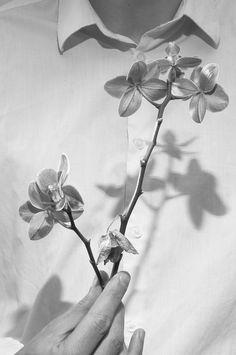
I've attached what I'm looking for: lower contrast, metallic, almost just muted silver, sharp lines. I know there is variation in these examples, but I'd be pretty happy with either. At the moment my shots are much higher contrast and not nearly as sharp.

SO far here's what a friend has recommended:
Tri-X shot at 200.
Printed on Illford MG paper with filter 1 or 2.

But I'd welcome any suggestions. For reference shooting with an OM4ti.

9934985ac077930188d5a2df91148e1c.jpg

Adrian-Samson3.jpg


Set-of-portraiture-from-Photographer-Jody-Rogac-image6.jpg


urban-web-21.jpg
 

tedr1

Member
Allowing Ads
Joined
Feb 3, 2016
Messages
940
Location
50 miles from NYC USA
Format
Multi Format
In my opinion these images show significant differences in lighting, they could have been made using a variety of films and development and printing techniques, the distinctive quality in each is a type of lighting rather than film contrast. It could be helpful to attempt to duplicate each image using your own sitters and props and any film using standard development and standard printing, this might be instructive more about lighting than film and paper.
 
OP
OP
LonerMatt

LonerMatt

Member
Allowing Ads
Joined
Dec 10, 2016
Messages
22
Location
Canberra, AUstralia
Format
35mm
I don't have sitters, props or lighting.

Just an urge to make things I take photos of outside look like liquid mercury.

Let's just take the first photo as an example, then.
 

Vilk

Member
Allowing Ads
Joined
Jan 15, 2008
Messages
515
Location
hegeso.com
Format
35mm
well, sounds like you don't have anything that's needed--one last chance, silver efex, they're free now :cool: or, when you do come back to earth, start with three naked hot bulbs for the "glitter thirties" (the first two). the "bland sixties" (the latter two) should not be propagated or promoted in any way, so i ain't sayin nuthin :laugh:
 

removed account4

Subscriber
Allowing Ads
Joined
Jun 21, 2003
Messages
29,832
Format
Hybrid
hi

you can use whatever film you want
tri x or ilford 400 ( hp5+ ) if you want grain
and the tab grain films if you want less grain
you might consider doing a film/developer test
because everyone's exposure and processing style is a bit different..
get a roll of film and expose it bracketing your exposures
so you set your meter to iso 400 ( if it is 400 speed film )
and over expose 2, 1, right on - underexpose 1 and 2 stops for each subject
then develop the film in whatever developer you like. do a few rolls like this and vary your
development by doing the recommended development for iso 400 film, then 30% more and 30% less
compare the 3 sets of negatives see which ones look the way you want things to look ...
and expose a whole roll like that ...
my guess for the 1st photograph would be over exposed a few stops, and a light 1-2 stops brighter than
the shirt to cast such a strong shadow. but i am probably wrong.

good luck
john
 
OP
OP
LonerMatt

LonerMatt

Member
Allowing Ads
Joined
Dec 10, 2016
Messages
22
Location
Canberra, AUstralia
Format
35mm
well, sounds like you don't have anything that's needed--one last chance, silver efex, they're free now :cool: or, when you do come back to earth, start with three naked hot bulbs for the "glitter thirties" (the first two). the "bland sixties" (the latter two) should not be propagated or promoted in any way, so i ain't sayin nuthin :laugh:

I didn't understand much of this at all.

I showed some photos of a tonal range I liked, but I don't take portraits, but I like the tonal range. I was hoping that it was the product of technical choices I could replicate, or imitate, but if I need to use bulbs (or experiment with them) that's completely off the table since I walk around taking photos of whatever strikes me, so setting up lights is pretty tricky.

Still that's the second response about lights so maybe I can't get what I want.
 

vdonovan

Member
Allowing Ads
Joined
Jan 8, 2008
Messages
607
Location
San Francisco
Format
Traditional
I think the look you are seeing in the first image is a combination of lighting, film and processing. Note that it's not really low contrast: there are areas of deep shadow on the stem of the flower - it's a nice effect having it in the center of the composition. Everywhere else is a highlight, or a light shade of grey, even under the collar.

Lighting: I think this is lit both with a broad softbox-type light for the overall softness, plus a small snoot to give the flower shadows. There may be a reflector below the subject pushing light up into the shadow areas.

Film: To give that soft-shadows look, you could do it with a long toe type film, like Kodak TXP320 (now only available in large format). I'm not sure if there are other long toe films, maybe Ilford PanF?

Processing: If I were shooting Tri-X (which is a great versatile film), I would shoot it maybe at ISO 100, and then underdevelop the hell out of it: reduce the development time by 20% or more. This will give you plenty of light in the shadows without blowing out the highlights. Then you can test to find the right grade of paper when you are printing, you may not need low contrast paper.

You may even want to split grade print - a quick flash at #5 to deepen the shadows, while the rest is printed at #2 or less.

Good luck! I love projects like this.
 

Vilk

Member
Allowing Ads
Joined
Jan 15, 2008
Messages
515
Location
hegeso.com
Format
35mm
...walk around taking photos of whatever strikes me

sadly, none of the four belongs in this category :sad:

still, i think you should really have a look at silver efex, or even bare photoshop--they are fantastic for acquiring knowledge, which you can then transfer to the darkroom; start with a straight scan, play with the curves and sliders all night, compare and learn, take notes, draw... eventually, you will end up with some very "traditional" insights: aaah, so to get the look i want i have to compress the shadows, flatten and raise the curve, extend the shoulder... all these translate into very specific darkroom actions: exposure, dev temp, dilution, time, etc etc

tinkering to match the first two shots in this way--noticing the lush, smooth highs and mids as well as the shiny, tar-dripping shadows--would quickly lead you to split grade printing, tons of fun if you like splashing around in the darkroom

hope this one was more intelligible! :angel:
 

Vilk

Member
Allowing Ads
Joined
Jan 15, 2008
Messages
515
Location
hegeso.com
Format
35mm
ps. all four could have been shot on XP2 and printed in a mini-lab... the trick is always the light--it's there when you walk around, too :wink:
 

Vilk

Member
Allowing Ads
Joined
Jan 15, 2008
Messages
515
Location
hegeso.com
Format
35mm
btw, is that a somogyi? if so, i guess you could hire a printer and focus on the walk around part... :redface:
 

Lachlan Young

Member
Allowing Ads
Joined
Dec 2, 2005
Messages
5,083
Location
Glasgow
Format
Multi Format
Tri-X shot at 200.
Printed on Illford MG paper with filter 1 or 2.

You're not far off here - a good starting point would be 8.5-9 mins in ID11/D76 1+1 at 20c.
In flat light your midtones might go a bit weird if you pull processing back too far.
Camera is generally irrelevant to this, but a yellow filter may be an idea to play with.

Key thing is never push, give generous exposure & restrain your processing, the rest is about learning to print.
 

MattKing

Moderator
Moderator
Allowing Ads
Joined
Apr 24, 2005
Messages
55,167
Location
Delta, BC Canada
Format
Medium Format
Welcome to APUG (and I like your screen name:wink:).
The posts above that reference the light are correct. Most of the result you see is due to the nature of the light, because it is the character of the light (directional and harsh vs. multi-directional and diffused) and the balance of the light (relatively even vs. a big difference between the fill/shadow and the main sources of light) that give this effect.
You can achieve this sort of result with existing light (rather than studio lights) if you are careful, and willing to accept the fact that sometimes the scene you come upon won't render the way you want it to in a photograph.
You may be able to achieve what you want through waiting for favourable conditions, changing your angle of view, positioning your subjects where there are natural reflectors that you can make use of or adding light (such as fill flash) that you can control. Your most important tool though is the ability to decide when not to shoot (unless you want a different effect).
Your OM-4Ti is a good tool for this, because the spot metering can help you evaluate how the shadows and highlights compare - you need them to be relatively close to each other in the scene for the desired effect.
The suggestions to expose generously and then develop moderately are good. This will give you great shadow illumination, without high contrast and overly dense highlights. You can then use the controls available to you while printing to make fine adjustments to the darkness of the shadows and the appearance of the highlights.
Personally, I would use T-Max 400 (TMY-2) for this purpose, but that is mostly because that is the high speed film I prefer, and am therefore most familiar with. You may very well find, however, that its characteristics are perfect for your needs.
It can be great fun learning how to do this sort of thing. Don't get frustrated if something doesn't work as planned - treat it instead as a learning experience.
 
OP
OP
LonerMatt

LonerMatt

Member
Allowing Ads
Joined
Dec 10, 2016
Messages
22
Location
Canberra, AUstralia
Format
35mm
btw, is that a somogyi? if so, i guess you could hire a printer and focus on the walk around part... :redface:

It is, but it is not mine.

Good eye.

I have a Larivee and a $40 beater that sounds about 10x as good as it cost.

You're not far off here - a good starting point would be 8.5-9 mins in ID11/D76 1+1 at 20c.
In flat light your midtones might go a bit weird if you pull processing back too far.
Camera is generally irrelevant to this, but a yellow filter may be an idea to play with.

Key thing is never push, give generous exposure & restrain your processing, the rest is about learning to print.


Thank you!

When you say generous exposure I assume you mean over-exposing?

Restrain processing means what?

(note I have never processed my own film before, I shot C41 exclusively for about 2 years and now moving into BnW)

Welcome to APUG (and I like your screen name:wink:).
The posts above that reference the light are correct. Most of the result you see is due to the nature of the light, because it is the character of the light (directional and harsh vs. multi-directional and diffused) and the balance of the light (relatively even vs. a big difference between the fill/shadow and the main sources of light) that give this effect.
You can achieve this sort of result with existing light (rather than studio lights) if you are careful, and willing to accept the fact that sometimes the scene you come upon won't render the way you want it to in a photograph.
You may be able to achieve what you want through waiting for favourable conditions, changing your angle of view, positioning your subjects where there are natural reflectors that you can make use of or adding light (such as fill flash) that you can control. Your most important tool though is the ability to decide when not to shoot (unless you want a different effect).
Your OM-4Ti is a good tool for this, because the spot metering can help you evaluate how the shadows and highlights compare - you need them to be relatively close to each other in the scene for the desired effect.
The suggestions to expose generously and then develop moderately are good. This will give you great shadow illumination, without high contrast and overly dense highlights. You can then use the controls available to you while printing to make fine adjustments to the darkness of the shadows and the appearance of the highlights.
Personally, I would use T-Max 400 (TMY-2) for this purpose, but that is mostly because that is the high speed film I prefer, and am therefore most familiar with. You may very well find, however, that its characteristics are perfect for your needs.
It can be great fun learning how to do this sort of thing. Don't get frustrated if something doesn't work as planned - treat it instead as a learning experience.


Thank you very much :smile:
 

Vilk

Member
Allowing Ads
Joined
Jan 15, 2008
Messages
515
Location
hegeso.com
Format
35mm
I have a Larivee...

oi, greets from toronto, the once-home of larrivée! :cool: my main is a tak LTD99, the one with the mountain (that's why i noticed the fish :smile:)

good luck with your photo quest, it's an amazing journey (can't really go wrong with a pursuit where even the worst junk you produce can be a revelation! :laugh:)
 

MattKing

Moderator
Moderator
Allowing Ads
Joined
Apr 24, 2005
Messages
55,167
Location
Delta, BC Canada
Format
Medium Format
When you say generous exposure I assume you mean over-exposing?

Restrain processing means what?
Over-expose implies an error. Generous exposure indicates exposure that is to the high end of the acceptable range. With black and white negative film there is always an acceptable range.

Just as there is an acceptable range for development. A "restrained" choice would be something toward the shorter end of the range.

You can achieve really good results using just the single, manufacturers' recommendations for exposure and development. But you can also fine tune the exposure and development, to get results that are even better suited to a particular scene and/or your intended results.

Try both the single recommended exposure and development, as well as adjusted versions. When you see the fairly subtle differences in your prints, you will have acquired some useful experience, and had some fun too.
 

Lachlan Young

Member
Allowing Ads
Joined
Dec 2, 2005
Messages
5,083
Location
Glasgow
Format
Multi Format
Over-expose implies an error. Generous exposure indicates exposure that is to the high end of the acceptable range. With black and white negative film there is always an acceptable range.

Just as there is an acceptable range for development. A "restrained" choice would be something toward the shorter end of the range.

You can achieve really good results using just the single, manufacturers' recommendations for exposure and development. But you can also fine tune the exposure and development, to get results that are even better suited to a particular scene and/or your intended results.

Try both the single recommended exposure and development, as well as adjusted versions. When you see the fairly subtle differences in your prints, you will have acquired some useful experience, and had some fun too.

Exactly what I meant & far more eloquently put!
 

Oldwino

Subscriber
Allowing Ads
Joined
Jun 6, 2014
Messages
732
Location
California
Format
Multi Format
Try some Fuji Acros in Rodinal 1+50. And then try the same combo, but stand develop it for an hour at 1+100. I've always gotten more silvery tones with that combo.
I'd recommend reading an ebook called "Iridescent Light" which is all about getting this effect using stand development.
 

Lachlan Young

Member
Allowing Ads
Joined
Dec 2, 2005
Messages
5,083
Location
Glasgow
Format
Multi Format
Try some Fuji Acros in Rodinal 1+50. And then try the same combo, but stand develop it for an hour at 1+100. I've always gotten more silvery tones with that combo.
I'd recommend reading an ebook called "Iridescent Light" which is all about getting this effect using stand development.

I'd suspect that the effects you are observing have little to do with the (largely disproved) 'benefits' of stand development & rather more to do with the behaviour of Rodinal at the 2 dilutions. Agfa's recommended times tended to be for a contrast index in the 0.65 range - quite high, to put it mildly. At 1+100, the developer is essentially exhausted after 20 minutes or so & the effective contrast index achieved at this point will vary depending on what film you used - I'd not be entirely surprised if Acros was landing somewhere in the low 0.5s, which would place it in a pretty good range for achieving the tonality you describe.
 

tedr1

Member
Allowing Ads
Joined
Feb 3, 2016
Messages
940
Location
50 miles from NYC USA
Format
Multi Format
I don't have sitters, props or lighting.

Just an urge to make things I take photos of outside look like liquid mercury.

Let's just take the first photo as an example, then.


Sitters is another word for subject

prop is something as simple as a chair or a flower

lighting is not equipment it is the quality of light, the direction and the degree of diffusion, it is sometimes what we find, available light is also "lighting"

Some beautiful light can be found on a cloudy day when there is no sunshine, the light comes from all directions, there are hardly any shadows, the light is soft and gentle, everything can be seen clearly.

The subject can be studied. There is a book I found useful by Norman Kerr (Amphoto) which covers the fundamentals of light well, it helped me understand better. Both natural light and artificial light are analyzed, copies can sometimes be found used for very little "Technique of photographic lighting" 1982.
 
Last edited:

removed account4

Subscriber
Allowing Ads
Joined
Jun 21, 2003
Messages
29,832
Format
Hybrid
one thing to remember is that one person's processing and exposure methods might work for them
but not for you.
use other people's suggestions as a starting point
they most likely agitate their films differently than you, their cameras and lenses might be calibrated differntly than yours
their meters might register/read light differently than yours, or they don't even use a meter and judge the light from experience.
and remember your mistakes, they may lead to a different road to get the same results.
 
OP
OP
LonerMatt

LonerMatt

Member
Allowing Ads
Joined
Dec 10, 2016
Messages
22
Location
Canberra, AUstralia
Format
35mm
Thanks for the advice, fellas.

I have quite a few rolls of Tri-X (around 30) so I'll start there and then try some Acros afterwards :smile:
 
Photrio.com contains affiliate links to products. We may receive a commission for purchases made through these links.
To read our full affiliate disclosure statement please click Here.

PHOTRIO PARTNERS EQUALLY FUNDING OUR COMMUNITY:


Ilford ADOX Freestyle Photographic Stearman Press Weldon Color Lab Blue Moon Camera & Machine
Top Bottom