


A few weeks ago I posted regarding the apparent effect of using demineralized water with 510-Pyro -- the resulting negatives were very thin. That thread is at (there was a url link here which no longer exists)
To test those initial results, I did some testing to determine if, all other things being equal, the difference in water makes a difference with 510-Pyro. I shot an entire roll of Legacy Pro 100/Acros in a Contax Aria, one lens, all photos within a ten or fifteen minute timeframe on a sunny day. Cut the roll in half in the changing bag, loaded two tanks. Develop in 510-Pyro semi-stand 1:400 (same volume of solution in each tank) at 75F for 35 minutes, with identical agitation every five minutes, only difference is one solution was with demineralized water and the other with Brita jug filtered tap water. I did 1:400 because that's what I had done in the first instance where the resulting negatives were very, very thin, so I wanted to see if that happened again.
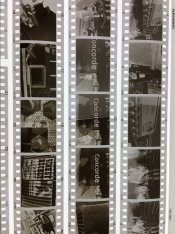
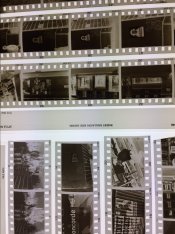
The results, show below, are that the film in demineralized water has lower apparent contrast than the film developed in tap -- visible, but not drastic, I'd say. The results with demineralized water are much, much better than my first effort that led to the first thread, so I can only think that (A) the lack of agitation the first time markedly cut down on development activity, or (B) I had made some error in the first test. You can see that when I cut the film I cut through a picture, so it's easy to see the difference in that frame and in the frames to the left and right.
As a result of these tests, I'm going to stick with filtered tap water. I recognize that the negatives here developed in tap water appear over-developed; my intention in this test was to get images on film. Now that I see the results of 35 minute stand with agitation every five minutes, I can fine-tune.
As an aside, I've also included an image of these test negatives and those of Legacy Pro 400/Neopan 400 in 510-Pyro (on the left), where the all the film including the sprocket area is stained -- it may not be very visible in the image, but the Neopan 400 film is noticeably darker all over than the Acros -- perhaps there's some difference in the film base.

To test those initial results, I did some testing to determine if, all other things being equal, the difference in water makes a difference with 510-Pyro. I shot an entire roll of Legacy Pro 100/Acros in a Contax Aria, one lens, all photos within a ten or fifteen minute timeframe on a sunny day. Cut the roll in half in the changing bag, loaded two tanks. Develop in 510-Pyro semi-stand 1:400 (same volume of solution in each tank) at 75F for 35 minutes, with identical agitation every five minutes, only difference is one solution was with demineralized water and the other with Brita jug filtered tap water. I did 1:400 because that's what I had done in the first instance where the resulting negatives were very, very thin, so I wanted to see if that happened again.
The results, show below, are that the film in demineralized water has lower apparent contrast than the film developed in tap -- visible, but not drastic, I'd say. The results with demineralized water are much, much better than my first effort that led to the first thread, so I can only think that (A) the lack of agitation the first time markedly cut down on development activity, or (B) I had made some error in the first test. You can see that when I cut the film I cut through a picture, so it's easy to see the difference in that frame and in the frames to the left and right.
As a result of these tests, I'm going to stick with filtered tap water. I recognize that the negatives here developed in tap water appear over-developed; my intention in this test was to get images on film. Now that I see the results of 35 minute stand with agitation every five minutes, I can fine-tune.
As an aside, I've also included an image of these test negatives and those of Legacy Pro 400/Neopan 400 in 510-Pyro (on the left), where the all the film including the sprocket area is stained -- it may not be very visible in the image, but the Neopan 400 film is noticeably darker all over than the Acros -- perhaps there's some difference in the film base.


