• Welcome to Photrio!
    Registration is fast and free. Join today to unlock search, see fewer ads, and access all forum features.
    Click here to sign up

400 ASA B&W 35mm film: lower-cost options

Forum statistics

Threads
203,248
Messages
2,851,979
Members
101,747
Latest member
Tallphotographer
Recent bookmarks
0

paulfish4570

Member
Allowing Ads
Joined
Feb 2, 2010
Messages
155
Location
At the confl
Format
35mm
Tri-X has gotten very expensive. For someone who is just learning the development trade - as in me - what are some lower-cost options while riding the tyro learning curve?
I have shot one 24-exp roll of Kentmere 400. I blew the handling of the film - it was a nightmare of clumsiness and idiocy in a changing bag - but got a couple of decent negatives (two shots are in the standard gallery), developed in Tmax. I am on a second roll and have two more to shoot up.
This Kentmere is thinner than Tri-X, so a little more difficult to handle. but it is available at a store in my area.
What are some other lopwer-cost options?
Freestyle's Legacy? Arista? Fomapan? Lucky? Other store brands?
I wouldn't mind trying some slower film, too, for work on a tripod.
Thanks ahead of time for advice ...
 
Last edited by a moderator:
Check out Freestyle. They sell Arista Premium 400, rebranded TriX, also the 100 is PlusX. I shoot loads of the Arista EDU Ultra which is even less money and an excellent film.
 
if you are looking to save money, other developer choices could provide savings as well. Something like d76 1:1 or xtol 1:1 or 1:2. Other people have good experience with even less expensive choices.
 
Thanks Rick,

I bought some Plus X 120 yesterday from a local shop, but they seem annoyed with me
that I had no interest in the DigiSnappers, and other High Tech Accessories.
So I might have to take my business elsewhere. I will definitely try some EDU next week,
the more I save on film, the sooner I can buy that item we typed about yesterday.

Ron

From The Long Island Of New York

.
 
Another way to save money is to buy bulk rolls (typically 100 feet of film) and roll it yourself into standard-size film cassettes. One 100-foot bulk roll produces about 18 36-exposure rolls, or more if you want to create shorter rolls. The cost is typically about half the cost of 18 36-exposure rolls, but that varies depending on the film. Some films aren't even available in bulk rolls.

Bulk loading is easiest if you have a device known as a bulk loader, and if you factor in the cost of a new bulk loader, you won't save money until at least the second or third bulk roll; however, you can pick up used bulk loaders on eBay for less money, so you might break even or perhaps save a small amount on the first bulk roll. You can get used 35mm cassettes from local minilab operators (see this photo.net thread for a discussion; photos of how to re-use them are on page 2), or you can buy re-usable cartridges.

There are, of course, downsides to bulk loading. These include an increased risk of scratches or other problems and the extra time investment. Depending on the design of the bulk loader and how you use it, there may be fogging of the last frame or two of each roll.
 
LegacyPro 400 is well under $2 per roll. If you buy it in bulk, it drops to something like $1.50 per roll. Arista Premium 36-exposure rolls are $2.19 per roll.
 
I think LegacyPro is a re-branded Fuji Neopan 400, it is not a trix to be sure, but if you soup it up in replenished Xtol, you will not be disappointed.
 
It is my understanding too, that Legacy Pro films are Fuji B&W materials. The 100 speed film is re-branded Acros, and the 400 speed film is re-branded Neopan 400. Both are really good films. I've used 'em both and I've been really happy with them. The contrast curves are a little different from the Kodak equivalents, but the materials themselves are top rate. If you're looking to save some money, this is the way to go. Of the Arista.EDU Ultra films, I like the 100 speed stuff best. The 400 speed film, while good, is very grainy by today's standards and definitely not up to snuff on the speed front. At best you get a real speed of 320, 1/3 stop slower than what the box suggests. In reality, I rate it at 250 and go easy on the development to get a negative that prints normally with a full range of tones.
 
I second the Arista Premium 100 and 400! A great less expensive option to still get the amazing films!
 
I found when mixing powdered chemicals to visually divide it up, pour into the water, mix, then do it again until you have the contents mixed. With 1 gallon D-76 I try to take 6 or 7 pours & mixes before it's all in solution.
 
Thank you all so much. When my Tmax developer is gone, I will switch to D76, probably in the 1-gallon servings. I intend to just pour the powder into a 1-gallon jug of grocery store distilled water ...

Don't do that. You'll end up with more than a US gallon of stock solution. The instructions state to start with about 3/4 of the final volume of water at about 50 degrees Celsius, and to slowly add the powder. Once dissolved, top up the developer with water to full volume. That's the only way to ensure that you get the right strength in the stock solution.

Tap water is usually fine, by the way. Unless you have really awful water (and by awful I mean high metal content, not taste), it will likely work fine.
 
It needs to be mixed by stirring, not shaking, and be complete dissolved. Plus, as stated, you will have the wrong mix ratio.
 
OK, thanks for the tips. Our tap tastes just fine. I do not know of metallic contens, but this whole area has been coal-mined repeatedly for 100 years. distilled water is inexpensive, and comes in ready-made containers. Certainly, I will pour off the distilled water and measure precisely, AND follow the directions.
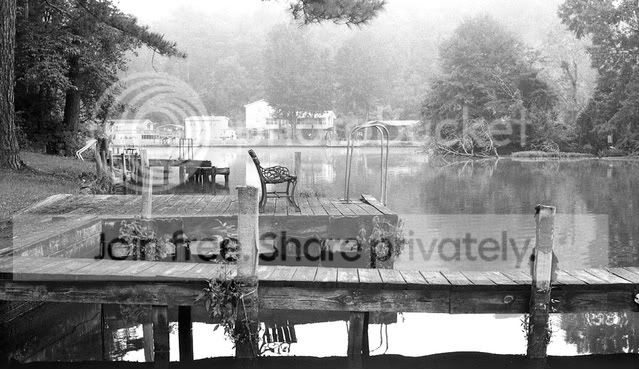
As for inexpensive film options, the Kentmere I souped last night came out rather well. Five examples, including this one, are in my gallery here.

dockside-jpeg-1.jpg
 
fotch, both rolls I have developed dried FLAT, as if ironed. On the loose end of wet film, I always clamp on a film clip for weight. When I cut my negs, the Kentmere strips have no curl on long axis or short one. This is one spot where the Ilford cheapie is way better than Tri-X, which takes a short-axis curve ...
 
A strong second on the calls for the Arista Premium 100 & 400 from Freestyle - as stated, it is Plus-X and Tri-X respectively. Kodak's quality control is second to none, so I think that option may be better in some ways than going the cheap "Brand X film" route. I mean really, Kodak film for $1.89/roll? Amazing. When the price of eggs and gas has doubled or more in recent years? Even more amazing.

D76 1:1 is a very economical way to do this and maintain quality results - so that's a great idea as well. I used to use D76 all the time, then got on an Xtol kick (which is more expensive, for arguably very small difference in the result)...and recently HC-110 - which is dirt cheap and now that I have the times down, I could recommend that as well for an inexpensive developer combo w/ the re-branded Tri-X.

By the way, I like the shot - somehow artistic looking of a "normal" scene, which I think is very nice. With a scene like this one, when you've got everything down just how you like it w/ the Tri-X, try a roll of ADOX CMS 20 just for fun. The detail in the dock will be mind blowing.
Take care,
Jed
 
Photrio.com contains affiliate links to products. We may receive a commission for purchases made through these links.
To read our full affiliate disclosure statement please click Here.

PHOTRIO PARTNERS EQUALLY FUNDING OUR COMMUNITY:


Ilford ADOX Freestyle Photographic Stearman Press Weldon Color Lab Blue Moon Camera & Machine
Top Bottom