Thank you all for all good advice!
Thus having a whole bottle of amidol I last night tried this formula:
Sodium sulfite 25g
Amidol 9g
Potassium bromide 0,5g
Benzotriazole 0,1g
Citric acid 0,7g
Water 1 liter
(roughly Cole Weston’s formula with some change in the anti-fog part)
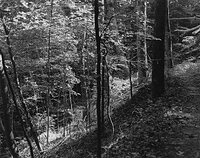
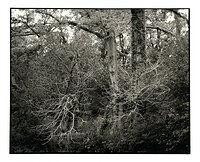
I made some contact prints from a 8x10 negative on Fomatone MG 131; everything worked quite normal concerning exposure time and developing time, and the result quite nice but nothing special.
Now, I haven’t had time to make more comparisons with other papers and other developers. Perhaps no need to invent the wheel one more time, so perhaps reasonable to ask inventors still around!
1) What is the main virtue of amidol supposed to be? Edward and Cole Weston recommended and used amidol formulas; Wolfgang Moersch was recently quite happy being able to produce a stable amidol developer (Amidol plus,
http://www.moersch-photochemie.de/co...sitiv/8/amidol).
+ Is it a developer particularly interesting for plain bromide papers?
+ Giving a warm tone on many different types of paper just using bromide (no bz)?
+ Papers available today for which amidol is of some special interest?
2) The amount of amidol that I have seen in various formulas seems to vary between 6-9g for 1 liter working solution. Edward’s formula 8g; Cole’s 9g; GAF 113 6,6g; Ilford ID-22 and ID-30 6g.
+ Is the amount mainly a question how many prints it will process, or does it make some change to the prints?
-- I used Cole’s 9g and I think (just a feeling) that I got a quite hard working developer, at least not soft working.
//Bertil