

-
Welcome to Photrio!Registration is fast and free. Join today to unlock search, see fewer ads, and access all forum features.Click here to sign up
You are using an out of date browser. It may not display this or other websites correctly.
You should upgrade or use an alternative browser.
You should upgrade or use an alternative browser.
1st roll using new meter???
-
A
- Thread starter stradibarrius
- Start date
Recent Classifieds
-
For Sale Minolta CLE+M-Rokkor 40/2 + Leica pola filter
- Started by Stankula
-
For Sale Pentax SMC 135mm f3.5 lens
- Started by logan2z
Forum statistics
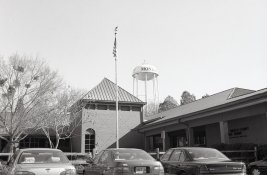

Looks ok to me. The blacks are black, the whites are white.

Have you checked this meter against a meter(in camera or hand-held)you are confident with? Your example looks good.
Rick
Rick

This is the first roll using the PDS meter I added to my Mamiya M645.
Does this look over exposed?
Neopan 400, XTOL 1:1, 80 deg. F for 5.25 min.
The simplest, and very reliable, test for an exposure meter is sunny-16. Have you tried it?

The simplest, and very reliable, test for an exposure meter is sunny-16. Have you tried it?
Very true. However, this time of year, depending on your location on the planet, even on a bright sunny day, the EV could be 1 stop less -- even more if you live way up north.
So what I always do when I check a meter's accuracy is I have a reference meter of known accuracy -- in this case a Gossen Luna Pro F -- and meter empty sky well away from the sun, and compare readings. Normally this will be "sunny f/16". But if it's not the optimum time of day or year, this works well.
As for the OP's photo -- I too think it shows a normal exposure range. The shadows are open but the windows in the shade range from almost black to black.
Last edited by a moderator:
OP
OP
It's a bit bright for me as well but the cars look exposed properly as does the building.I find in a lot of bright, sunny situations, I like a bit of underexposure, so it is bit bright for my tastes. Technically though, it looks great. I'd say your meter works fine.
I have check this meter against other meter and it is off by comparison.
If I had left it in the developer a bit longer, how would it have affected the outcome?
There is no way to tell from what you posted, other than to say that it is a "usable" or "printable" exposure. Reflected meters will always be wrong when read right out of the camera...even if they are metering a grey card. (They should be opened up 1/2 stop from a grey card to get the equivalent of an incident reading.)
Based solely on the lighting and the composition, I would say that if your meter if perfectly calibrated, the shot is underexposed.
Based solely on the lighting and the composition, I would say that if your meter if perfectly calibrated, the shot is underexposed.
Last edited by a moderator:
OP
OP
The example photo is a negative scan with no PP in Photoshop.
The example photo is a negative scan with no PP in Photoshop.
As 2F/2F said, impossible to judge your exposure meter from this. You got too many variables at work, lightmeter, camera, film, development, scanner, monitors. Try sunny 16 between 10am and 2pm or simply print the negative and judge it from there.
The example photo is a negative scan with no PP in Photoshop.
It doesn't make any difference. You can't judge exposure based on it except in a general sense (such as "printable", "unprintable", etc.). Just because it is unadjusted in the computer does not mean that it properly represents the actual negative densities. In fact, a file that was properly adjusted to best match the way the negative actually looks, and then inverted would be prudent, not an unadjusted scan. Why not make a proof print on a grade 2 paper so that the film edges are black, then scan that, and adjust it so that it looks like the actual proof print? It will tell you (and us) much more than an unaltered inverted negative scan.
What is PP?
Last edited by a moderator:
Just to add to this, and also as a way of reducing the variables, one of the best ways to test the accuracy of your camera's meter is to shoot slide film. It has a much narrower exposure latitude than print film, and if the exposure is not bang-on, you'll know it. Also, when you inspect the slide with a good loupe, you don't have the additional variables introduced by printing or scanning.
However, I suspect that if you would have used slide film to shoot the same subject at the same time of day and with the same weather conditions, the sky would have been blown out almost to white if you would have been exposing for the shadows, and if exposing for the sky, the shadows would have been all blocked up.
However, I suspect that if you would have used slide film to shoot the same subject at the same time of day and with the same weather conditions, the sky would have been blown out almost to white if you would have been exposing for the shadows, and if exposing for the sky, the shadows would have been all blocked up.

We used to test such things by eliminating processing variations. We did that by shooting Kodachrome. Nowadays I guess everyone is on his/her own. Personally, I use film and processing I know to produce good results and shoot the MacBeth chart. You can do this kind of test by bracketing around your meter readings and then evaluating the negatives with a demanding eye.

Looks ok but slightly over exposed. As far as I know, this meter is center weighted so if it was aimed up into the sky when you were setting it, I think it may effect exposure. Others may disagree....

- Joined
- Dec 31, 2006
- Messages
- 2,704
- Format
- Medium Format
****************This is the first roll using the PDS meter I added to my Mamiya M645.
Does this look over exposed?
Neopan 400, XTOL 1:1, 80 deg. F for 5.25 min.
80 deg F ????

Sirius Glass
Subscriber
Looks ok but slightly over exposed. As far as I know, this meter is center weighted so if it was aimed up into the sky when you were setting it, I think it may effect exposure. Others may disagree....
Note: If the meter reading included the sky, the negative would have been under exposed. The inclusion of the sky would cause a reading leading to a smaller aperture or a shorter shutter time thus leading to under exposure not over exposure.
As a matter of course, unless a photograph is mostly sky and even then, I take my readings without the sky. The exposures are good for negatives and slides.
When the meter readings include the sky, one may be erroneously led to believe that the film should be exposed below the box speed. This leads to a whirlwind of testing and the announcement that Kodak-Fuji-Ilford do not know what they are doing and the ISO must be driven down.
There are legitimate reasons for testing the film speed and adjusting the ISO and development processing, but solely adjusting the ISO based on including the sky in the exposure is not one of them.
Nothing succeeds like proper technique.

Steve
Shadows look ok for thin overcast sky. The bright area on top the water tower looks to be too dense.
I am looking at a scanned image so the accuracy is not there unless you calibrated a manual exposure scan on a step wedge subject or a nice full range found subject like a white house with black shutters. Then applied the same scan exposure/contrast to your test.
The definitive test is how it prints with your enlarger on #2 paper with no burn or dodge. Then look at the black and whites to see if they are correct.
It really helps to have a fixed subject with full tone range and reproduceable lighting. To me this is a studio still life with color checker & grey scale and a doll with white blouse and black pleated skirt. You need to get all the tones correct. Then you can test any film any time day or night.
Just based on what I see here, the exposure is fine if there was a slighly overcast sky because the shadows are correct, but the development is 5 or 10 % too long. Print it on a lower contrast paper or to simulate less development. The problem with this subject is there are deep shadows and a water tower in bright sun. If you exposed enough to get the shadows up, then the tower will be over exposed.
Sometimes it is hard to get highlights correct in scans even though they print properly. I can`t do Plus X to save my soul. I can`t find a time that makes a perfectly printable neg that scans perfectly. Tri X works, Delta 100, TMax all work fine.
The key is exposure controls shadow density and development time controls highlight density. Get the shadows correct, then work on development time.
I am looking at a scanned image so the accuracy is not there unless you calibrated a manual exposure scan on a step wedge subject or a nice full range found subject like a white house with black shutters. Then applied the same scan exposure/contrast to your test.
The definitive test is how it prints with your enlarger on #2 paper with no burn or dodge. Then look at the black and whites to see if they are correct.
It really helps to have a fixed subject with full tone range and reproduceable lighting. To me this is a studio still life with color checker & grey scale and a doll with white blouse and black pleated skirt. You need to get all the tones correct. Then you can test any film any time day or night.
Just based on what I see here, the exposure is fine if there was a slighly overcast sky because the shadows are correct, but the development is 5 or 10 % too long. Print it on a lower contrast paper or to simulate less development. The problem with this subject is there are deep shadows and a water tower in bright sun. If you exposed enough to get the shadows up, then the tower will be over exposed.
Sometimes it is hard to get highlights correct in scans even though they print properly. I can`t do Plus X to save my soul. I can`t find a time that makes a perfectly printable neg that scans perfectly. Tri X works, Delta 100, TMax all work fine.
The key is exposure controls shadow density and development time controls highlight density. Get the shadows correct, then work on development time.
| Photrio.com contains affiliate links to products. We may receive a commission for purchases made through these links. To read our full affiliate disclosure statement please click Here. |
PHOTRIO PARTNERS EQUALLY FUNDING OUR COMMUNITY:  |