




Andreas Thaler
Subscriber
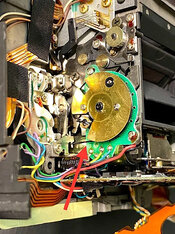
Did you know that the computer-controlled Nikon F4 from 1988 still has a mechanical cable pull?
It is used to transmit the aperture manually set on the lens. Contacts (sliders) are moved via the cable pull along a ring-shaped resistance track on the rewind side of the mirror box.
Depending on their position, a certain voltage value is produced for each aperture, which is probably digitized and transmitted to the camera's computer.
However, other electromechanical SLRs also use cable pulls to transmit information, for example the Nikon F3, Nikon FA, Minolta XD, and Canon AE-1.
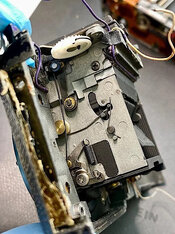
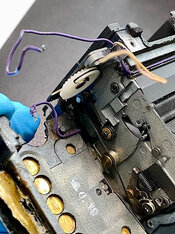
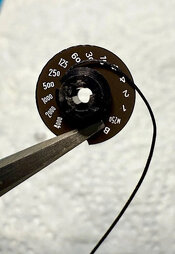
In the Nikon F3, a cable pull connects the aperture ring on the camera's bayonet mount to the disc-shaped functional resistor element (FRE) under the rewind crank. Depending on the position of the coupled aperture ring on the lens, the cable pull rotates contacts on the FRE, thereby transmitting values mechanically.
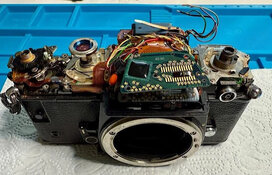
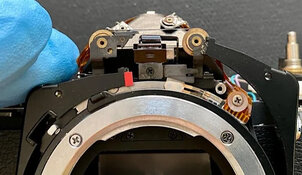
In the Nikon FA and Minolta XD, mechanical displays in the viewfinder are linked to the mode/shutter speed dial via a cable pull.
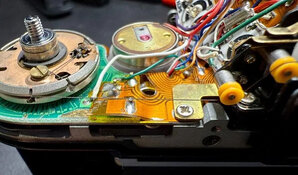
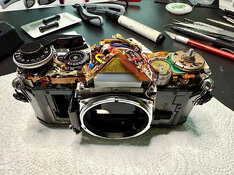
And in the Canon AE-1, the settings of the shutter speed dial on the wind side of the camera are transmitted to the functional resistor on the rewind side via a tungsten wire.
This and other fascinating collaborations between mechanics and electronics in electromechanical SLRs are described in detail in two documents. See the two articles by Master Larry Lyells on the Minolta XD and Canon AE-1.
Nikon's FRE is described in the Technical Manual for the Nikon F3 on page 25 (PDF).
+++
 A word of caution
Please keep in mind that you’ll be using highly flammable solvents for service work, and their fumes are harmful to your health. Soldering also produces fumes that should not be inhaled. Dangerous high voltages can be present when handling electronics, especially in conjunction with electronic flash units and mains. Therefore, familiarize yourself with the safety regulations beforehand and ensure your safety. Depending on the activity, protective gear may be advisable.
All information provided without guarantee and use at your own risk.
Acknowledgments
Without the work of Master Larry Lyells, in particular, we wouldn’t have the detailed technical information we need today for service/repair of SLRs.
The SPT Journal and The Camera Craftsman, which he helped shape significantly as an author, and which contain all the necessary information and instructions are available for a fee through Learn Camera Repair.
We owe our access to them to Eugene Pate, the founder of Learn Camera Repair.

