

• Welcome to Photrio!
    Registration is fast and free. Join today to unlock search, see fewer ads, and access all forum features.
    Click here to sign up

Nikon 28mm 1.8G

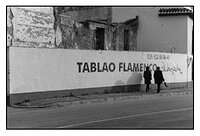
Tablao Flamenco

A
Tablao Flamenco

  • 1
  • 0
  • 18
Untitled

A
Untitled

  • 1
  • 2
  • 73

Forum statistics

Threads
204,328
Messages
2,867,184
Members
102,224
Latest member
BearThunder
Recent bookmarks
0

pierods

Member
Joined
Dec 18, 2007
Messages
393
Format
35mm
Hello friends,

last week I gave the first stab to color film on nikon lenses, and I was pleasantly surprised by the sharpness and the vivid, super saturated colors, specifically 50mm 1.4 AF D, which is a lens from 1995 (sample images attached).
I am keen on getting now the 28mm 1.8G. I suppose the colors will not be the same, being a much later lens? I know that the 28 is very sharp, but sterile, sigma-art-like colors are not for me.
Anybody has tried it on film?

 

Attachments

  • Screenshot From 2026-05-26 18-31-50.jpg
    Screenshot From 2026-05-26 18-31-50.jpg
    323 KB · Views: 47
I know it's pointing out the obvious, but how you color balance your scans is far more significant than the color rerendition of a specific lens. For instance the example image attached leans towards cyan and that surely isn't due to the lens used for the shot.
 
I got the Nikkor 28/1.8 G a few years ago as a modern replacement for my Zeiss 28/f2 Distagon in Rolleiflex mount.

Printing B&W is hard enough, I have not exposed or printed color film in decades, so I cannot comment.

The lens is a fantastic performer, equaling or surpassing my beloved 28/2 Distagon. The Nikkor is plastic, but that is an advantage as it keeps the weight reasonable. Though the lens is a little bulky to carry around all the time.


Nikkor 28mmJPG.JPG
 
I got the Nikkor 28/1.8 G a few years ago as a modern replacement for my Zeiss 28/f2 Distagon in Rolleiflex mount.

Printing B&W is hard enough, I have not exposed or printed color film in decades, so I cannot comment.

The lens is a fantastic performer, equaling or surpassing my beloved 28/2 Distagon. The Nikkor is plastic, but that is an advantage as it keeps the weight reasonable. Though the lens is a little bulky to carry around all the time.


View attachment 425959

Thanks
 
I know it's pointing out the obvious, but how you color balance your scans is far more significant than the color rerendition of a specific lens. For instance the example image attached leans towards cyan and that surely isn't due to the lens used for the shot.

That is quite true, and the above image itself is color corrected.

Having said that, having used the same film, the same scanner and much of the same post processing, but with other (non-Nikon) lenses, I noticed a much higher saturation with the Nikon 50 mm, quite difficult to keep under control actually, so I thought maybe somebody had noticed it as well.
 
The 1.8/28 AFS replaced a 2.8/28 AIS in my then setup centered around a Nikon D800E and I didn't see much difference with respect to color and else. It's a little sharper, i switched more for the integration with the modern body. It may have been slightly cooler than the Distagon 2/35 ZF I owned at the time. Should have kept the Zeiss, but that is a different story...
 
Last edited:
having used the same film, the same scanner and much of the same post processing, but with other (non-Nikon) lenses, I noticed a much higher saturation with the Nikon 50 mm, quite difficult to keep under control actually
99% certain this is due to other factors than the lens. Basically, your color management process is likely uncontrolled. Sorry to put it so bluntly, but it's entirely plausible (even likely).

The easiest workaround is to scan your negatives as if they were slides and disable all automatic adjustments during scanning. Then invert the scans manually using curves in e.g. Photoshop or GIMP. Apply the exact same curve adjustments to negative scans you want to compare.
Note that using something like NegativeLab Pro etc. with "the same settings" does not necessarily result in the same output. Tools like NLP make 'intelligent' decisions based on image data and these decisions are not necessarily consistent. In fact, they're usually inconsistent on a frame-to-frame basis. Sometimes the differences are subtle, sometimes they're dramatic.
 
99% certain this is due to other factors than the lens. Basically, your color management process is likely uncontrolled. Sorry to put it so bluntly, but it's entirely plausible (even likely).

The easiest workaround is to scan your negatives as if they were slides and disable all automatic adjustments during scanning. Then invert the scans manually using curves in e.g. Photoshop or GIMP. Apply the exact same curve adjustments to negative scans you want to compare.
Note that using something like NegativeLab Pro etc. with "the same settings" does not necessarily result in the same output. Tools like NLP make 'intelligent' decisions based on image data and these decisions are not necessarily consistent. In fact, they're usually inconsistent on a frame-to-frame basis. Sometimes the differences are subtle, sometimes they're dramatic.

Can be, can be.

Do Nikon lenses have a reputation for a certain color signature?
 
Can be, can be.

Not just that. Is. And it's easily demonstrated. Go ahead and try it out. The interesting side effect is that you can actually study more subtle aspects like the color rendition of a particular lens that way, but you have to keep all the rest constant - film, exposure, processing etc.
 
Ah, the colour "rendering" of this and that lens manufacturer and then the Leica...

We absolutely need to bring in the science to this thread too!!!
 
Here are three quick shots under copystand lighting, all at f/2.8. I used a D300s, opened the RAW shots in Photoshop and exported as JPG without making any changes except resizing. Draw your own conclusions:

First, the 28mm f/1.8G:
28mmG.jpg


Next, an old single-coated 28mm f/2:
28f2.jpg


Finally, a Zeiss 25mm f/2 ZF.2
25.jpg
 
Nice comparison! You could equal the brightness to one of the mid-grey samples to better visualize the differences in color-reproduction.
 
Here are three quick shots under copystand lighting, all at f/2.8. I used a D300s, opened the RAW shots in Photoshop and exported as JPG without making any changes except resizing. Draw your own conclusions:

First, the 28mm f/1.8G:
View attachment 426014

Next, an old single-coated 28mm f/2:
View attachment 426015

Finally, a Zeiss 25mm f/2 ZF.2
View attachment 426016

That’s nice. It looks like your lenses are very well matched although I consider this somewhat more important in cinematography. That is, to have matched color rendering in the lenses. Especially if changing lenses during single scene.
 
One possible clue would be to look at the color coatings of the various lenses. Vintage and earliest used yellow, on the front lens. But if I’m not mistaken some of Nikon’s most contrasty lenses even used red. I think that’s correct.
But any conclusions would probably necessitate a good control to compare results to.
There are so many variables that will affect color and contrast, film batch numbers, light at various times of the day, the quality of light, age of the film, type, temperature variance during processing, and obviously color correction.
Pushing will boost contrast, pulling will soften it.
But as a general rule, it’s my opinion that older, non Ai Nippon Kogaku lenses are less contrasty, and a bit softer. I’m speaking of color as much as anything else.
I’m curious to hear what you find. Let us know.
Good luck.
 
One possible clue would be to look at the color coatings of the various lenses.

That doesn't match my own experience, where versions of lenses matched in reproduction but had changed visibly in coating. I don't want to belittle this notion but it sounds just too familiar: Another version of the law of similars?
 
You could equal the brightness to one of the mid-grey samples to better visualize the differences in color-reproduction.
Here's everything matched to the L value (from Lab) on patch 001 (top left, brown).
I don't think the lighting was really the same in all three shots. In fact, I'm 100% positive it wasn't. This makes the comparison difficult. I'd suggest re-shooting the thing under more diffuse light, on a tripod so the camera-subject angle remains the same.
1779954544130.png
 
Not just that. Is. And it's easily demonstrated. Go ahead and try it out. The interesting side effect is that you can actually study more subtle aspects like the color rendition of a particular lens that way, but you have to keep all the rest constant - film, exposure, processing etc.

Okay, so if I understand you right, whatever color shift from a lens is vastly overridden by scanning etc.
 
Nice comparison! You could equal the brightness to one of the mid-grey samples to better visualize the differences in color-reproduction.

So, I would like to reframe my question... I agree that given postprocessing, we can find out differences in color renditions and scientifically create my own color signature and get it from any lens.

What I am talking about here is straight out-of-camera differences, things that you can easily detect and say "it looks like it was that lens".
 
All lenses have a color signature.
Would you extend your statement to "and lenses from brand x and a certain year/collection also share a color signature"?
 
Last edited by a moderator:
Lens color signature comparison.jpg


Here's a quick test I just did.
Top: Tamron 17-35 Di LD etc. etc.
Middle: Canon EF 35/2 IS
Bottom: Canon EF-s 15-85 IS etc.
Both zooms were set at the 35mm mark as indicated on the lens housing. Exposure was identical across all three: 1/25 f/8 ISO 100, camera (EOS 7D) mounted on a tripod. Lighting is open shade on a sunny day. White balance manually set to 'shade' on camera and kept unaltered in post processing. Post processing involved making no changes whatever to any of the files as loaded into RawTherapee, only exported to JPG and then assembled in GIMP in a single file as shown above.

As you can see, there is a color signature, but it's very subtle indeed and none of it involves anything like one lens producing very strongly saturated colors that are difficult to manage etc.

Honestly, you're breaking your head over the wrong factor.

There's one exception, which is strongly tinted lenses due to the use of thorium glass, which turns strongly yellow over time. This will produce a strong color cast. None of the lenses discussed so far in this thread fall in this category.

PS the Tamron lens in the top frame is the most strongly biased lens I have used on the EOS system. I specifically included it in this test for this reason. As you can see, it's still pretty close to the Canon lenses in color rendition. You'll also note that some of the (subtle) differences between the frames is not so much color rendition, but contrast, with the affordable EF-s zoom lens taking the cake with noticeably better contrast than the other two lenses.
 
That doesn't match my own experience, where versions of lenses matched in reproduction but had changed visibly in coating. I don't want to belittle this notion but it sounds just too familiar: Another version of the law of similars?

Hypothesis are not laws in the scientific sense. And my opinion is just that, a hypothesis.
We do know lenses coatings improve saturation and contrast, right?
And we can assume that various lenses have different coatings?
Doesn’t it make sense to consider the coatings to try to establish some sort of explanation why some are as the contributor describe?
Now, as I stated, whether it’s significant in relationship to all the other things that affect color in photography, that’s the question.
And as I stated, he’ll need to consider a proper control to determine that. Call it a scientific experiment.
Anyhow, thanks for expressing an opinion on this.
To be quite honest, as I read more about coatings, I realize they don’t really color the image as color filters do. They appear to behave quite differently.
 
Photrio.com contains affiliate links to products. We may receive a commission for purchases made through these links.
To read our full affiliate disclosure statement please click Here.

PHOTRIO PARTNERS EQUALLY FUNDING OUR COMMUNITY:


Ilford ADOX Freestyle Photographic Stearman Press Weldon Color Lab Blue Moon Camera & Machine
Top Bottom
