

• Welcome to Photrio!
    Registration is fast and free. Join today to unlock search, see fewer ads, and access all forum features.
    Click here to sign up

Changes in Ilford Multigrade Classic Glossy

On The Mound

A
On The Mound

  • 0
  • 1
  • 79
On The Mound

A
On The Mound

  • 2
  • 2
  • 86

Forum statistics

Threads
204,425
Messages
2,868,418
Members
102,266
Latest member
Linhtran
Recent bookmarks
0

Steve Goldstein

Subscriber
Joined
Jul 8, 2007
Messages
1,850
Location
Northeastern US
Format
Multi Format
Over the last few years I've gone through at least a half dozen (probably more) 50- and 100-sheet boxes of 11x14 Ilford Multigrade Classic and Warmtone (always glossy). This note describes differences I noticed between paper from 100-sheet boxes of Multigrade Classic I purchased in May 2025 and April 2026.

There were a lot of physical differences - the newer paper felt finer (I can't find a better word than this), slightly smoother and thinner, and just a bit more pliant and limp. It reminded me of some Foma paper I'd used a few months ago. Measuring the thickness with my Starrett vernier revealed that the new paper was very slightly thinner than the old: 0.0115" for the old and 0.0112"-0.0113" for the new.

The two papers also curled differently. The old paper's out-of-the-box curl was in the long direction, i.e. the two long edges curled towards each other. The new paper curled the other way, short edge towards short edge.

The papers expanded differently when wet. The old paper grew more in the short dimension while the new grew more in the long direction. When placed atop one another, wet sheets of old and new were clearly different, with the long edge of the new paper about 1/4" longer than the old, and the short edge of the old paper a bit longer than the new. They were the same size after drying.

I also ran test strips since I was in the middle of a short series of supposed-to-be-identical prints. Where the old paper had required a 12-second exposure, the new needed 13 seconds to reach the same mid-tone density. Contrast, at least with an Ilford 2-1/2 filter, appeared identical, as did image color and response to toning (not much, if I'm honest), it's just that prints on paper from the new box needed about 8% more exposure to match those from the older box. This is the first time I'd ever run into this - all prior boxes had always matched each other quite closely.

This isn't a complaint. Ilford's (and Foma's) papers remain excellent products, and the physical differences aren't of any practical consequence. But from now on I'll always run test strips if I have to switch to a new box of paper mid-stream.
 
Last edited:
I wonder how much variation is normal in paper thickness? I've been using mostly Fomatone of late. Just a phase I'm in.

I have so darn much paper. I've been lazy I need to get busy and print.

The dimension of the cut sheet 1/4" variation is crazy .
 
Over the last few years I've gone through at least a half dozen (probably more) 50- and 100-sheet boxes of 11x14 Ilford Multigrade Classic and Warmtone (always glossy). This note describes differences I noticed between paper from 100-sheet boxes of Multigrade Classic I purchased in May 2025 and April 2026.

There were a lot of physical differences - the newer paper felt finer (I can't find a better word than this), slightly smoother and thinner, and just a bit more pliant and limp. It reminded me of some Foma paper I'd used a few months ago. Measuring the thickness with my Starrett vernier revealed that the new paper was very slightly thinner than the old: 0.0115" for the old and 0.0112"-0.0113" for the new.

The two papers also curled differently. The old paper's out-of-the-box curl was in the long direction, i.e. the two long edges curled towards each other. The new paper curled the other way, short edge towards short edge.

The papers expanded differently when wet. The old paper grew more in the short dimension while the new grew more in the long direction. When placed atop one another, wet sheets of old and new were clearly different, with the long edge of the new paper about 1/4" longer than the old, and the short edge of the old paper a bit longer than the new. They were the same size after drying.

I also ran test strips since I was in the middle of a short series of supposed-to-be-identical prints. Where the old paper had required a 12-second exposure, the new needed 13 seconds to reach the same mid-tone density. Contrast, at least with an Ilford 2-1/2 filter, appeared identical, as did image color and response to toning (not much, if I'm honest), it's just that prints on paper from the new box needed about 8% more exposure to match those from the older box. This is the first time I'd ever run into this - all prior boxes had always matched each other quite closely.

This isn't a complaint. Ilford's (and Foma's) papers remain excellent products, and the physical differences aren't of any practical consequence. But from now on I'll always run test strips if I have to switch to a new box of paper mid-stream.

The differences you note in curl and dimension changes are due to the grain direction of the paper. It is possible that Ilford has more than one source for the base and the grain direction of the master rolls could vary. Or someone mistakenly cut the paper with the grain going differently.
 
The differences you note in curl and dimension changes are due to the grain direction of the paper. It is possible that Ilford has more than one source for the base and the grain direction of the master rolls could vary. Or someone mistakenly cut the paper with the grain going differently.

The grain direction of a Fourdrinier paper isn't going to change mysteriously. What is much more common is that the width of cut down from master roll will vary for minimum wastage in a given conversion event. e.g. sometimes you'll take an 8" cut for 8x10, other times a 10" cut will be more efficient.


The papers expanded differently when wet. The old paper grew more in the short dimension while the new grew more in the long direction. When placed atop one another, wet sheets of old and new were clearly different, with the long edge of the new paper about 1/4" longer than the old, and the short edge of the old paper a bit longer than the new. They were the same size after drying.
Hardening effects can continue at a low rate for some time.


Where the old paper had required a 12-second exposure, the new needed 13 seconds to reach the same mid-tone density.

Those are the effects of age fog, even if well below visual threshold. This is why the manufacturer has a life expectancy for the paper that is significantly shorter than it is for the fogging to significantly impact contrast and white values.
 
The grain direction doesn't change. What changes is how the paper is cut in relation to the grain, i.e. does the grain run along the long or short dimension of the cut sheet.

What you had said implied that the grain direction of the master roll could vary (it won't, not unless you know of a paper machine with a headbox 1600m wide), and nor will the direction of the slit-to-width doughnuts - the width of those doughnuts relative to the finished cut sheet is what will define the grain direction of the final cut sheets.
 
What you had said implied that the grain direction of the master roll could vary (it won't, not unless you know of a paper machine with a headbox 1600m wide), and nor will the direction of the slit-to-width doughnuts - the width of those doughnuts relative to the finished cut sheet is what will define the grain direction of the final cut sheets.

What I said implied that one supplier could have rolls with the grain running a different direction than another. Unlikely. More likely is the sheets being cut so the grain runs differently, that is sheets can be cut "long grain" or short grain."
 
I bet Harman sources their paper base from Schoeller like virtually everyone else, and that this product is subject to change as a result of constant optimizations (cost reductions, efficiency improvements, compliance efforts).
 
Hello everyone,

I would like to add my experience here, as the topic of possible changes in ILFORD fibre-based papers is very relevant to me.

I run MeinFilmLab in Germany, a professional analogue photo lab, and we have been working with ILFORD fibre-based papers for many years. ILFORD FB Warmtone in particular has been one of my standard papers for roughly over twenty years. We use these papers regularly for professional darkroom printing and customer work. It is also my personal paper.

Unfortunately, for several months now we have been seeing a serious problem with both ILFORD FB Classic and ILFORD FB Warmtone. We bought a larger quantity of both papers at the end of 2022, specifically because we wanted to work with consistent emulsion batches over a longer period. The paper was stored carefully in a professional lab environment. We still have several 50-sheet boxes in 24×30 cm, 30×40 cm and 40×50 cm in stock.

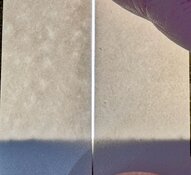
The problem appears as spotting or small dot-like marks in the paper. In the wet state these marks are visible even without transmitted light. They seem to be in the paper base. At first, until roughly the end of 2025, the spots were mostly no longer visible after drying, or only very faintly. Now, however, they remain visible after drying as well. With the Warmtone paper we also see a more random, irregular spotting pattern. It looks like the paper is not fixed thourougly, but it is.

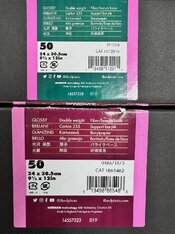
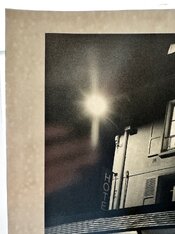
I have attached example photographs. One image shows the affected batch numbers, and another shows a dried print on a light table. On the left side you can see the defective paper; on the right side there is an older, slightly earlier ILFORD paper which does not show this problem.

We have spent several weeks trying to rule out our own process. At MeinFilmLab we work with Moersch and ILFORD chemistry. We tested different processing sequences, including following the ILFORD data sheet, longer fixing, thorough washing, washing for around 30 minutes and also for around one hour. All test prints were properly fixed and washed. Our washing temperature is normally around 24 to 27°C.

One observation is that the effect seems to become more obvious at processing temperatures above 20°C. It also seems to be intensified after stronger, warmer selenium toning. This is particularly problematic for us, because selenium toning is a normal part of our professional fibre-base printing workflow. Of course fibre-based papers react to temperature, chemistry and toning, but this behaviour is different from what I have known from ILFORD papers over the last two decades.

I am also fairly sure that the surface structure has changed. With the newer FB Classic, this slightly duller surface was already noticeable some time ago. In my experience, a similar surface character has also appeared with FB Warmtone since around 2022.

This is important to me because the old ILFORD FB Warmtone had a very special surface after air drying. It dried with a deep, elegant gloss, almost reminiscent of the gloss from a glazing press, although it was simply air dried. That was one of the reasons why I used this paper as my standard paper for so many years.

The current Warmtone no longer dries in the same way. The surface appears less glossy, slightly duller and more textured or grained. The difference is not huge, and perhaps someone who only started using the paper recently would not notice it. But after working with this paper for about twenty years, I can see and feel the difference.

I contacted HARMAN with photographs of the batch numbers and comparison images and asked for technical clarification. I wanted to know whether anything had changed in the emulsion, baryta coating, paper base, hardening, surface coating or production process, and whether similar reports had come from other users or labs. Unfortunately, I have not received a reply so far.

I am posting this here because I would like to know whether other printers have seen similar behaviour, especially with ILFORD FB Warmtone from around 2022 onwards.

I would be particularly interested in observations regarding:
  • spotting visible in the wet paper and later also in the dry print
  • stronger spotting after selenium toning
  • stronger defects at processing or washing temperatures above 20°C
  • changes in air-dried gloss
  • a slightly duller or more textured surface compared with older Warmtone batches
  • long-term ageing of unopened or carefully stored boxes
I want to be clear that I have great respect for ILFORD/HARMAN and their importance to black-and-white photography.

Best regards,

Jörg

IMG_1022.jpegIMG_1021.jpegIMG_1025.jpeg
 
The random translucent spots in wet prints are characteristic of the newer paper base which has a more open weave. It has been around for awhile on Classic and Cooltone FB, and now MGWT too. It seems they have no choice; the previous paper is apparently no longer available. I find no difference in the final result. The spots disappear once the paper is dry. I see no difference in toning either, or in dry mounting. Ilford formally responded to this earlier; there were past threads. Nothing to worry about.

What I have found is that MG and Cooltone need to be very quickly and evenly submerged into their respective baths or they are susceptible to unevenness. The few cases of permanent spots I had I traced to some kind of packaging contamination on maybe 5% of the sheets. But I haven't encountered any of that in the last decade of so.
It was unrelated to the new paper weave.

Too warm of a water temp can always affect gelatin sheen, or serious humidity issues, at least temporarily.

You should really contact them directly about this.
 
Last edited:
Hello everyone,

I would like to add my experience here, as the topic of possible changes in ILFORD fibre-based papers is very relevant to me.

I run MeinFilmLab in Germany, a professional analogue photo lab, and we have been working with ILFORD fibre-based papers for many years. ILFORD FB Warmtone in particular has been one of my standard papers for roughly over twenty years. We use these papers regularly for professional darkroom printing and customer work. It is also my personal paper.

Unfortunately, for several months now we have been seeing a serious problem with both ILFORD FB Classic and ILFORD FB Warmtone. We bought a larger quantity of both papers at the end of 2022, specifically because we wanted to work with consistent emulsion batches over a longer period. The paper was stored carefully in a professional lab environment. We still have several 50-sheet boxes in 24×30 cm, 30×40 cm and 40×50 cm in stock.

The problem appears as spotting or small dot-like marks in the paper. In the wet state these marks are visible even without transmitted light. They seem to be in the paper base. At first, until roughly the end of 2025, the spots were mostly no longer visible after drying, or only very faintly. Now, however, they remain visible after drying as well. With the Warmtone paper we also see a more random, irregular spotting pattern. It looks like the paper is not fixed thourougly, but it is.

I have attached example photographs. One image shows the affected batch numbers, and another shows a dried print on a light table. On the left side you can see the defective paper; on the right side there is an older, slightly earlier ILFORD paper which does not show this problem.

We have spent several weeks trying to rule out our own process. At MeinFilmLab we work with Moersch and ILFORD chemistry. We tested different processing sequences, including following the ILFORD data sheet, longer fixing, thorough washing, washing for around 30 minutes and also for around one hour. All test prints were properly fixed and washed. Our washing temperature is normally around 24 to 27°C.

One observation is that the effect seems to become more obvious at processing temperatures above 20°C. It also seems to be intensified after stronger, warmer selenium toning. This is particularly problematic for us, because selenium toning is a normal part of our professional fibre-base printing workflow. Of course fibre-based papers react to temperature, chemistry and toning, but this behaviour is different from what I have known from ILFORD papers over the last two decades.

I am also fairly sure that the surface structure has changed. With the newer FB Classic, this slightly duller surface was already noticeable some time ago. In my experience, a similar surface character has also appeared with FB Warmtone since around 2022.

This is important to me because the old ILFORD FB Warmtone had a very special surface after air drying. It dried with a deep, elegant gloss, almost reminiscent of the gloss from a glazing press, although it was simply air dried. That was one of the reasons why I used this paper as my standard paper for so many years.

The current Warmtone no longer dries in the same way. The surface appears less glossy, slightly duller and more textured or grained. The difference is not huge, and perhaps someone who only started using the paper recently would not notice it. But after working with this paper for about twenty years, I can see and feel the difference.

I contacted HARMAN with photographs of the batch numbers and comparison images and asked for technical clarification. I wanted to know whether anything had changed in the emulsion, baryta coating, paper base, hardening, surface coating or production process, and whether similar reports had come from other users or labs. Unfortunately, I have not received a reply so far.

I am posting this here because I would like to know whether other printers have seen similar behaviour, especially with ILFORD FB Warmtone from around 2022 onwards.

I would be particularly interested in observations regarding:
  • spotting visible in the wet paper and later also in the dry print
  • stronger spotting after selenium toning
  • stronger defects at processing or washing temperatures above 20°C
  • changes in air-dried gloss
  • a slightly duller or more textured surface compared with older Warmtone batches
  • long-term ageing of unopened or carefully stored boxes
I want to be clear that I have great respect for ILFORD/HARMAN and their importance to black-and-white photography.

Best regards,

Jörg

View attachment 426010View attachment 426011View attachment 426012

Do the spots appear to be part of the emulsion or paper base?
Are the particles, like a solid grain?
Do the spots have a stain like appearance, translucent or colored?
 
Do the spots appear to be part of the emulsion or paper base?
Are the particles, like a solid grain?
Do the spots have a stain like appearance, translucent or colored?

I'd be looking very carefully at the mains water/ pipe conditions and the filtration thereof before jumping on Harman
 
I have been split-toning and redeveloping MG Classic last year and also noticed that the paper didn't like to be submerged unevenly. It turned out more sensitive to this than anything I used before. I wish I had some of the good old Galerie FB graded paper I loved to use many years ago... nostalgia.
 
Thank you for the questions.

The spots do not look like solid particles sitting on the surface. They appear to be within the paper base or coating itself. In the wet state they are visible even without transmitted light, and after drying they can remain visible as a kind of internal spotting or mottling. With the Warmtone paper we also see a more random stain-like pattern.

I fully agree that water quality and filtration should be checked before blaming the manufacturer. That was one of the first things we considered. However, in our case I am quite confident that this is not a mains-water or pipe-contamination issue.

We are a professional lab in Germany, and the water quality here is generally very high. More importantly, our filtration system works very well and is part of a larger professional lab setup, as we also operate other print machines and wet-processing equipment. If we had a contamination problem in the water supply or filtration, I would expect to see it elsewhere in the lab as well, not only with these particular ILFORD fibre-base papers.

We have tested different washing times and processing sequences, including the procedure according to the data sheet, longer washing, and different chemistry combinations. The issue remains specific to these papers/batches and becomes more visible with ageing, higher processing temperatures and stronger selenium toning.

So I am not trying to “jump on Harman”. I am trying to understand whether this is a batch issue, a change in paper base/coating, or a change in production tolerance. That is why I contacted Harman directly first, but unfortunately I have not received a reply so far.
 
Classic is the fussiest in terms of or uneven dev splotchiness if not quickly submerged and evenly agitated at the start. The paper base is now all the same. I tend to avoid Classic and now only keep on hand Cooltone and MGWT. The quality control of Cooltone seems to have actually improved. WT has barely changed. Both tone fine, but of course differently.

Early on, when Cooltone was first released, I had some of the spot issues you described. But if I recall correctly, that was when the emulsion faced the inside of the plastic packaging sleeve itself; and it was only the top one or two sheets themselves affected. So I attributed that to some kind of packaging contamination, for lack of a better
explanation. But now half the sheets are packed one direction, half the other direction, both facing inward, so none of the emulsion contacts the plastic bag at all. And I haven't seen any of the previous issue at all.
 
Hello everyone,

I would like to add my experience here, as the topic of possible changes in ILFORD fibre-based papers is very relevant to me.

I run MeinFilmLab in Germany, a professional analogue photo lab, and we have been working with ILFORD fibre-based papers for many years. ILFORD FB Warmtone in particular has been one of my standard papers for roughly over twenty years. We use these papers regularly for professional darkroom printing and customer work. It is also my personal paper.

Unfortunately, for several months now we have been seeing a serious problem with both ILFORD FB Classic and ILFORD FB Warmtone. We bought a larger quantity of both papers at the end of 2022, specifically because we wanted to work with consistent emulsion batches over a longer period. The paper was stored carefully in a professional lab environment. We still have several 50-sheet boxes in 24×30 cm, 30×40 cm and 40×50 cm in stock.

The problem appears as spotting or small dot-like marks in the paper. In the wet state these marks are visible even without transmitted light. They seem to be in the paper base. At first, until roughly the end of 2025, the spots were mostly no longer visible after drying, or only very faintly. Now, however, they remain visible after drying as well. With the Warmtone paper we also see a more random, irregular spotting pattern. It looks like the paper is not fixed thourougly, but it is.

I have attached example photographs. One image shows the affected batch numbers, and another shows a dried print on a light table. On the left side you can see the defective paper; on the right side there is an older, slightly earlier ILFORD paper which does not show this problem.

We have spent several weeks trying to rule out our own process. At MeinFilmLab we work with Moersch and ILFORD chemistry. We tested different processing sequences, including following the ILFORD data sheet, longer fixing, thorough washing, washing for around 30 minutes and also for around one hour. All test prints were properly fixed and washed. Our washing temperature is normally around 24 to 27°C.

One observation is that the effect seems to become more obvious at processing temperatures above 20°C. It also seems to be intensified after stronger, warmer selenium toning. This is particularly problematic for us, because selenium toning is a normal part of our professional fibre-base printing workflow. Of course fibre-based papers react to temperature, chemistry and toning, but this behaviour is different from what I have known from ILFORD papers over the last two decades.

I am also fairly sure that the surface structure has changed. With the newer FB Classic, this slightly duller surface was already noticeable some time ago. In my experience, a similar surface character has also appeared with FB Warmtone since around 2022.

This is important to me because the old ILFORD FB Warmtone had a very special surface after air drying. It dried with a deep, elegant gloss, almost reminiscent of the gloss from a glazing press, although it was simply air dried. That was one of the reasons why I used this paper as my standard paper for so many years.

The current Warmtone no longer dries in the same way. The surface appears less glossy, slightly duller and more textured or grained. The difference is not huge, and perhaps someone who only started using the paper recently would not notice it. But after working with this paper for about twenty years, I can see and feel the difference.

I contacted HARMAN with photographs of the batch numbers and comparison images and asked for technical clarification. I wanted to know whether anything had changed in the emulsion, baryta coating, paper base, hardening, surface coating or production process, and whether similar reports had come from other users or labs. Unfortunately, I have not received a reply so far.

I am posting this here because I would like to know whether other printers have seen similar behaviour, especially with ILFORD FB Warmtone from around 2022 onwards.

I would be particularly interested in observations regarding:
  • spotting visible in the wet paper and later also in the dry print
  • stronger spotting after selenium toning
  • stronger defects at processing or washing temperatures above 20°C
  • changes in air-dried gloss
  • a slightly duller or more textured surface compared with older Warmtone batches
  • long-term ageing of unopened or carefully stored boxes
I want to be clear that I have great respect for ILFORD/HARMAN and their importance to black-and-white photography.

Best regards,

Jörg

View attachment 426010View attachment 426011View attachment 426012

I had similar problems a few years ago--spots on the paper when wet. They disappeared when dry. i contacted Ilfor and this was their reply:

I'm sorry you've been alarmed by some abnormal looking dark and lights spots on your processed MGFB Classic paper. I work in our Technical Services department, but also handle customer quality issues/complaints.

From your helpful description - I can put your mind at rest, as I am recognising the exact issue you describe. Seeing your image also confirmed my recognition of the issue.
I'd had approx 10 other customers raise this to me - initially approx 18 months ago. The issue only affects FB (never RC) and only ever shows when FB paper is wet.
It can arise on all FB products, and on all/random batches. Exact as you report - it can show as dark spots seen on the base side when wet only. But also as light spots - on the emulsion side, again only when wet. The spots often show worse if you hold a wet print up to lights/a window - or over a lightbox.

The issue is linked to an enforced base change approx 4 years ago (This is why they weren't present on the prior product version - MGFB IV). The newer base has a slightly different paper structure/fibre weave, and this means some of the paper pulp can show more openly - and have more structure when wet.
The issue if it shows, really is very random though.

Following all investigations and from the feedback of customers - our findings are that these spots really do only show when wet, and they have no adverse effects in dried prints. Nor do they alter archival stability of prints.
So any prints you're seeing these spots on when wet, will be as archivally stable as prints pre the base change, and the spots ought not ever show. You won't need to alter anything either - re how you process your prints.
But, we do appreciate its likely un-nerving for you/others seeing the issue when prints are wet.

I'm not typically replacing customers items/boxes - as these spots are intermittently inherent with all FB papers in our range. (Even within a batches master roll, not all the meterage will be affected. Likewise a customer might even observe that not all sheets within any box - is affected). So even a replacement box could show this issue. But, most boxes any customers use - likely won't show these wet related spots. So this too, is why we are never replacing paper, as the actual dried prints look totally normal and free of the spots.
Just in case it further helps, the issue can tend to show more when prints are washed longer than we guide, but even then - they are never showing when try, and still don't affect archival stability.
So I hope this helps to reassure you the spots can be normal, and you're not doing anything wrong with how you process the paper. If you were ever to see the spots on dried prints however, please come back to me and I'll certainly then further help.
Technical Services

technical@harmantechnology.com
 
If the problem is not simply one of the paper structure as explained by the Harman Tech Service correspondence above, or by using paper that is ageing (and I'd very seriously question why people are still obsessed with a 1980's mentality about batch variance, having done plenty of match printing with current papers), I'd be looking carefully at what trays and tongs have been used for what, especially if things like thiourea or iron ions have been involved at any point. My suspicion is that if there is contamination (and it can get trapped in the base when wet, then react with e.g. selenium), it has been introduced either into the paper bags by the end user, or is present in residual spots somewhere within the process and handling area. All it could take is some dried chemistry on a sleeve of a shirt getting into the bags. Just because it isn't appearing elsewhere, doesn't necessarily mean it isn't present, but some other processes might be sequestering it better.

Another possible aspect is that contamination is getting caught in the weave of the paper base when it is wet during processing, and/ or hardening increasing with time is preventing the base shrinking completely back to size when it dries.

The surface finish change likely has a lot to do with people complaining that the surface was too glossy a few years ago, unless somehow something is being done that is affecting the supercoat hardening by the end user.
 
Last edited:
Thank you all, this is very helpful.

It seems that the paper change is indeed known, so perhaps I simply have to accept that the paper is no longer exactly the material I used for many years. Still, this is disappointing. ILFORD FB Warmtone was my standard paper for roughly over twenty years, and the old air-dried surface was one of its great qualities.

In general, I am becoming increasingly concerned about what feels like a gradual decline or change in the quality and character of analogue materials. Kodak moving more 35mm film to PET base, emulsion defects at the end of some Kodak films (https://www.photrio.com/forum/threa...rames-of-kodak-35-mm-films-since-2020.217458/), and now a changed surface structure on ILFORD fibre-base paper — all of these things may have technical or economic reasons, but for professional users they are not trivial changes. One starts to wonder where this will lead in the long run.

Regarding possible contamination from trays: I can rule that out with a high degree of confidence. We use separate trays for each process, and they are thoroughly rinsed after use. We do not use the same tray for developer, stop, fixer, toner and washing. This is a professional darkroom workflow, not a casual home-darkroom setup.

I also understand that manufacturers have to adapt materials, supply chains and coating processes. But when a paper has had a certain surface character for decades, and that character changes noticeably, it affects the final print. For some users this may be unimportant. For others, especially those who print the same paper for many years and sell finished prints to customers, the difference is visible and relevant.

I've been in this business for way too long, and maybe I'm already too old for all this crap.
 
I've been in this business for way too long, and maybe I'm already too old for all this crap.

Joerg, just too add, this kind of unfortunate things have been happening before. The difference today being the lack of alternatives. When Forte Polywarmtone was gone, there was hardly anything to replace it. We made the best from Agfa MCC until this was lost to us. It came back as ADOX we liked it but later the paper changed and was less fun than before. So we continued with Ilford, embraced reliable quality until today as things start to get questionable in a way we can hardly tolerate if this continues. But where to move now?

What changed is: Today we are seriously running out of options! But I will rather print exclusively on RC thant stop doing it.
 
Joerg, just too add, this kind of unfortunate things have been happening before. The difference today being the lack of alternatives. When Forte Polywarmtone was gone, there was hardly anything to replace it. We made the best from Agfa MCC until this was lost to us. It came back as ADOX we liked it but later the paper changed and was less fun than before. So we continued with Ilford, embraced reliable quality until today as things start to get questionable in a way we can hardly tolerate if this continues. But where to move now?

What changed is: Today we are seriously running out of options! But I will rather print exclusively on RC thant stop doing it.

Yes, exactly. We are living in a niche, that is very clear. And I fully understand that manufacturers have to deal with smaller production volumes, changed suppliers, environmental regulations, rising costs and all the other realities of keeping analogue materials alive.

But if the quality continues to shrink, then at some point the whole logic behind this niche starts to collapse. We are not only paying for a nostalgic idea. We are paying for a material quality, a surface, a tonal behaviour and a reliability which made these products worth using in the first place.

The analogue scene is currently being kept alive, and in many ways refreshed, by newcomers and people coming from digital photography. That is wonderful. But many of them have no direct reference to the older materials. They never printed on Forte Polywarmtone when it was still available. They never used the old Agfa papers in their best years. They may not know how older Ilford Warmtone air-dried, how certain films handled, or how consistent some products once were. The mindset of many young people new to analog photography is also completely different from what we had back then: A large percentage of them want flawed material. Analog photos have to look rough; mistakes are fun and cool. Young people think that’s exactly how it was back then. And: Many have their film destroyed after it’s been scanned. That’s not my world.

That knowledge is mostly with us old darkroom people, unfortunately. And that makes the current situation difficult to discuss, because younger users may simply accept the present quality as normal. For us, it is not normal. We see the difference because we have lived with these materials for decades.

And then the question becomes unavoidable: does the current quality still justify the current price?

I could name several products which were clearly better in the past, or which are now no longer available, or only available in a reduced quality. Kodak’s move to PET base, defects at the end of some films, changed paper surfaces, missing alternatives in fibre-base papers — each of these things may be explainable on its own. But together they form a pattern.

Of course I do not want to stop printing. I also do not want to attack the few manufacturers who are still producing materials for us. Quite the opposite. I want them to survive. But survival alone is not enough if professional users can no longer rely on the quality.

And yes, that is the real problem today: where do we move now?

In the past, if one paper disappeared or changed, there was usually another serious alternative. Today the alternatives are becoming very thin. That is what worries me most. We are not only losing products. We are losing choices.
 
Well, we've lost graded papers. The Ilford VC papers are quite good, certainly way better than previous MGIV. And let's face it - VC printing is easier. Down to a single real cold tone choice - MG cooltone. The biggest problem now is the sheer expense of any of them. But I can't complain about the quality of what is left; it's quite uncommon for me to cull any Ilford print due to a production issue; and I exclusively use FB. Sure, I miss all kinds of classic papers from the past; but the ones we still have are excellent performers, and cover most of the bases.

Kodak's switch to PET base for most films, especially sheet films, was a positive. Their film quality control is better than ever. PET is more permanent; and even more significantly, it is dimensionally stable, allowing for precise register in advanced printing protocols like unsharp masking.
 
The shame is that although there are many photographers using film today, a very small percentage are printing in the darkroom or having such prints done. So darkroom paper becomes an even more niche market. I am grateful Ilford is still making FB Glossy.
 
I have the impression, that the change in quality is not only due to being a niche market, but also that toxic ingredients get more and more restricted. Yes, this means changes, and in many cases even disappearances of product lines, but I'm willing to accept this in turn for a longer expected life time in decent health. Yes, Marie Curie could play with Polonium, and we can't.
 
have the impression, that the change in quality is not only due to being a niche market, but also that toxic ingredients get more and more restricted.

Maybe, but my own feeling, given that I am very routinely working with the materials implicated (without seeing either the specific paper faults that remain after drying or packaging gripper faults on Portra, or within the final frame of 400TX), is that lightning is hitting the same spot so repeatedly such that there are unresolved questions.
 
Photrio.com contains affiliate links to products. We may receive a commission for purchases made through these links.
To read our full affiliate disclosure statement please click Here.

PHOTRIO PARTNERS EQUALLY FUNDING OUR COMMUNITY:


Ilford ADOX Freestyle Photographic Stearman Press Weldon Color Lab Blue Moon Camera & Machine
Top Bottom