



Andreas Thaler
Subscriber
A Vivitar skylight filter was stuck on a Rikenon 55/2.8 lens and wouldn’t budge even with the lens filter wrench.
Since the filter was already damaged and had a dent, I didn’t want to waste time trying WD-40 to loosen it.
Besides, this presented an opportunity to try out a technique that Thomas Tomosy describes in one of his two books on camera repair1.
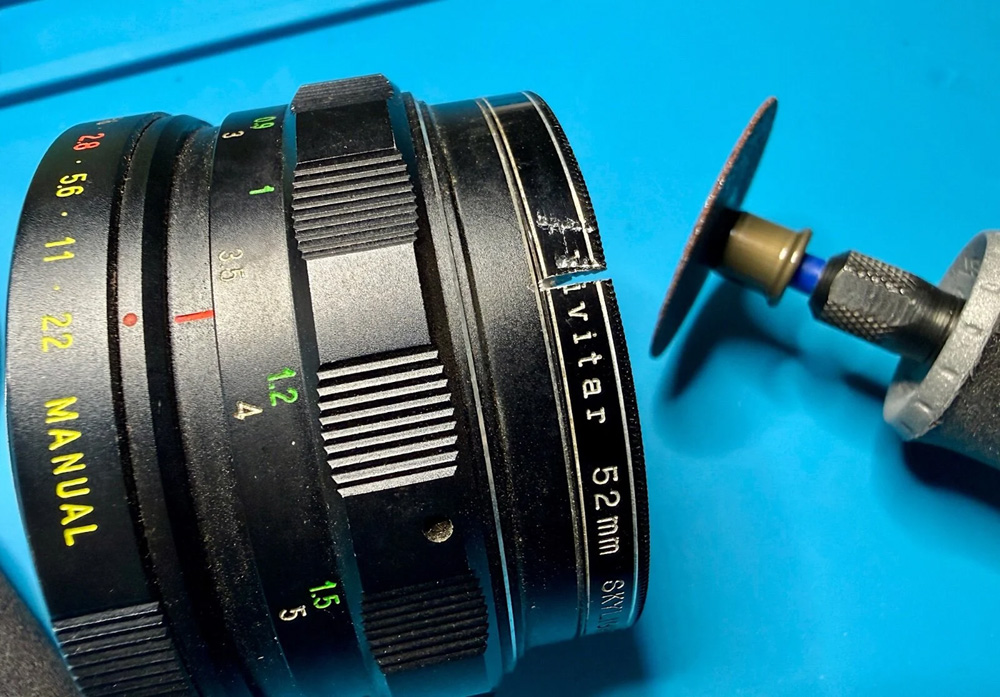
To do this, the glass is removed, the filter ring is cut in, and then, using combination pliers, it is pried out of the filter thread on the lens with a twisting motion.
This destroys the filter, so it’s a last resort when nothing else works.
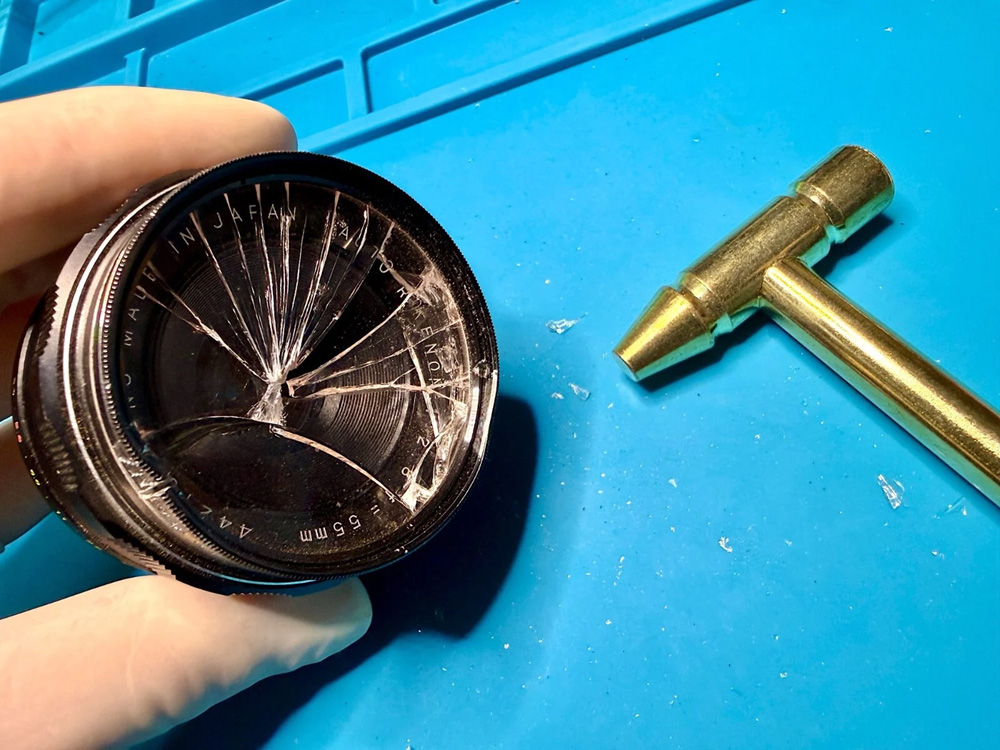
Since the dent made it impossible to remove the glass, I carefully tapped the glass with a small hammer and removed the broken glass pieces.
This created glass dust that fell onto the work mat.
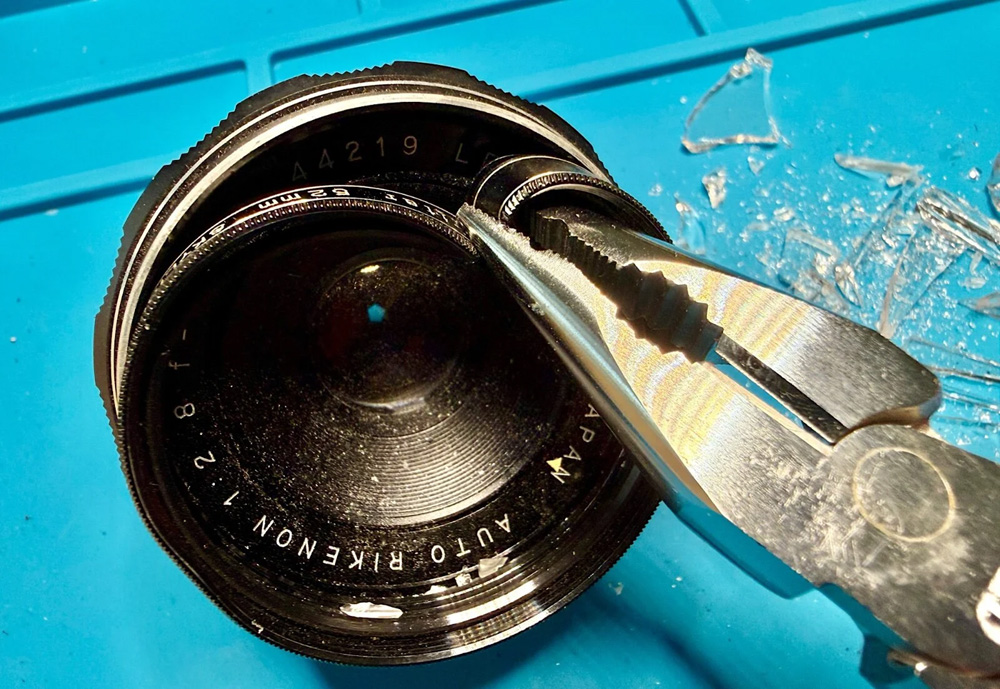
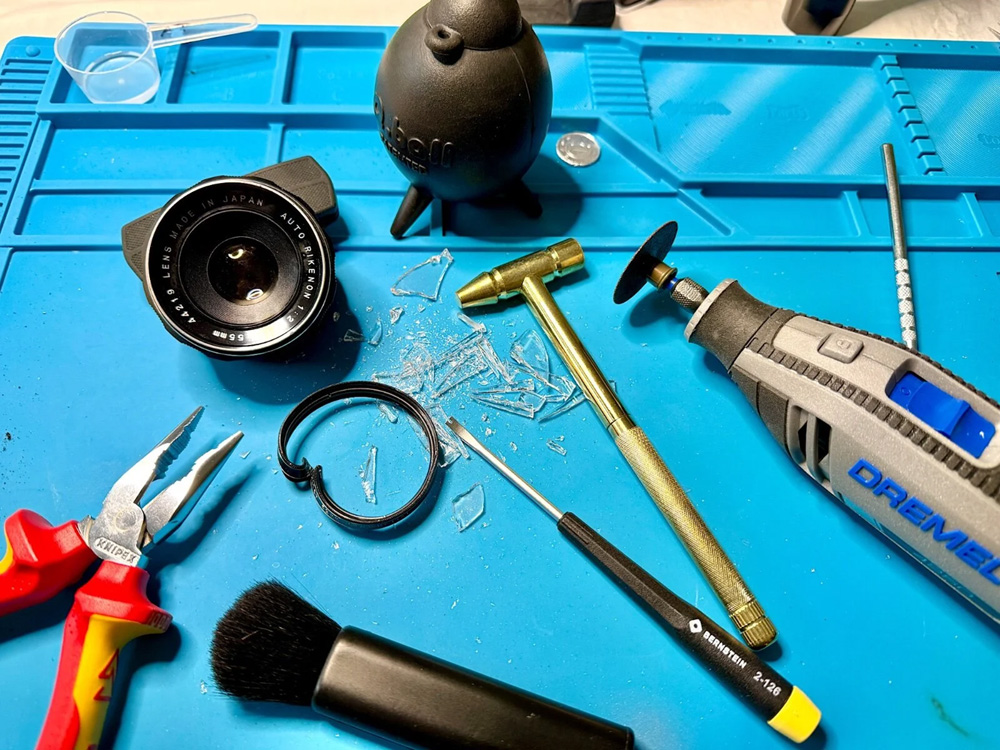
All went well
the job was done without damaging the lens.
Now I started worrying about the glass dust
After all, there are lenses that contain thorium and emit alpha radiation.
As long as the glass isn’t damaged and no pieces of it enter the body, it’s harmless. Alpha radiation can be blocked by as little as a sheet of paper. According to my research, the levels of beta and gamma radiation are not cause for concern.
Anyway in fact
I found a video where someone detected low levels of radiation from skylight filters.
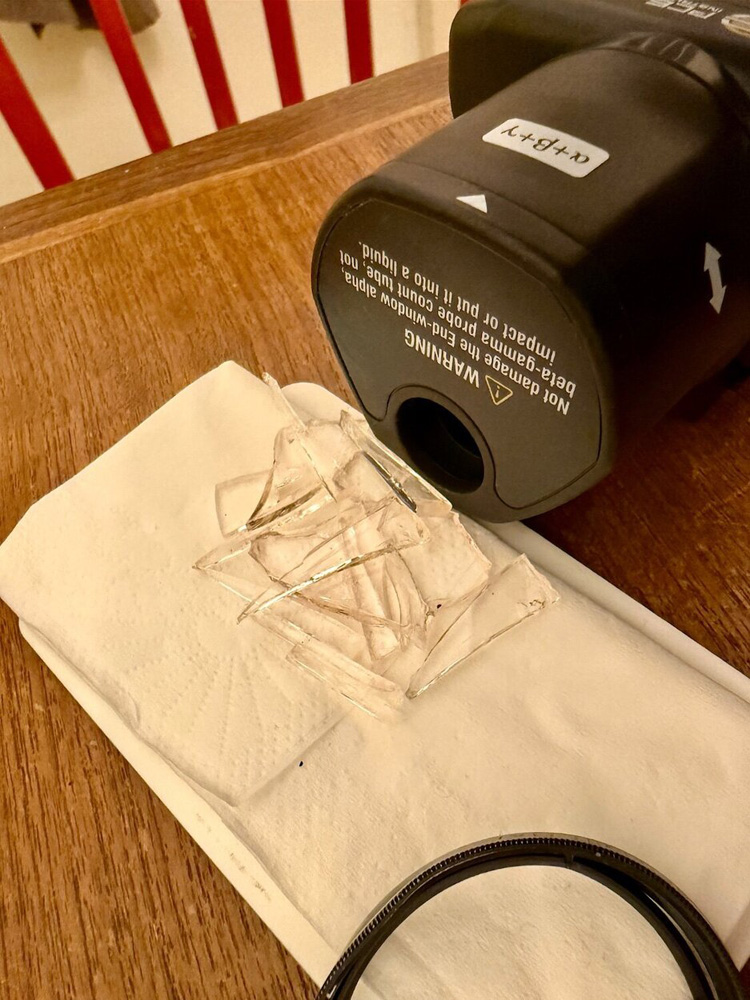
This worried me, so I got a radiation meter, researched the topic, and concluded that the glass shards from my Vivitar skylight filter did not exceed background radiation levels.
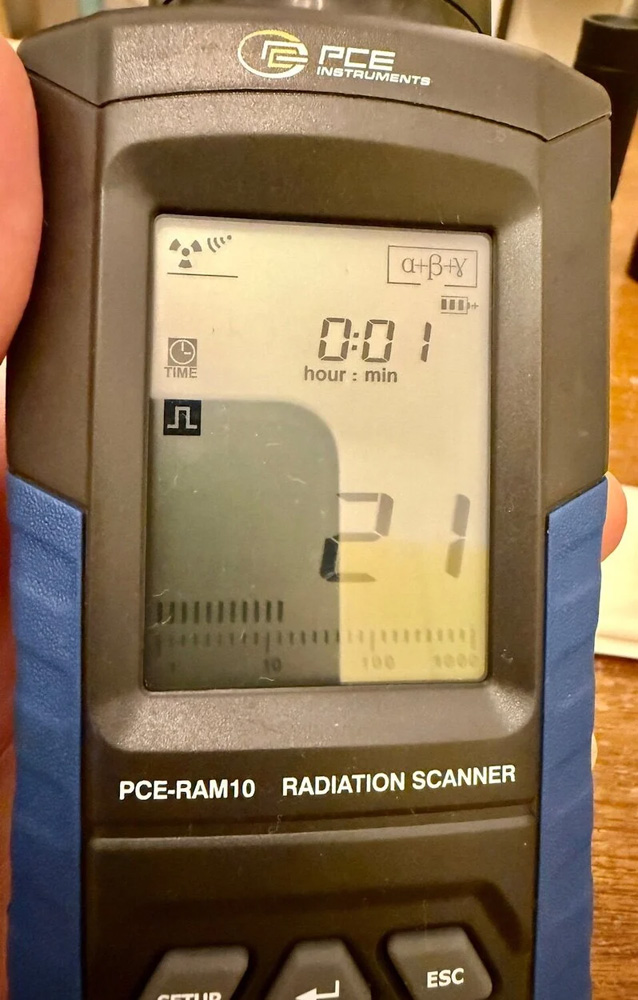
Meaning they are not radioactive (both around 20 counts per minute—cpm).
For comparison, I measured a piece of uranium glass, which emits a significant amount of radiation at 86 cpm but it's not dangerous.
An interesting topic. Perhaps I’ll find another lens with thorium glass in my lens collection.
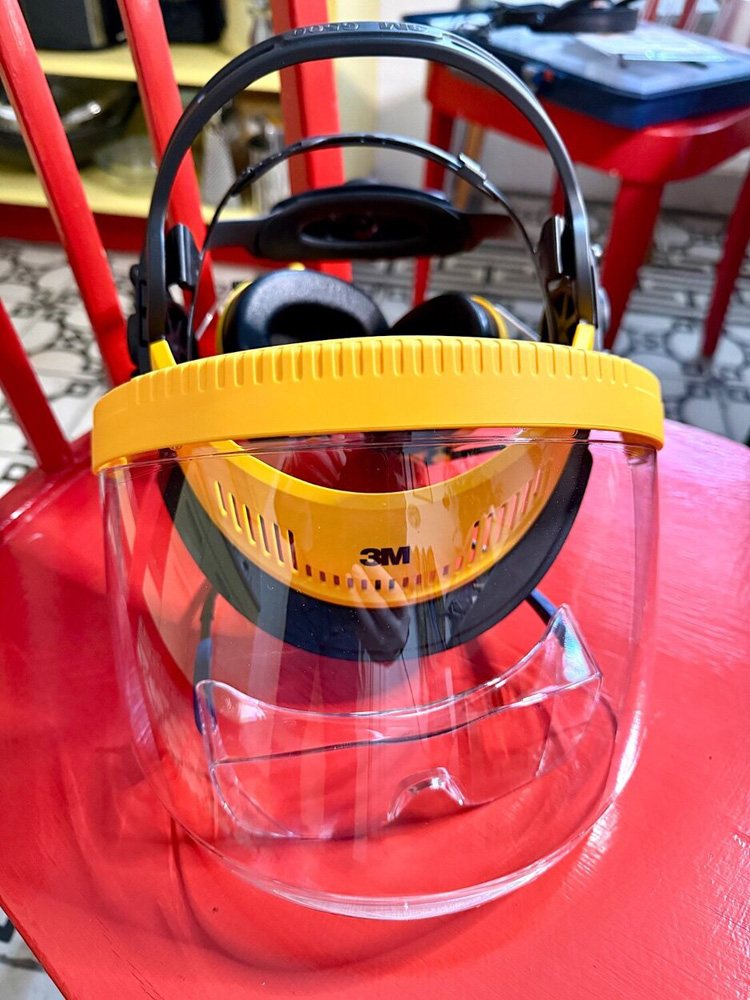
When doing this kind of work, you should take every precaution to protect yourself.
Small pieces of glass can fly off unpredictably.
So face protection, safety goggles and hearing protection are a must for me. As they always are when working with the Dremel.
A respirator filters out particles.
1 Camera Maintenance & Repair, Book 1: Fundamental Techniques: A Comprehensive, Fully Illustrated Guide
+++
 A word of caution
Please keep in mind that you’ll be using highly flammable solvents for service work, and their fumes are harmful to your health. Soldering also produces fumes that should not be inhaled. Dangerous high voltages can be present when handling electronics, especially in conjunction with electronic flash units and mains. Therefore, familiarize yourself with the safety regulations beforehand and ensure your safety. Depending on the activity, protective gear may be advisable.
All information provided without guarantee and use at your own risk.
Since the filter was already damaged and had a dent, I didn’t want to waste time trying WD-40 to loosen it.
Besides, this presented an opportunity to try out a technique that Thomas Tomosy describes in one of his two books on camera repair1.
To do this, the glass is removed, the filter ring is cut in, and then, using combination pliers, it is pried out of the filter thread on the lens with a twisting motion.
This destroys the filter, so it’s a last resort when nothing else works.
Since the dent made it impossible to remove the glass, I carefully tapped the glass with a small hammer and removed the broken glass pieces.
This created glass dust that fell onto the work mat.
All went well
the job was done without damaging the lens.
Now I started worrying about the glass dust
After all, there are lenses that contain thorium and emit alpha radiation.
As long as the glass isn’t damaged and no pieces of it enter the body, it’s harmless. Alpha radiation can be blocked by as little as a sheet of paper. According to my research, the levels of beta and gamma radiation are not cause for concern.
Anyway in fact
I found a video where someone detected low levels of radiation from skylight filters.
This worried me, so I got a radiation meter, researched the topic, and concluded that the glass shards from my Vivitar skylight filter did not exceed background radiation levels.
Meaning they are not radioactive (both around 20 counts per minute—cpm).
For comparison, I measured a piece of uranium glass, which emits a significant amount of radiation at 86 cpm but it's not dangerous.
An interesting topic. Perhaps I’ll find another lens with thorium glass in my lens collection.
When doing this kind of work, you should take every precaution to protect yourself.
Small pieces of glass can fly off unpredictably.
So face protection, safety goggles and hearing protection are a must for me. As they always are when working with the Dremel.
A respirator filters out particles.
1 Camera Maintenance & Repair, Book 1: Fundamental Techniques: A Comprehensive, Fully Illustrated Guide
+++
A word of cautionPlease keep in mind that you’ll be using highly flammable solvents for service work, and their fumes are harmful to your health. Soldering also produces fumes that should not be inhaled. Dangerous high voltages can be present when handling electronics, especially in conjunction with electronic flash units and mains. Therefore, familiarize yourself with the safety regulations beforehand and ensure your safety. Depending on the activity, protective gear may be advisable.
All information provided without guarantee and use at your own risk.

 .
.