



Andreas Thaler
Subscriber
A few years ago, I took over a Nikon F3AF from an English photographer who had never used the camera. It had been stored in its original packaging in a closet ever since he bought it new in the 80s. Unfortunately, the LCD went crazy, as I already owned the F3AF.
Since then, I've done everything I could to convert the "8860", a number that doesn't make sense, that was constantly displayed on the LCD display in the viewfinder.
I replaced the LCD, checked the circuit board connections, went through all the troubleshooting instructions in the Nikon F3 Repair Manual, SPT Journal, and C & C Associates Troubleshooting Guide, but to no avail.
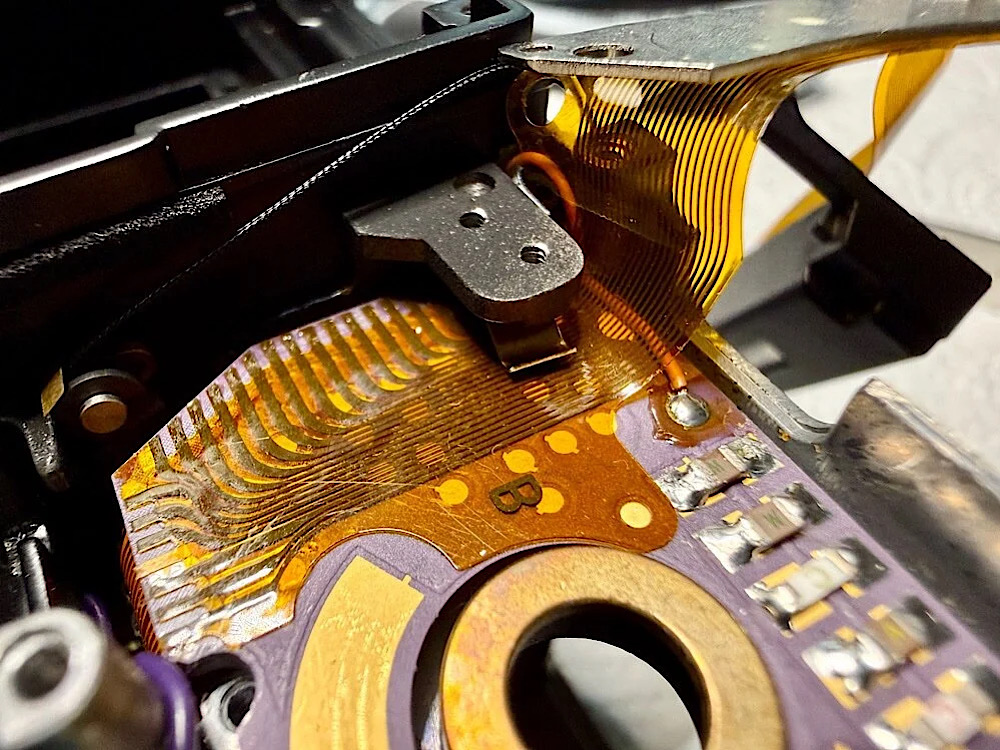
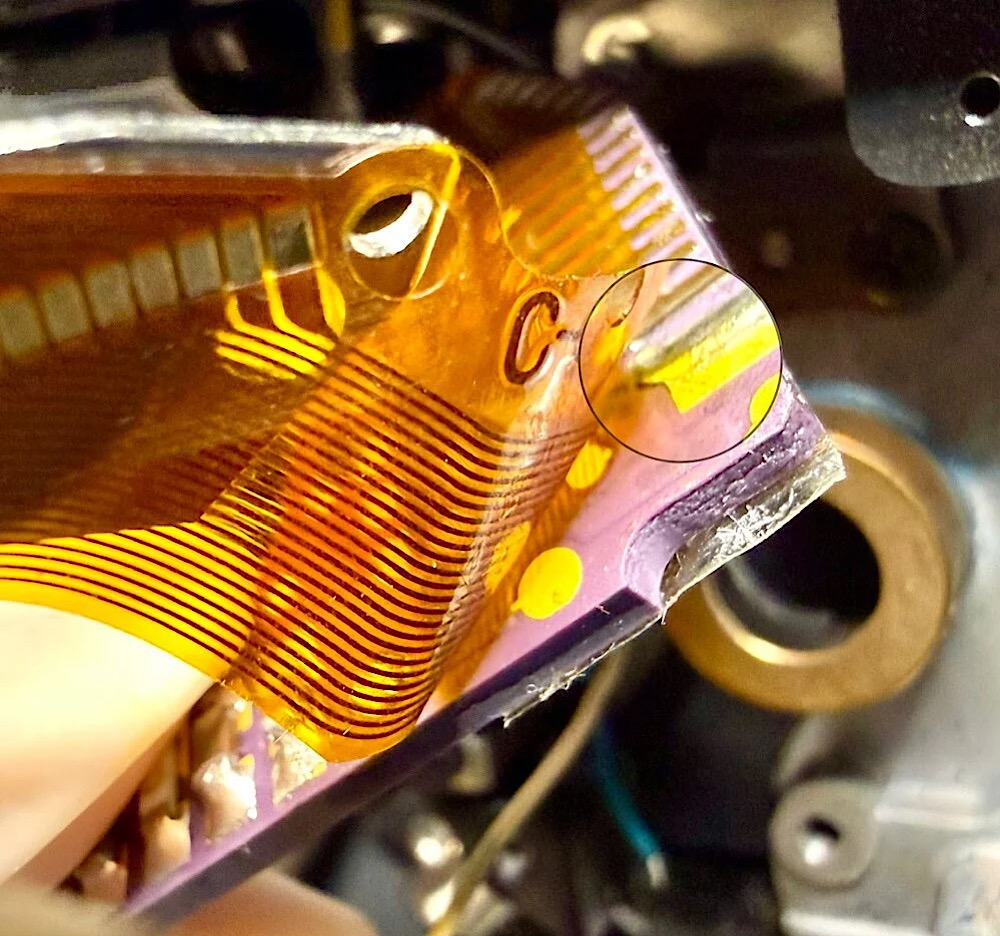
Here, a solder joint between the ceramic board and the flexible circuit board had come loose.
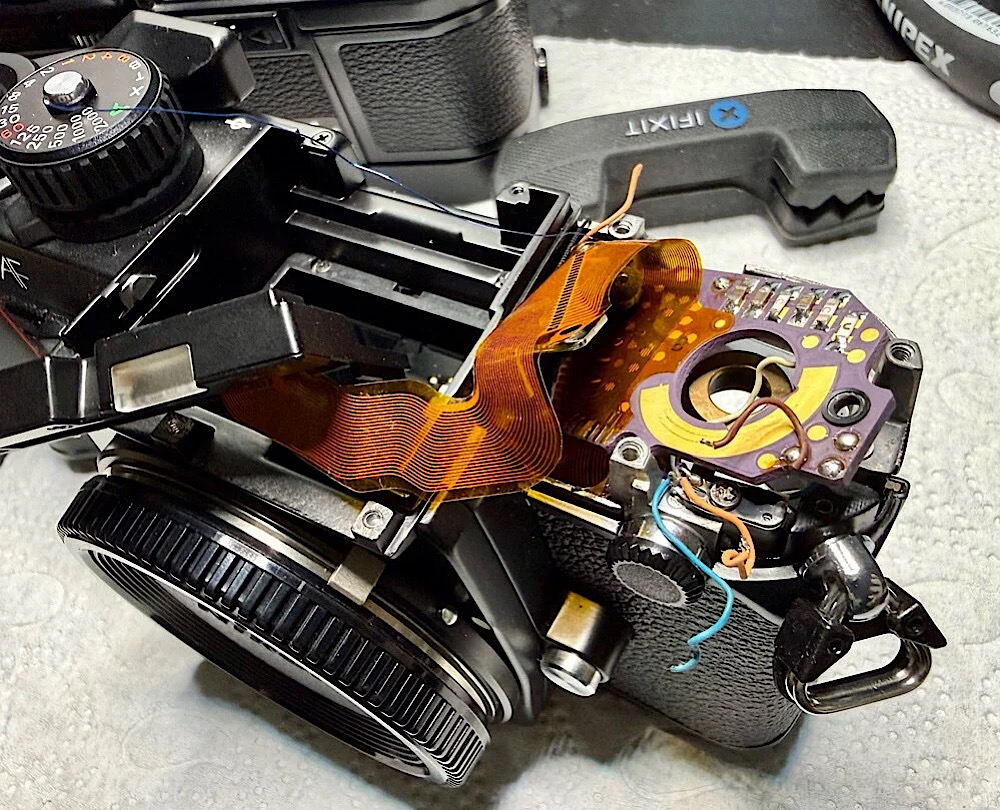
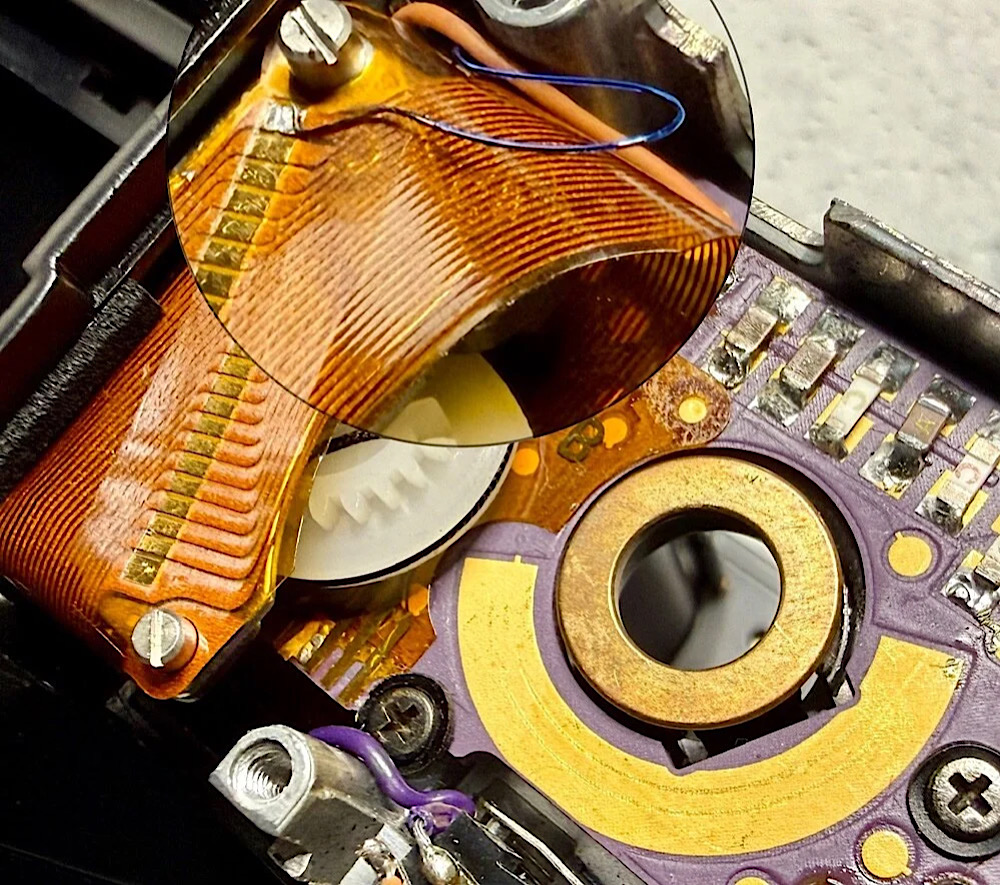
Bridging the faulty solder joint with enamelled copper wire was a delicate job, but unfortunately was unsuccessful.
I did indeed find a loose solder joint on the circuit board to which the LCD is connected, which I bridged with fine enameled copper wire.
I replaced two small SMD components and checked the contact rows on the LCD.
Everything remained in vain.
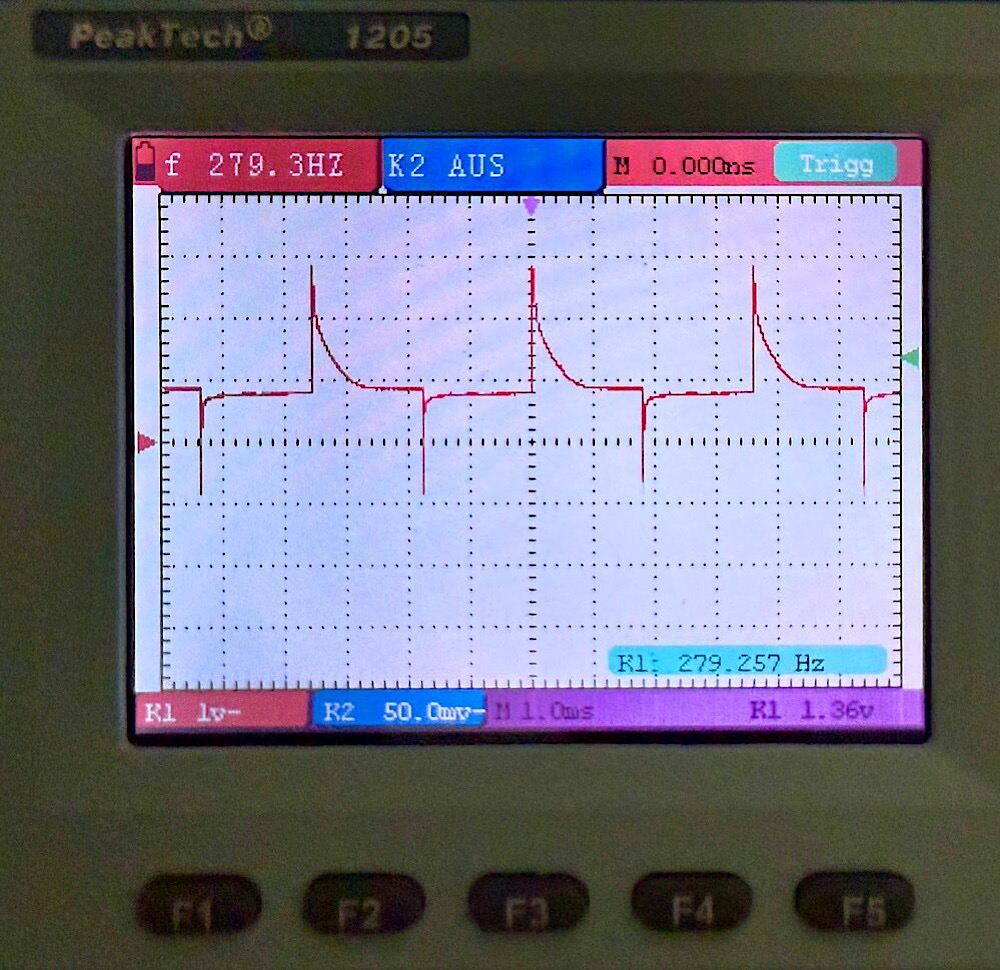
Measuring a connection pin for the LCD with an oscilloscope should produce a square wave, as shown in the Nikon F3 Repair Manual:
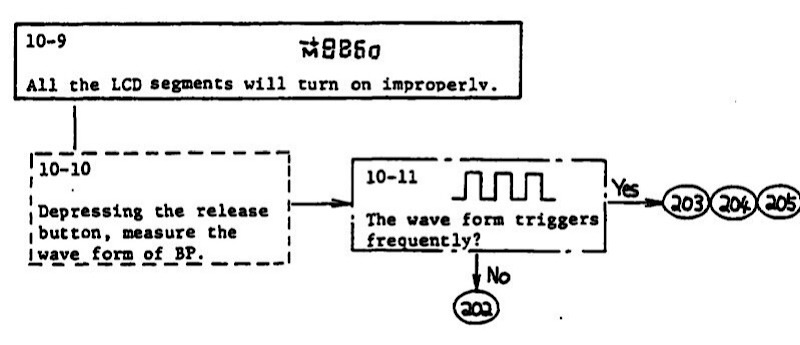
What is not the case.
So I suspect a fault in the IC responsible for driving the LCD.
There's nothing I can do here; I can't desolder these ICs with their plastic covers, even though I have replacements. But the fault could also lie in another part of the circuit. That's where my options end.
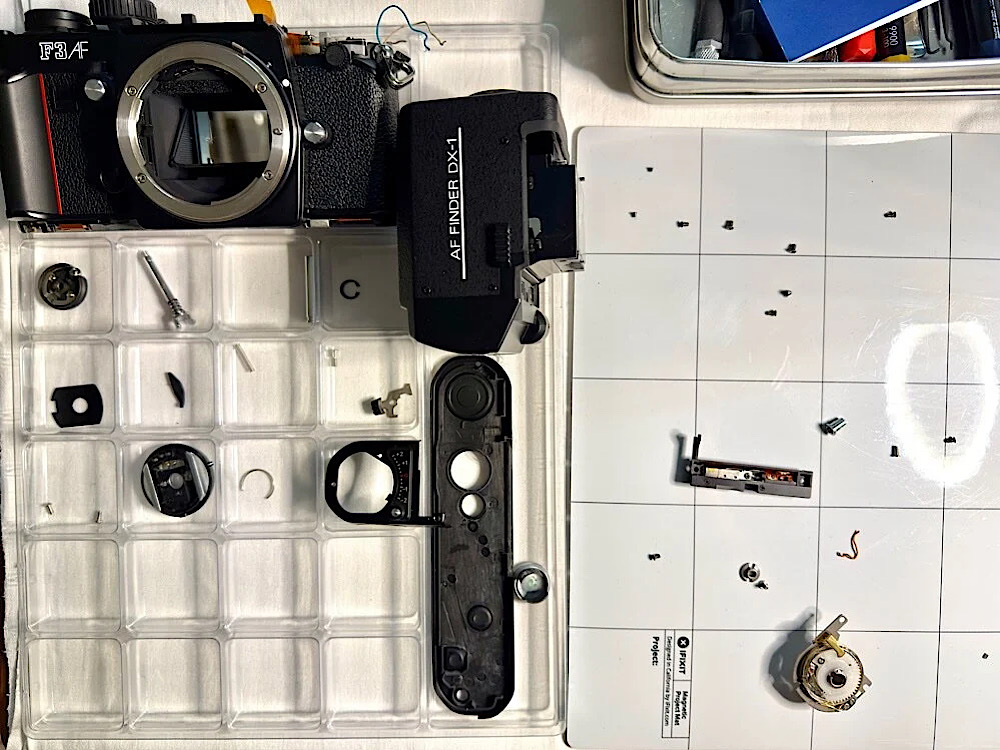
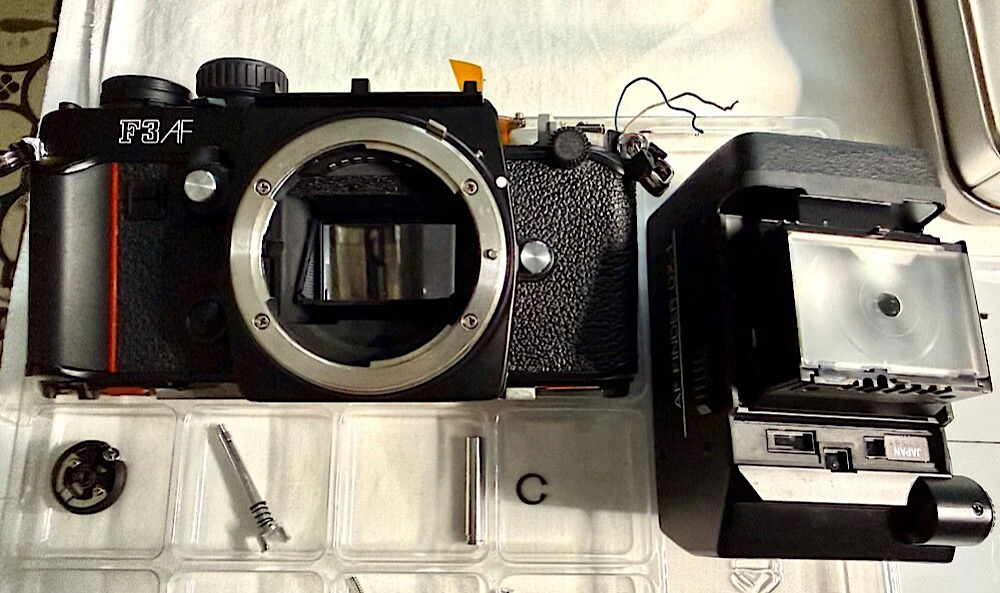
So I decided to put this beautiful F3AF into the spare parts stash. Because without a working LCD, the camera is useless. Anyway I still have the DX-1 finder, which works perfectly.
And the small LCD itself, which has no faults, is a valuable spare part.
For a collector, it's a loss, but for a repairer, it's a welcome spare parts source for future projects.
Still, I'm a little sad
But further digging around without a thorough understanding of the circuit won't yield any results, except for disassembly work.
One last chance
Nikon provided the complete circuit as a replacement part. I have some brand new boards available, but I don't know if they'll fit the AF version.
The two AF lenses for the F3AF should be controlled via the DX-1 viewfinder, but there doesn't seem to be any connection to the camera's electronics. So there should not be a separate board version for the F3AF.
Replacing the entire electronics as a single unit is feasible according to the SPT Journal.
Anyway I don't know if my replacement boards are still OK (it's sensitive to electrostatics).
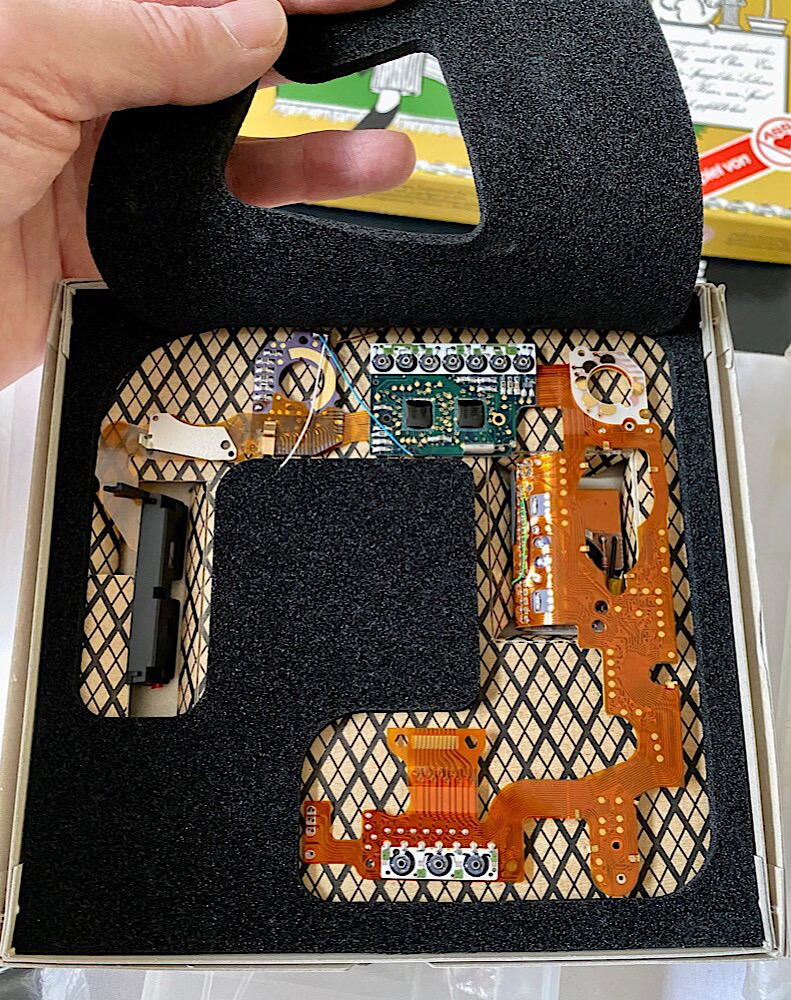
Since I have several boards in stock, I can try.
If all are faulty, they go back in their boxes, and I tried it. There's nothing to lose.
So next step: removing the defective electronics board.
One challenge after installing the board will be adjusting the electronics using the ten trim potentiometers. Here, I can use the positions of the trim pots from the old board as a preset.
Hallelujah, that's going to be a lot of work
What's next?
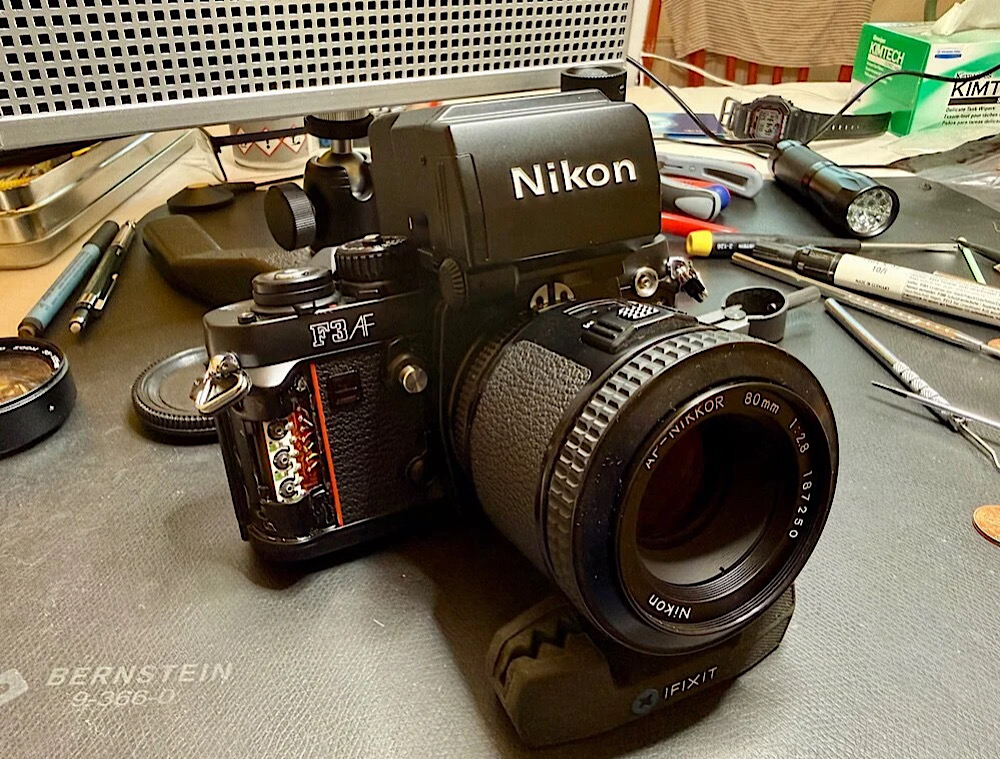
Finally it worked
For the full project report see on photo.net:
Nikon F3AF: absolutely new, never used and yet only good for spare parts
+++
 A word of caution
Please keep in mind that you’ll be using highly flammable solvents for service work, and their fumes are harmful to your health. Soldering also produces fumes that should not be inhaled. Dangerous high voltages can be present when handling electronics, especially in conjunction with electronic flash units and mains. Therefore, familiarize yourself with the safety regulations beforehand and ensure your safety. Depending on the activity, protective gear may be advisable.
All information provided without guarantee and use at your own risk.
Acknowledgments
Without the work of Master Larry Lyells, in particular, we wouldn’t have the detailed technical information we need today for service/repair of SLRs.
The SPT Journal and The Camera Craftsman, which he helped shape significantly as an author, and which contain all the necessary information and instructions are available for a fee through Learn Camera Repair.
We owe our access to them to Eugene Pate, the founder of Learn Camera Repair.
Since then, I've done everything I could to convert the "8860", a number that doesn't make sense, that was constantly displayed on the LCD display in the viewfinder.
I replaced the LCD, checked the circuit board connections, went through all the troubleshooting instructions in the Nikon F3 Repair Manual, SPT Journal, and C & C Associates Troubleshooting Guide, but to no avail.
Here, a solder joint between the ceramic board and the flexible circuit board had come loose.
Bridging the faulty solder joint with enamelled copper wire was a delicate job, but unfortunately was unsuccessful.
I did indeed find a loose solder joint on the circuit board to which the LCD is connected, which I bridged with fine enameled copper wire.
I replaced two small SMD components and checked the contact rows on the LCD.
Everything remained in vain.
Measuring a connection pin for the LCD with an oscilloscope should produce a square wave, as shown in the Nikon F3 Repair Manual:
What is not the case.
So I suspect a fault in the IC responsible for driving the LCD.
There's nothing I can do here; I can't desolder these ICs with their plastic covers, even though I have replacements. But the fault could also lie in another part of the circuit. That's where my options end.
So I decided to put this beautiful F3AF into the spare parts stash. Because without a working LCD, the camera is useless. Anyway I still have the DX-1 finder, which works perfectly.
And the small LCD itself, which has no faults, is a valuable spare part.
For a collector, it's a loss, but for a repairer, it's a welcome spare parts source for future projects.
Still, I'm a little sad
But further digging around without a thorough understanding of the circuit won't yield any results, except for disassembly work.
One last chance
Nikon provided the complete circuit as a replacement part. I have some brand new boards available, but I don't know if they'll fit the AF version.
The two AF lenses for the F3AF should be controlled via the DX-1 viewfinder, but there doesn't seem to be any connection to the camera's electronics. So there should not be a separate board version for the F3AF.
Replacing the entire electronics as a single unit is feasible according to the SPT Journal.
Anyway I don't know if my replacement boards are still OK (it's sensitive to electrostatics).
Since I have several boards in stock, I can try.
If all are faulty, they go back in their boxes, and I tried it. There's nothing to lose.
So next step: removing the defective electronics board.
One challenge after installing the board will be adjusting the electronics using the ten trim potentiometers. Here, I can use the positions of the trim pots from the old board as a preset.
Hallelujah, that's going to be a lot of work
What's next?
- First, I'll gather the parts I've already removed from the F3AF and put in my spare parts store.
- Then I need to figure out how to open the back door without the rewind spindle.
- There's also a problem with the cable (pulley) to the FRE (functional resistance element).
- Finally, I'll remove the entire electronics (one unit) from the F3AF and learn how to install the new electronics (instructions in the SPT Journal by Master Larry Lyells).
- If that's successful and the replacement electronics are intact, it's time to adjust them.
Finally it worked
For the full project report see on photo.net:
Nikon F3AF: absolutely new, never used and yet only good for spare parts
+++
A word of cautionPlease keep in mind that you’ll be using highly flammable solvents for service work, and their fumes are harmful to your health. Soldering also produces fumes that should not be inhaled. Dangerous high voltages can be present when handling electronics, especially in conjunction with electronic flash units and mains. Therefore, familiarize yourself with the safety regulations beforehand and ensure your safety. Depending on the activity, protective gear may be advisable.
All information provided without guarantee and use at your own risk.
Acknowledgments
Without the work of Master Larry Lyells, in particular, we wouldn’t have the detailed technical information we need today for service/repair of SLRs.
The SPT Journal and The Camera Craftsman, which he helped shape significantly as an author, and which contain all the necessary information and instructions are available for a fee through Learn Camera Repair.
We owe our access to them to Eugene Pate, the founder of Learn Camera Repair.
Last edited:


