• Welcome to Photrio!
    Registration is fast and free. Join today to unlock search, see fewer ads, and access all forum features.
    Click here to sign up

Hi all - I came across this Printing technique not sure how to do it - what is opal film?

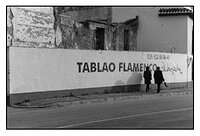
Tablao Flamenco

A
Tablao Flamenco

  • 1
  • 0
  • 32
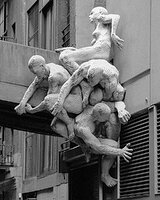
Untitled

A
Untitled

  • 1
  • 2
  • 89

Forum statistics

Threads
204,332
Messages
2,867,217
Members
102,225
Latest member
Narsanam
Recent bookmarks
0

TOFEUW

Member
Joined
May 4, 2026
Messages
2
Location
uk
Format
Analog
How do I do this technique do I need a positive and a negative on line/Lith/technical film or is the legacy technique lost to time and materials?

Screenshot 2026-05-04 at 21.34.13.png
 
Yes, you got it right. I've done what we called "glows" on film using that technique. I had not heard it referred to as Opal film. We used frosted mylar. The number of layers used affected the dimension of the glow. It was more than 30 years ago so I don't remember more details.

I may have an example, but it looked like that article. I think I used it around text.

Good luck!
 
Thanks, LenB!! I can now sleep happily tonight! Any idea on the steps or setup? I’m finding it hard to imagine how it’s done with these limited instructions.
 
Taking a stab at it here, from memory. Yikes! 🙂

I think the positive lith was in contact with the emulsion of the 8x10 ektachrome dupe film, then the mylar in between, then the negative on top of that. The reverse order, chrome, neg., pos. may also be true. I think the order affects the glow as well, but I don't remember. I did it twice, out of probably hundreds of photo comps at different labs.

Good luck with it!
 
It's just frosted mylar (preferably frosted both sides). Art stores typically sell it in large individual sheets which can be cut down. Duralar is a common brand. 5-mil thickness sheets will prove more durable than 3 mil. But to get the ridiculous degree of diffusion illustrated in that article, would need an additional layer of clear Plexiglas in between, or else a cutout of something like matboard to act as a spacer (as shown in their schematic).

The shown method is rather primitive, since no punch and register alignment gear is involved, but is at least a starting point.

Making dupes was entirely different, since that would have been done emulsion to emulsion, with the frosted mylar either used for a preliminary unsharp contrast masking step, or used between the contact frame glass and backside of the original image for sake of inhibiting Newton rings. Lith film was sometimes used for pre-masking just the specular highlights. The old Kodak Graphics Arts Guides describe all these things.
 
For clarity, when I described using dupe film, the original transparencies were not contact printed. The transparencies were projected onto the film through the lith masks. These were multiple exposed images. Sometimes, we used Internegative film, other times dupe film.
 
I actually just came across this book last week and am going to try and re create and image like the one with the bird. I find that the author is pretty vague in his technique.

Am I basically exposing my nagtive onto the lith film and making a super contrasty mask, Then I’m using that lith print to contact print onto color paper using opal and glass as diffusion in between?

So… is the final image printed on lith film or on the ra-4 paper?
 
Photrio.com contains affiliate links to products. We may receive a commission for purchases made through these links.
To read our full affiliate disclosure statement please click Here.

PHOTRIO PARTNERS EQUALLY FUNDING OUR COMMUNITY:



Ilford ADOX Freestyle Photographic Stearman Press Weldon Color Lab Blue Moon Camera & Machine
Top Bottom