
• Welcome to Photrio!
    Registration is fast and free. Join today to unlock search, see fewer ads, and access all forum features.
    Click here to sign up

The great Robert Capa

Recent Classifieds

Forum statistics

Threads
204,357
Messages
2,867,513
Members
102,233
Latest member
CristianSP
Recent bookmarks
0

IpseLux

Member
Joined
Apr 17, 2026
Messages
181
Location
East Tennessee
Format
35mm
We are fast approaching the passing date of one one photography’s heroes of mine and I’m sure of countless others: Robert Capa.
Here are some very basic facts:

Born: Oct 22, 1913, Budapest, Hungary
Died: May 25, 1954 (40 years), Thai Binh Province
Cause of death: Landmine explosion
Education: Deutsche Hochschule für Politik
Siblings: Cornell Capa
Full name: Endre Ernő Friedmann
Parents: Dezső Friedmann, Julianna Henrietta Berkovits
Awards: World Press Photo Award for General News
Form: Photography

Every time I read a camera or lens review of some new, and much improved piece of equipment, especially in this digital age of greater MegaPixels, VR, less vignetting, no chromatic aberration, and less than f/1.0 apertures I think of this man.
His photos did not depend on today’s technological advancements but on sheer will.
Fortitude is landing WWII Normandy with no weapon, just a camera. Fortitude is Spain’s Franco war, unarmed. And photographing while men around you are blown to pieces.
The love of his life perished in España.
He himself died at the young age of 40, blown up by a mine.
Capa is said to have said something to the extent that if your photos are not good enough, you are not close enough.
How very true.
A 35mm lens’ hyper focal distance at f/11 is just over 12’. That means at f/11 everything from 6’ to infinity is relatively sharp.
400 ISO film and shooting at the inverse of the focal length (1/30th second) buys you quite a bit of latitude on not so sunny days. A good flash does the rest.
Six feet. And courage.
Blessed be Mr. Capa’s memory, as is his tremendous work.
 
I saw an exhibition of Vietnam war photography, by photographers who were killed during the conflict, at the Chicago Cultural Center, in, AFAIR, 2000. Capa’s photos were among the many exhibited, including the last two exposures he made (the second last was B&W, the last was colour) he made before stepping on the landline which ended his life.

There was a display of photographs by the photographers who had died, including Dickey Chapelle and Larry Burrows, and many others.

There was also photographs of the photographers, and if I remember correctly, most were North Vietnamese.
 
I saw an exhibition of Vietnam war photography, by photographers who were killed during the conflict, at the Chicago Cultural Center, in, AFAIR, 2000. Capa’s photos were among the many exhibited, including the last two exposures he made (the second last was B&W, the last was colour) he made before stepping on the landline which ended his life.

There was a display of photographs by the photographers who had died, including Dickey Chapelle and Larry Burrows, and many others.

There was also photographs of the photographers, and if I remember correctly, most were North Vietnamese.

Thank you for your response. I’ll get myself acquainted with Chapelle and Burrows.
And I’ll look at North Vietnamese photographers too.
Kind regards T.
 
Larry Burrows was killed along with Henri Huet (Associated Press), Kent Potter (United Press International) and Keisaburo Shimamoto (freelancer with Newsweek), when their helicopter was shot down over the Ho Chi Minh Trail in Laos in 1971 when covering the South Vietnamese invasion of Laos.

1777669180977.png
 
His photos did not depend on today’s technological advancements but on sheer will.

They also depended on the technology of his time. He was using the most suitable equipment at the time.

Today, the most suitable equipment for that kind of activity appears to be digital and usually a zoom lens.
 
They also depended on the technology of his time. He was using the most suitable equipment at the time.

Today, the most suitable equipment for that kind of activity appears to be digital and usually a zoom lens.

I agree, Capa, Eugene Smith and a few others were using Leica and Context with a variety of lens, freed them to move quickly under pressure. The German rangefinders were technological wonders of the day.
 
The technology available to Capa was more than capable of providing superb results - it wasn't like he was limited to wet plate and magnesium powder!
Where there is a difference is the technology involved in getting the results out to the world, as well as the technology involved in becoming aware of where to go to get the images themselves.
 
I agree, Capa, Eugene Smith and a few others were using Leica and Context with a variety of lens, freed them to move quickly under pressure. The German rangefinders were technological wonders of the day.

"Context".....Contax ?
 
The technology available to Capa was more than capable of providing superb results - it wasn't like he was limited to wet plate and magnesium powder!
Where there is a difference is the technology involved in getting the results out to the world, as well as the technology involved in becoming aware of where to go to get the images themselves.

Thank you Matt.
 
They also depended on the technology of his time. He was using the most suitable equipment at the time.

Today, the most suitable equipment for that kind of activity appears to be digital and usually a zoom lens.

Most war photographers now do. But let’s not ignore the obvious, the old cameras did it, and still could. The images they created attest to that.
Of course, the camera requires a man like Capa to be photographing.
Thanks for chiming in D.
 
The technology available to Capa was more than capable of providing superb results - it wasn't like he was limited to wet plate and magnesium powder!
Where there is a difference is the technology involved in getting the results out to the world, as well as the technology involved in becoming aware of where to go to get the images themselves.

Speaking of getting results, I once read most of the Omaha beach images were destroyed at the lab, while processing….
Imagine that!
 

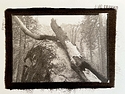
Fallen Ent at the Battle of Isengard
...with apologies to Robert Capa
 
Last edited:
Speaking of getting results, I once read most of the Omaha beach images were destroyed at the lab, while processing….
Imagine that!

Most were and the surviving negatives were damaged. There is some debate, the story that has gone around for years was that Larry Burrows as a teenager worked at the lab and set the negative dryer for too high of a temperature. Later others now state that it was not Larry Burrows but some other tech. Not really sure. The DDay images were taken with a Leica IIIC, he had been shooting with a Contax but moved to a Leica, then moved back to Contax. When Capa was killed he both a Contax and Nikon S with Nikon 50 1.5.
 
Last edited:
But let’s not ignore the obvious, the old cameras did it, and still could. The images they created attest to that.

The cameras weren't old at the time.

Anyway, you're preaching to the choir. My everyday camera is a Leica III of some sort.

The DDay images were taken with a Leica IIIC

Looks like it, judging by the image running onto the sprocket holes.

1777740432169.png
 
  • IpseLux
  • Deleted
  • Reason: accidental quote
Photrio.com contains affiliate links to products. We may receive a commission for purchases made through these links.
To read our full affiliate disclosure statement please click Here.

PHOTRIO PARTNERS EQUALLY FUNDING OUR COMMUNITY:


Ilford ADOX Freestyle Photographic Stearman Press Weldon Color Lab Blue Moon Camera & Machine
Top Bottom