• Welcome to Photrio!
    Registration is fast and free. Join today to unlock search, see fewer ads, and access all forum features.
    Click here to sign up

Process promptly for best results

Cigar again

H
Cigar again

  • 1
  • 0
  • 32
Rainy Day Trees

A
Rainy Day Trees

  • 8
  • 1
  • 124

Recent Classifieds

Forum statistics

Threads
203,169
Messages
2,850,811
Members
101,708
Latest member
Soy Lola
Recent bookmarks
1

Bill Burk

Subscriber
Allowing Ads
Joined
Feb 9, 2010
Messages
9,564
Format
4x5 Format
Process promptly (within 7 days) for best speed and contrast.

You may experience latent image degradation when you develop your summertime pictures after the holidays.

Conversely, you may get amazing contrast and speed when you develop your film right away in excitement.

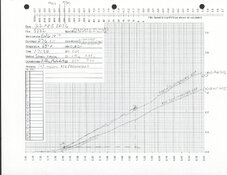
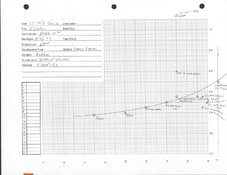
Last month I caught up a year old backlog. I graphed different speed and contrast from the same film developed in the same tank for the same time. I checked old notes and saw the same. Times when I struggled to reach contrast aims, the latent images tended to be older.

When I load cassettes from bulk rolls, I will place sensitometry exposures on the leader of half the rolls and mark “6 for sens” as a reminder to wind past 6 before shooting (the other rolls will have a full 36 exposures).


Naturally, pre-exposing test strips causes old latent images for sensitometry if you don’t develop promptly.

Sometimes I’ll pull a length from the bulk loader and expose a fresh sensitometry strip to put in the tank. For example when there’s room for another reel because I only have a few rolls to develop, or if none of the rolls has a test strip on it already. These will be fresh.

In those examples a tank can have an old and a new sensitometry strip of the same film and when graphed, will reveal different speeds and contrast.

Not just test anomalies. These are real differences with practical implications. Carefully-exposed shots that would be excellent if processed promptly can come out underexposed and flat if you leave the film lying around too long. Too long is about a year.
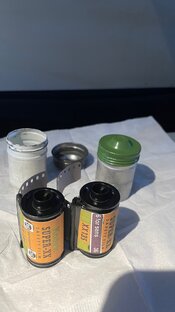
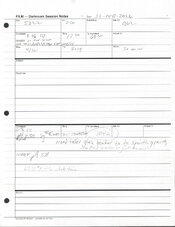
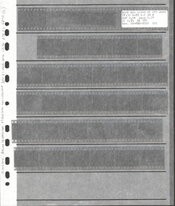
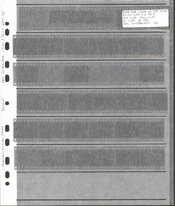
IMG_4124.jpeg2026-03-06-0010.jpeg2026-03-06-0006.jpeg2026-03-06-0005.jpeg2026-03-06-0009.jpeg2026-03-06-0008.jpeg2026-03-06-0011.jpeg
 
Well done Bill! By your opinion, what are the best option for people without sensitometer?
40 years ago, at University I had Sensitometry course, but I do not have any desire to buy one.
For New year I bought BW densitometer from our own Derek and I'm thinking about creating "target" with different patches to use it for comparing my film developing.
 
Do you store exposed films at room temperature, or do you put them in a freezer? Of course, in their snap lid plastic can (or aluminum).
 
That is nice that you have the pre exposed Control Strip on the film leader!
 
Good stuff Bill. I'm the king of letting exposed rolls languish for months.
 
Well done Bill! By your opinion, what are the best option for people without sensitometer?
40 years ago, at University I had Sensitometry course, but I do not have any desire to buy one.
For New year I bought BW densitometer from our own Derek and I'm thinking about creating "target" with different patches to use it for comparing my film developing.

Thanks gorbas

I would start with a Stouffer Scale such as T2115 and an electronic flash on an old school contact printer. I’d rig it up “permanently” so that it’s always ready to flash a test strip. An enlarger makes a good sensitometer with the same Stouffer Scale but you would end up with Tungsten speeds.
 
Do you store exposed films at room temperature, or do you put them in a freezer? Of course, in their snap lid plastic can (or aluminum).

Probably a contributing factor is how poorly I store exposed film. I keep it in a little cabinet with chicken wire doors. It’s an uncontrolled environment, on a shelf in my darkroom which is in my garage a few blocks from the beach.

Fresh film where I exposed the test strip is stored in a wine refrigerator.
 
That is nice that you have the pre exposed Control Strip on the film leader!

It’s convenient to get out the sensitometer when loading bulk rolls. I like to bulk load in the dark (so I don’t ruin the last couple shots).
 
Pan F is notorious for the latent image to fade away over time. The strength of the frame numbers is an indication of film age since those are exposed onto the film during manufacture.
 
Pan F is the only film I've ever seen a need to worry about this with. I shot Neopan 400 at 3200 and developed it by accident at 400 ten years later (no refrigeration) and still got a bunch of usable pictures (hybrid process). However if I shoot that same film stock from that batch today, I only get maybe 100 speed out of it. So from what I've seen shooting expired film gives worse results than waiting to develop your film for the same amount of years.
 
Thanks gorbas

I would start with a Stouffer Scale such as T2115 and an electronic flash on an old school contact printer. I’d rig it up “permanently” so that it’s always ready to flash a test strip. An enlarger makes a good sensitometer with the same Stouffer Scale but you would end up with Tungsten speeds.

Thank you very much Bill! I appriciate all your efforts!
 
Pan F is the only film I've ever seen a need to worry about this with. I shot Neopan 400 at 3200 and developed it by accident at 400 ten years later (no refrigeration) and still got a bunch of usable pictures (hybrid process). However if I shoot that same film stock from that batch today, I only get maybe 100 speed out of it. So from what I've seen shooting expired film gives worse results than waiting to develop your film for the same amount of years.

That is interesting, the part about the film stock losing speed but the latent image holding up reasonably well. It's the opposite to what I would have expected. I have some 2009 Neopan400, so I'll give it a try.

I have been amazed at the latent image on Tri_X (or TMAX400, I don't remember at the moment) sheet film holding well over 10 years when I decided that I might as well develop some duplicate negs that hadn't been needed.
 
That is interesting, the part about the film stock losing speed but the latent image holding up reasonably well. It's the opposite to what I would have expected. I have some 2009 Neopan400, so I'll give it a try.

I have been amazed at the latent image on Tri_X (or TMAX400, I don't remember at the moment) sheet film holding well over 10 years when I decided that I might as well develop some duplicate negs that hadn't been needed.

Just my experience from taking a 10 year break from photography and leaving about 20 rolls of various stocks in limbo land.
 
So from what I've seen shooting expired film gives worse results than waiting to develop your film for the same amount of years.

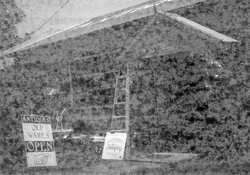
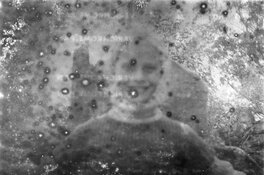
This is opposite to what I observed with Kodak Verichrome Pan that I found in a Kodak Box Brownie camera in an antique shop. The roll was at frame 6 so I shot the remaining two frames. While severely degraded, these frames were better quality than the latent images on the rest of the roll (taken by the camera owner). Compare the image of the antique shop (fresh) with the portrait (latent image).
fresh-image.jpeglatent-image.jpeg
I had similar experience with Ilford Selochrome. Fresh images came out fairly well, while the latent images (presumably 70 years old) were gone completely. See this thread:
 
This is opposite to what I observed with Kodak Verichrome Pan that I found in a Kodak Box Brownie camera in an antique shop. The roll was at frame 6 so I shot the remaining two frames. While severely degraded, these frames were better quality than the latent images on the rest of the roll (taken by the camera owner). Compare the image of the antique shop (fresh) with the portrait (latent image).
View attachment 420719View attachment 420720
I had similar experience with Ilford Selochrome. Fresh images came out fairly well, while the latent images (presumably 70 years old) were gone completely. See this thread:

Mine was only a 10-15 year test, I can't apply it to anything as old as that.
 
The other characteristic that may be relevant with respect to @Romanko 's half exposed roll is that the half that didn't receive any light historically remained rolled up in the condition it was in when it left the factory, while the half of the roll that had been exposed was more subject to the atmospheric conditions inside the camera at time of exposure and after.
 
The other characteristic that may be relevant with respect to @Romanko 's half exposed roll is that the half that didn't receive any light historically remained rolled up in the condition it was in when it left the factory, while the half of the roll that had been exposed was more subject to the atmospheric conditions inside the camera at time of exposure and after.

Matt, this is definitely true for 35 mm film as the unexposed half is still inside the cassette and hence more protected. But Romanko's roll is medium format and I believe it had a backing paper. Wouldn't the exposed part of the film in a similar condition as the unexposed part except for the frame that was right behind the lens? Or am I missing something?
 
Matt, this is definitely true for 35 mm film as the unexposed half is still inside the cassette and hence more protected. But Romanko's roll is medium format and I believe it had a backing paper. Wouldn't the exposed part of the film in a similar condition as the unexposed part except for the frame that was right behind the lens? Or am I missing something?

Actually moving through the camera exposes the film emulsion and the just uncovered backside of the backing paper to the conditions inside the camera. Those conditions may or may not differ greatly from the conditions present at the factory - think of the camera that has been loaded with film outside near the seashore, and then shut for the next few decades.
And of course the take-up side may not have the same tension as the just manufactured and taped roll.
If the film is finished and developed reasonably promptly, the difference in conditions is unlikely to matter.
But if the camera sits for decades in a closet or on a shelf, there is a lot of time for any moisture or contaminant or even the constituent parts of the film, spool and backing paper package to do all sorts of things on the parts of the film that have not yet been exposed to the air, other than in the factory.
 
Process promptly (within 7 days) for best speed and contrast.

You may experience latent image degradation when you develop your summertime pictures after the holidays.

Conversely, you may get amazing contrast and speed when you develop your film right away in excitement.

Last month I caught up a year old backlog. I graphed different speed and contrast from the same film developed in the same tank for the same time. I checked old notes and saw the same. Times when I struggled to reach contrast aims, the latent images tended to be older.

When I load cassettes from bulk rolls, I will place sensitometry exposures on the leader of half the rolls and mark “6 for sens” as a reminder to wind past 6 before shooting (the other rolls will have a full 36 exposures).


Naturally, pre-exposing test strips causes old latent images for sensitometry if you don’t develop promptly.

Sometimes I’ll pull a length from the bulk loader and expose a fresh sensitometry strip to put in the tank. For example when there’s room for another reel because I only have a few rolls to develop, or if none of the rolls has a test strip on it already. These will be fresh.

In those examples a tank can have an old and a new sensitometry strip of the same film and when graphed, will reveal different speeds and contrast.

Not just test anomalies. These are real differences with practical implications. Carefully-exposed shots that would be excellent if processed promptly can come out underexposed and flat if you leave the film lying around too long. Too long is about a year.
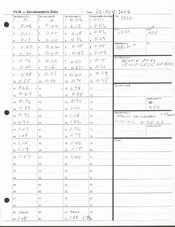


View attachment 419651View attachment 419652View attachment 419653View attachment 419654View attachment 419655View attachment 419656View attachment 419657

Excellent study! Thank you.
 
Photrio.com contains affiliate links to products. We may receive a commission for purchases made through these links.
To read our full affiliate disclosure statement please click Here.

PHOTRIO PARTNERS EQUALLY FUNDING OUR COMMUNITY:


Ilford ADOX Freestyle Photographic Stearman Press Weldon Color Lab Blue Moon Camera & Machine
Top Bottom