• Welcome to Photrio!
    Registration is fast and free. Join today to unlock search, see fewer ads, and access all forum features.
    Click here to sign up

Lens Cleaning

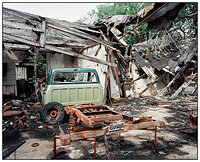
Abandoned Farm Truck

H
Abandoned Farm Truck

  • 0
  • 0
  • 0
Balloon

A
Balloon

  • 2
  • 0
  • 30

Forum statistics

Threads
204,384
Messages
2,867,762
Members
102,245
Latest member
TedTown
Recent bookmarks
0
I have never had an issue dissolving Benzotriazole in IPA. Trying to get a decent solution in water is difficult. Warming the IPA/ Benzotriazole solution will help it to dissolve quicker.
 
Not quite. I assume by "alcohol" you mean ethanol. This is an excellent solvent for fats and oils, as is propan-2-ol (isopropanol).
Isopropanol is actually slightly LESS polar than ethanol which makes is slightly better at dissolving non-polar fats/oils.
The main reason isopropanol is preferred is because it is more volatile and evaporates faster, making it less prone to leaving streaks or other residues - important for cleaning lenses.

I doubt anyone is using pure ethanol for cleaning. Absolute alcohol is hard to get hold off & due to taxation VERY expensive, more than 10 times the cost of iso-propanol in the UK. Last time I ordered them for work 2.5litres of iso-propanol was under £10, 1 litre of 'absolute' alcohol was over £100 (and needed special customs & excise paperwork).

The nearest most people get is denatured alcohol which usually contains significant methanol making it somewhat toxic. Bitrex or pyridine are often added to make it unpalatable to try & stop people drinking it & going blind
This denatured alcohol is typically only about 90% ethanol. Without a denaturant it's impossible to distil ethanol from a more dilute aqueous solution & get over about 40% ethanol. Removing the denaturant is difficult too.

Yes iso-propanol is less polar than ethanol (& much less than methanol) but it's not more volatile.
Ethanol boils at 78 C while iso-propanol boils at 82.5 C not significantly different but slightly less volatile.

IPA is prefered because of it's better solvency, cheaper price & the lack of heavy trace components which could be left on the glass.

FWIW Ethanol is not fully miscible with all hydrocarbons, something that has caused minor difficulties in blending high ethanol gasoline products.
 
My daughter is starting to be a really great photgrapher.

When I gave her her first real camera, I said to her:

"How do you clean lenses?"

She said, "How?"

I said "don't let them get dirty."
 
My daughter is starting to be a really great photgrapher.

When I gave her her first real camera, I said to her:

"How do you clean lenses?"

She said, "How?"

I said "don't let them get dirty."

best advise and a good reasonto have a UV filter on the lens at all times.
 
There’s too much worry in this thread. I spent my working life as a wildlife biologist. Binoculars were a tool of the trade. Pay was not handsome, so good binoculars were a lifetime investment, and if you have good eyes you want good binoculars. They get wet with rain, snow and drips off your nose. They get dusty and dirty from outdoor life in general. Animals being handled stick their grubby feet or noses on the fat ends. These things can’t be avoided. There is no way to add UV filters. So I’ve cleaned the four ends of my (Zeiss) binoculars literally hundreds of times, always with isoprop and lens tissues, always with care. To this day, after 45 years, the T• coating is unblemished. It’s really not a big deal.

 
Alcohol doesn't dissolve fats and oils. Isopropyl alcohol is polar, similar to water, so good for dissolving similar compounds and fast to evaporate.

I've not been impressed by the wipes that bear the Zeiss branding.

In fact, there are several different 'Zeiss' cleaning formulations, most of which are NOT endorsed by the Photographic division of Zeiss which is responsible for photographic lenses, these non-photographic lens cleaners can be meant for use by consumers of Zeiss optometric (vision correction) glasses or other Zeiss divisions.

 
There’s too much worry in this thread. I spent my working life as a wildlife biologist. Binoculars were a tool of the trade. Pay was not handsome, so good binoculars were a lifetime investment, and if you have good eyes you want good binoculars. They get wet with rain, snow and drips off your nose. They get dusty and dirty from outdoor life in general. Animals being handled stick their grubby feet or noses on the fat ends. These things can’t be avoided. There is no way to add UV filters. So I’ve cleaned the four ends of my (Zeiss) binoculars literally hundreds of times, always with isoprop and lens tissues, always with care. To this day, after 45 years, the T• coating is unblemished. It’s really not a big deal.

Glad to hear it from somebody with experience.
 
There’s too much worry in this thread. I spent my working life as a wildlife biologist. Binoculars were a tool of the trade. Pay was not handsome, so good binoculars were a lifetime investment, and if you have good eyes you want good binoculars. They get wet with rain, snow and drips off your nose. They get dusty and dirty from outdoor life in general. Animals being handled stick their grubby feet or noses on the fat ends. These things can’t be avoided. There is no way to add UV filters. So I’ve cleaned the four ends of my (Zeiss) binoculars literally hundreds of times, always with isoprop and lens tissues, always with care. To this day, after 45 years, the T• coating is unblemished. It’s really not a big deal.
But also keep in mind that the human eye is a fairly LOW resolving device, and a 135 format photographic image captured with a photographic lens might be enlarged 8-16X and need to reveal much more detail at that magnification, much more than the naked human eye could ever detecte thru binoculars.

Ralph Lambrecht said:
but I made one exception: I do not exclusively use dedicated lens tissue but also use, God forbid. wood-free soft toilet paper. I

As for paper made from wood pulp, it does erode the coatings on lens surfaces. Modern Photography magazinge's Herb Keppler many decades ago published a test report that even showed low levels of coating wear caused by Kodak Lens Cleaning tissue, and found that microfiber cloth (only available in Japan in those times) had less wear!
 
But also keep in mind that the human eye is a fairly LOW resolving device, and a 135 format photographic image captured with a photographic lens might be enlarged 8-16X and need to reveal much more detail at that magnification, much more than the naked human eye could ever detecte thru binoculars.

That’s a fair point, except that damage to lens coating is (surely?) likely to manifest as a general degradation in contrast, rather than pin-point details. As far as my ‘bins’ are concerned, I wouldn’t care to judge the effects on performance of 45 years of cleaning with eyes that have also aged by the same amount, so I was just going by a careful examination of the coated surfaces.

As for paper made from wood pulp, it does erode the coatings on lens surfaces. Modern Photography magazinge's Herb Keppler many decades ago published a test report that even showed low levels of coating wear caused by Kodak Lens Cleaning tissue, and found that microfiber cloth (only available in Japan in those times) had less wear!
As I and others have said up-thread, it is possible to be too rough with lens tissues. On the other hand, because they are re-used, it’s difficult to keep microfibre cloths totally free of grit.
 
Last edited:
I have used the Zeiss premade stuff but kept the spray bottles so I could make my own:

99% Isopropyl Alcohol 1+2
Photoflo 200 5-6ml/l

I spray this on to a microfiber cloth and use the cloth the clean lenses, smart phone screens, computer screens and keyboards, etc.

Hereabouts, nearly pure ethanol can be had inexpensively from the local booze store. Apparently is is used for making liquored up punches and party mixes (yuck!).

It is typically sold as "190 proof grain alcohol" or "grain neutral spirit" and sells for under $12-20 USD for 750ml.

I use ethanol a fair bit for cleaning camera parts, film rails, press camera rack-and-pinion, and metal camera surfaces to remove grunge. This is preferred to denatured alcohol whose denaturing agents are not good for you and to be avoided via skin absorption.

A small bit of ethanol on a microfiber cloth can also be used to clean lens haze and grunge. Care must be take to avoid lifting the paint off the surrounding mounting surfaces/flanges as the paint used is sometimes soluble in alcohol.
 
But also keep in mind that the human eye is a fairly LOW resolving device, and a 135 format photographic image captured with a photographic lens might be enlarged 8-16X and need to reveal much more detail at that magnification, much more than the naked human eye could ever detecte thru binoculars.


As for paper made from wood pulp, it does erode the coatings on lens surfaces. Modern Photography magazinge's Herb Keppler many decades ago published a test report that even showed low levels of coating wear caused by Kodak Lens Cleaning tissue, and found that microfiber cloth (only available in Japan in those times) had less wear!

Amazing that this is not more publicized. I'm considering a large test showing glass surface damage by several cloths and papers, dry and moist.
 
I have been happy using Kimtech Kimwipes that are used in medical labs. I forgot mine on a trip last year, but did have coffee filters handy. I used the brown non bleached ones from Walmart. Cheap hack. I thought they worked great and still carry a few of them in my bag just in case.
 
Amazing that this is not more publicized. I'm considering a large test showing glass surface damage by several cloths and papers, dry and moist.

The Keppler article is not found in a Google search (just ran a search in the past week). I was recently wondering if the library still keeps a copy of Reader's Guide to Periodicals, which might find reference to the Modern Photography article and retrieval via microfilm copy.
 
One note, I slap a B&W MRC uv filter on my lenses when fresh. Usually never need to touch the actual camera lens.

I go one level better using their KSM C-POL filters (a few of which are more than 30 years old!) in additional to their Schott glass MRC UV filters, but latterly have changed over to NiSi true colour C-POLs, which provide an extra 1 stop brighter viewfinder image over the traditionally thick and dark B+W offerings. NiSi also have the Armor FX UV (0); also fitted to lenses when scenes are too dark to achieve accurate focus.
 
I go one level better using their KSM C-POL filters (a few of which are more than 30 years old!) in additional to their Schott glass MRC UV filters, but latterly have changed over to NiSi true colour C-POLs, which provide an extra 1 stop brighter viewfinder image over the traditionally thick and dark B+W offerings. NiSi also have the Armor FX UV (0); also fitted to lenses when scenes are too dark to achieve accurate focus.

Sounds a bit looney to me.
 
Sounds a bit looney to me.

What makes you think it's a bit looney?

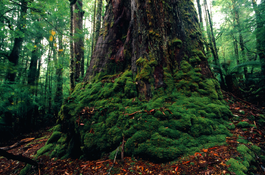
C-POLs have been on just about every one of my lensese (across 3 systems) for decades now. They are, as stated, swapped out when using a slow lens (>f4) for plain old UV(0) filter. There are some oh-so-green (and bloody wet, cold) rainforest environments in Australia – exemplars among many, where you never need a polariser, at the risk of ridiculously
'Disneychroming' the scenes!


Big Bertha_Que South_Takayna.png
______________________________
Look mum! No polariser! 😯


1100 to 1300 year old e. regnans in
loggin-threatened Que South rainforest, Takayna, NW Tasmania.
 
Last edited:
Photrio.com contains affiliate links to products. We may receive a commission for purchases made through these links.
To read our full affiliate disclosure statement please click Here.

PHOTRIO PARTNERS EQUALLY FUNDING OUR COMMUNITY:


Ilford ADOX Freestyle Photographic Stearman Press Weldon Color Lab Blue Moon Camera & Machine
Top Bottom