




Andreas Thaler
Subscriber
When an SLR, lens, or accessory isn't working as it should, the question arises as to whether the device can be repaired, by whom, and at what cost. Or whether a repair should be carried out at all.
There are no blanket answers to these questions; they arise anew in each case.
Let's take a Canon T90 as an example
where the aperture is not set correctly in aperture priority mode. Aperture 2.8 is preselected, but the aperture closes too far, resulting in an aperture of approximately 5.6.
We have experience with DIY repairs of the T90, so we suspect that the aperture control in the mirror box is at fault. This is a complex electromechanical mechanism that ensures that the aperture is set correctly.
So there is a chance that we can carry out the repair ourselves. All the more so as we know that most repair shops refuse to accept a T90. Too little demand, too much electronics, no spare parts are the usual reasons given.
Now the question of effort arises
Since we do DIY, we don't pay for service and repairs with our money, but with our time. How much time we want to invest depends on our motivation.
the best solution will be to replace the defective aperture control with one from which we assume that it works.
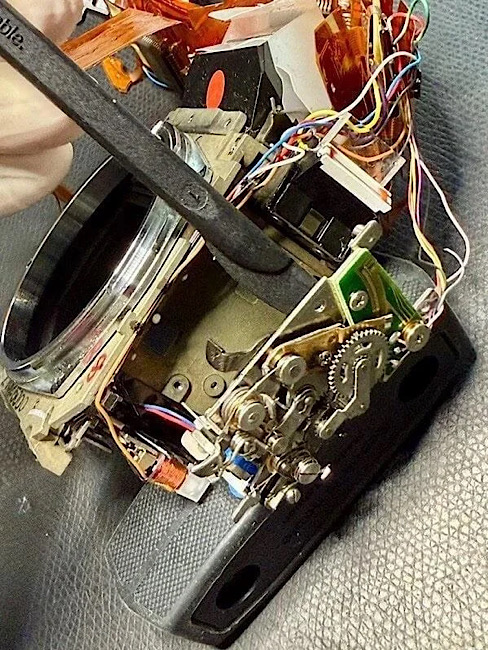
To do this, we remove the aperture control from a T90 for spare parts.
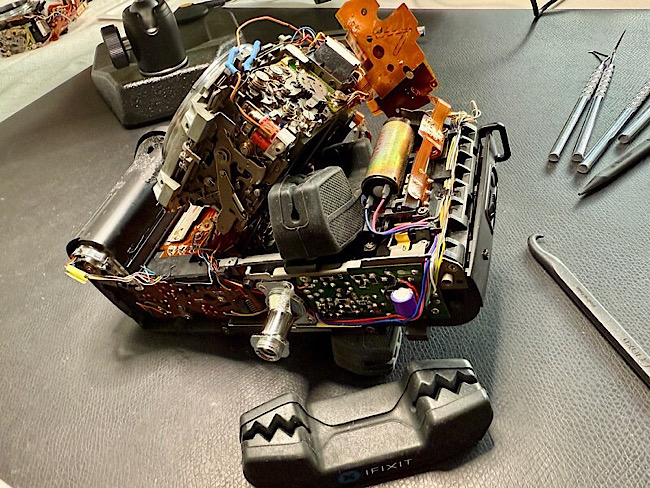
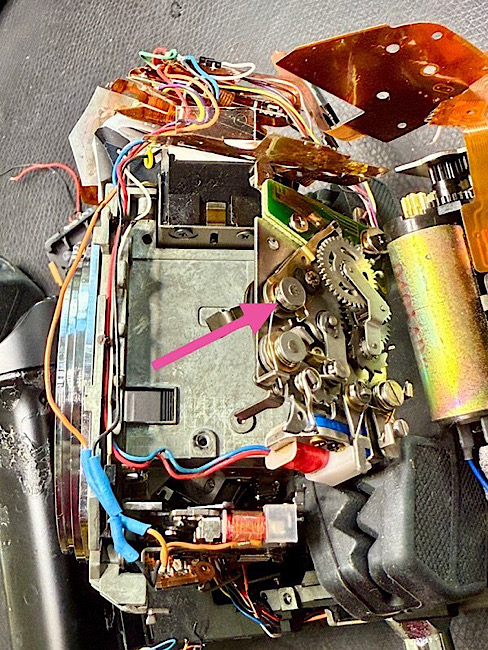
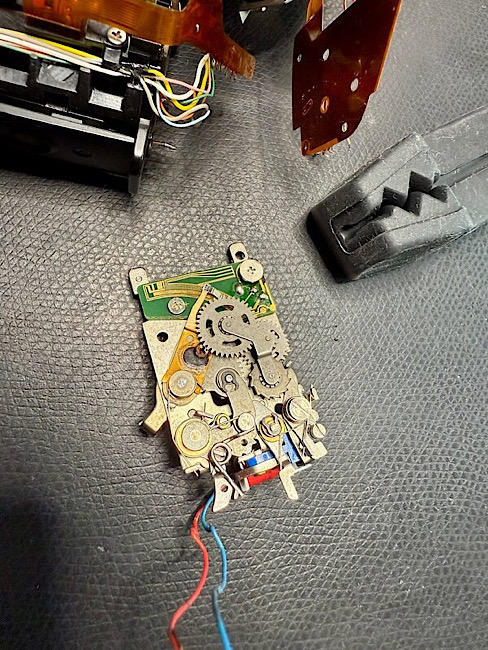
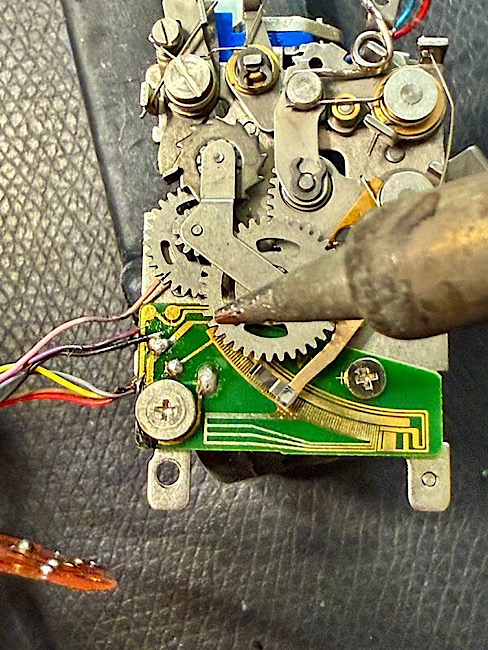
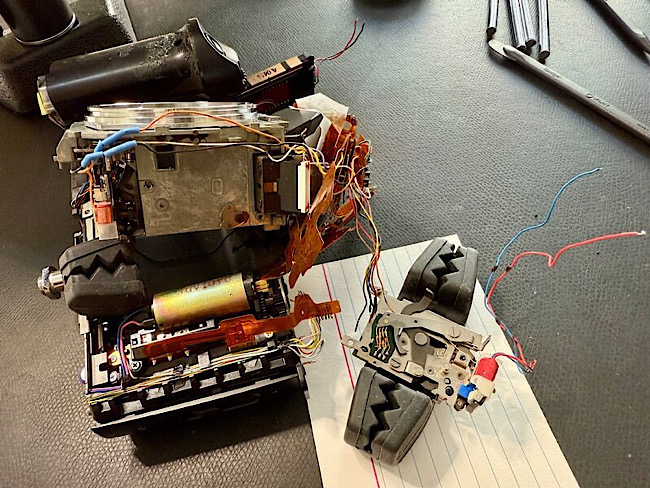
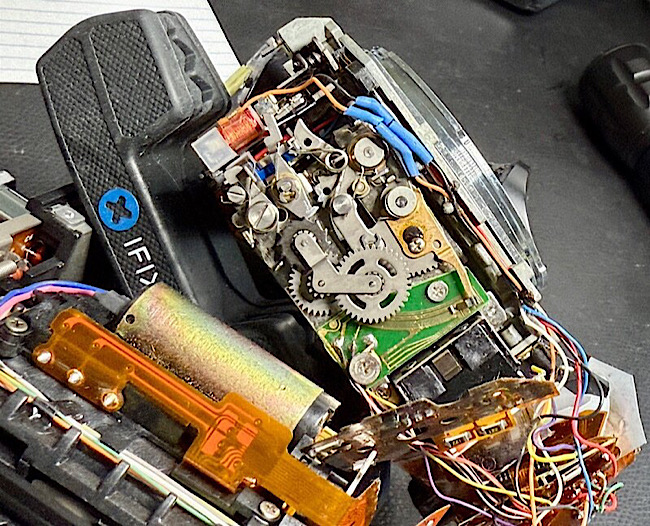
Since we already have experience with this, the replacement is quickly done. We don't have to worry about adjustment either, as the factory settings should still apply. After installation, we check the aperture function and everything works as it should.
Job done. We have solved the problem with relatively little effort.
If, on the other hand
we want to get to the bottom of the aperture control problem in order to learn more about it or because we are ambitious, the task becomes more complicated.
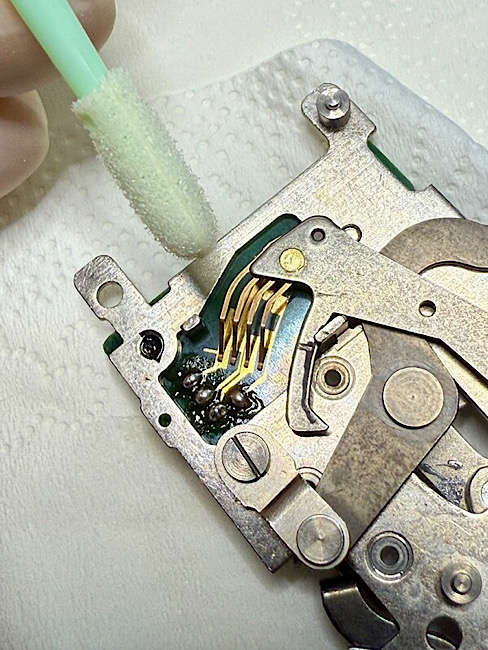
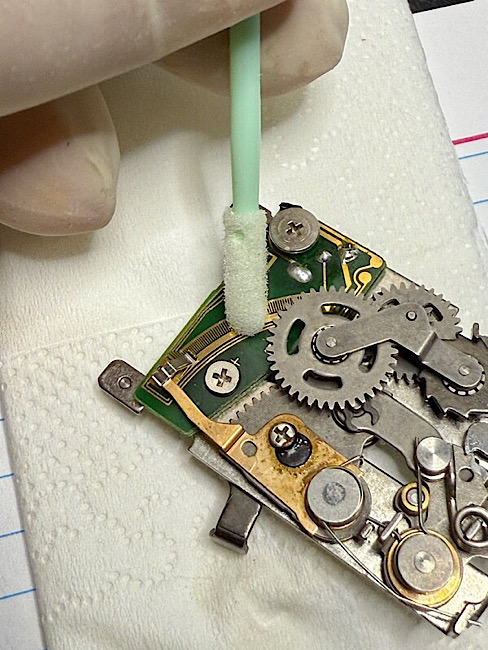
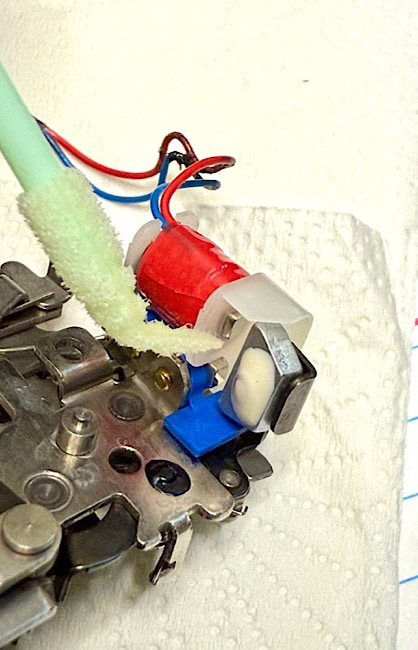
We have to examine the aperture control, learn how it works, clean and lubricate it, or probably take it apart, find and fix the problem, and put it back together again. The mechanism needs to be adjusted—hopefully we can find information on how to do this—and then tested to see if it works. Only when the T90 is complete again will we see if we have been successful.
The situation is similar
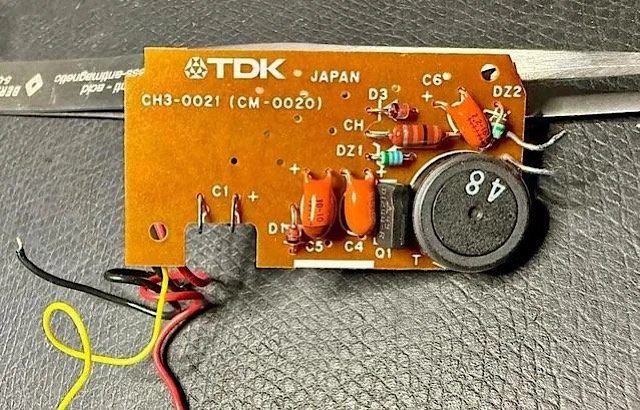
with issues like defective electronic shutters or electronic components such as a DC/DC converter, which provides the required voltages as a circuit on a board. These are all complex components that can either be replaced or repaired.
Nearly everything is possible with DIY
it just depends on how much effort you want to invest.
And that should always be clear before starting a project.
See also

 www.photrio.com
www.photrio.com
www.photrio.com
+++
 A word of caution
Please keep in mind that you’ll be using highly flammable solvents for service work, and their fumes are harmful to your health. Soldering also produces fumes that should not be inhaled. Dangerous high voltages can be present when handling electronics, especially in conjunction with electronic flash units and mains. Therefore, familiarize yourself with the safety regulations beforehand and ensure your safety. Depending on the activity, protective gear may be advisable.
All information provided without guarantee and use at your own risk.
Acknowledgments
Without the work of Master Larry Lyells, in particular, we wouldn’t have the detailed technical information we need today for service/repair of SLRs.
The SPT Journal and The Camera Craftsman, which he helped shape significantly as an author, and which contain all the necessary information and instructions are available for a fee through Learn Camera Repair.
We owe our access to them to Eugene Pate, the founder of Learn Camera Repair.
There are no blanket answers to these questions; they arise anew in each case.
Let's take a Canon T90 as an example
where the aperture is not set correctly in aperture priority mode. Aperture 2.8 is preselected, but the aperture closes too far, resulting in an aperture of approximately 5.6.
We have experience with DIY repairs of the T90, so we suspect that the aperture control in the mirror box is at fault. This is a complex electromechanical mechanism that ensures that the aperture is set correctly.
So there is a chance that we can carry out the repair ourselves. All the more so as we know that most repair shops refuse to accept a T90. Too little demand, too much electronics, no spare parts are the usual reasons given.
Now the question of effort arises
Since we do DIY, we don't pay for service and repairs with our money, but with our time. How much time we want to invest depends on our motivation.
- Do we just want to be able to use the T90 again as quickly as possible for photography with the least possible effort?
- Or are we interested in solving a complex problem that no one has tackled yet, at least not publicly?
the best solution will be to replace the defective aperture control with one from which we assume that it works.
To do this, we remove the aperture control from a T90 for spare parts.
Since we already have experience with this, the replacement is quickly done. We don't have to worry about adjustment either, as the factory settings should still apply. After installation, we check the aperture function and everything works as it should.
Job done. We have solved the problem with relatively little effort.
If, on the other hand
we want to get to the bottom of the aperture control problem in order to learn more about it or because we are ambitious, the task becomes more complicated.
We have to examine the aperture control, learn how it works, clean and lubricate it, or probably take it apart, find and fix the problem, and put it back together again. The mechanism needs to be adjusted—hopefully we can find information on how to do this—and then tested to see if it works. Only when the T90 is complete again will we see if we have been successful.
The situation is similar
with issues like defective electronic shutters or electronic components such as a DC/DC converter, which provides the required voltages as a circuit on a board. These are all complex components that can either be replaced or repaired.
Nearly everything is possible with DIY
it just depends on how much effort you want to invest.
And that should always be clear before starting a project.
See also
Canon T90: Aperture function restored by replacing the aperture control (AE unit)
In the previous repair project, I cleaned the aperture magnet, among other things, to fix a problem with the aperture. That didn't completely resolve the issue, so I tackled the problem again. What was the issue with the aperture? The aperture didn't close evenly. Here, aperture priority...
www.photrio.com
Canon T90: Solution found for the stubborn front flex connector, service and repairs on the T90 are no longer a gamble
It's happened to me several times now that I've serviced a T90, only to find the work was in vain because of unsolvable contact problems in the front flex connector. The front flex connector is located on the front release side, where the red self-timer LED is located. Three flexible circuit...
www.photrio.com
Canon T90: systematic troubleshooting, DC/DC converter replaced, one LED digit missing, sticky shutter, EEE again, summary
Checking a Canon T90 according to the troubleshooting instructions by Larry Lyells in the SPT Journal. https://learncamerarepair.com/product.php?product=1778 No sign of life. Battery compartment removed, measuring the input voltage on the DC/DC converter. Front and top cover...
www.photrio.com
+++
A word of cautionPlease keep in mind that you’ll be using highly flammable solvents for service work, and their fumes are harmful to your health. Soldering also produces fumes that should not be inhaled. Dangerous high voltages can be present when handling electronics, especially in conjunction with electronic flash units and mains. Therefore, familiarize yourself with the safety regulations beforehand and ensure your safety. Depending on the activity, protective gear may be advisable.
All information provided without guarantee and use at your own risk.
Acknowledgments
Without the work of Master Larry Lyells, in particular, we wouldn’t have the detailed technical information we need today for service/repair of SLRs.
The SPT Journal and The Camera Craftsman, which he helped shape significantly as an author, and which contain all the necessary information and instructions are available for a fee through Learn Camera Repair.
We owe our access to them to Eugene Pate, the founder of Learn Camera Repair.
Last edited:
