
• Welcome to Photrio!
    Registration is fast and free. Join today to unlock search, see fewer ads, and access all forum features.
    Click here to sign up

Dig Negs & Plat Pallad

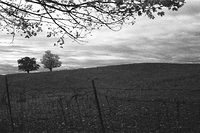
Pasture

A
Pasture

  • 0
  • 0
  • 6
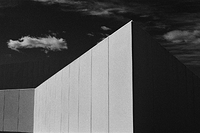
Angular building

A
Angular building

  • 3
  • 1
  • 27

Recent Classifieds

Forum statistics

Threads
201,078
Messages
2,818,681
Members
100,516
Latest member
victorreeds
Recent bookmarks
0

nmp

Member
Allowing Ads
Joined
Jan 20, 2005
Messages
2,054
Location
Maryland USA
Format
35mm
Good suggestion.... In consideration of this “beginner” whose aspirations are to become a platinum printer ... salt printing offers the chance to learn proper coating techniques , exposure calculations and the ability to do tonal evaluations and the added benefit of using less expensive materials... my thought was that Kallitypes are a bit more related to Pt/Pd ( iron based, oxalate sensitizer , Ammonium citrate developers, same suitable papers and an almost identical tonal range, etc).

I have not done a kallitype yet (it's on the list,) but from some of the threads lately, it seems to me there are some issues related to ferric oxalate solubility, color, precipitations etc. that could potentially be overwhelming to a beginner. I think vandykes are probably better in that regard and ferric ammonium citrate is significantly cheaper than FO. Some excellent vandyke work can be found on this forum.

If looking for even simpler than salt print, check out what I call salt-free salt prints:

https://www.photrio.com/forum/threads/salt-free-salt-print-toned-with-himalayan-black-salt.155417/


In this bear-bones process, it requires a single coat of a single-component sensitizer, silver nitrate - as opposed two consecutive ones of salt and silver nitrate with drying in between in the traditional salt prints. You can also use a cheaper buffered paper - in fact it gets its maximum Dmax on buffered paper. No pricey COTs and Platines. Not to mention a toner you can buy at a grocery store.

:Niranjan.
 

nmp

Member
Allowing Ads
Joined
Jan 20, 2005
Messages
2,054
Location
Maryland USA
Format
35mm
Regarding Kallitype vs Pt Pd printing. Does anyone here have a good knowledge of the attributes of both systems?.. I am most concerned in the archival relationship between the two.

I am finding that I love gum over Palladium, but as Miles mentions the cost of the metal is huge and is a real consideration for someone working on personal pojects like myself.

thanks in advance

Bob

Hi, Bob:

This Sandy King article addresses your questions:

http://sandykingphotography.com/resources/technical-writing/the-kallitype-process

Un-toned kallitypes are silver prints like salt prints except there is an added danger of residual iron (ii) in the former (which is hard to remove completely) that can oxidize silver over time in addition to the the normal environmental degradation that is common to all silver images. So kallitypes are in greater necessity to be toned with a noble metal than a salt print or silver gelatin. As per the article, if you tone the print with Pt or Pd, the outcome is identical in both tonality and permanence as a normally processed pt/pd print. King goes in the details of why even if you tone a kaliitype with Pt and/or Pd, it still would come out to be a cheaper option of the two.

I have wondered myself if one were to use Pt/Pd/Au toning, and the cost of the process was a factor, why not tone a salt print or a vandyke, which has a added cost advantage of using a cheaper iron (iii) source or none at all. The tonal quality issue I think is somewhat superseded with the use of digital negatives that allows greater control of the input densities than that was possible with contact-printing of large format silver negatives.

:Niranjan.
 

Prof_Pixel

Member
Allowing Ads
Joined
Feb 17, 2012
Messages
1,917
Location
Penfield, NY
Format
35mm
I have wondered myself if one were to use Pt/Pd/Au toning, and the cost of the process was a factor, why not tone a salt print or a vandyke, which has a added cost advantage of using a cheaper iron (iii) source or none at all.
Salt printing,, as taught at the George Eastman Museum, always includes gold toning and waxing (beeswax and lavender oil).

It makes some great looking prints!
 

Miles Nelson

Member
Allowing Ads
Joined
Mar 8, 2018
Messages
7
Location
Florida
Format
4x5 Format
Regarding Kallitype vs Pt Pd printing. Does anyone here have a good knowledge of the attributes of both systems?.. I am most concerned in the archival relationship between the two.

I am finding that I love gum over Palladium, but as Miles mentions the cost of the metal is huge and is a real consideration for someone working on personal pojects like myself.

thanks in advance

Bob
Without question an untoned Kallitype is not as archival as Pt/Pd print ... untoned but properly process Kallitype should last about as long as any well made silver print... On the other hand, a palladium or gold toned Kallitype is quite archival... Toning metals (platinum, palladium, gold , lead , selenium, etc) ensure longevity mostly by replacement... What’s cool with palladium toning is that you are using only a fraction of the Pd that you would use in making a pure Pt/Pd print and again the toned print can be very difficult to distinguish... I’m about to explore gum over Kallitype this week... my challenge is to make the best Pt/Pd print that I can and simultaneously make a palladium toned Kallitype to match and then do gum over each as a comparative study ... fun ! ... I hope
 

nmp

Member
Allowing Ads
Joined
Jan 20, 2005
Messages
2,054
Location
Maryland USA
Format
35mm
Without question an untoned Kallitype is not as archival as Pt/Pd print ... untoned but properly process Kallitype should last about as long as any well made silver print... On the other hand, a palladium or gold toned Kallitype is quite archival... Toning metals (platinum, palladium, gold , lead , selenium, etc) ensure longevity mostly by replacement... What’s cool with palladium toning is that you are using only a fraction of the Pd that you would use in making a pure Pt/Pd print and again the toned print can be very difficult to distinguish... I’m about to explore gum over Kallitype this week... my challenge is to make the best Pt/Pd print that I can and simultaneously make a palladium toned Kallitype to match and then do gum over each as a comparative study ... fun ! ... I hope

Sounds very interesting. Please share your results, if you don't mind.
 

nmp

Member
Allowing Ads
Joined
Jan 20, 2005
Messages
2,054
Location
Maryland USA
Format
35mm
Salt printing,, as taught at the George Eastman Museum, always includes gold toning and waxing (beeswax and lavender oil).

It makes some great looking prints!

Once I have some salt prints worth keeping, I am going to look into waxing. I mean the prints....:smile:

Never seen a waxed salt print myself. I guess it gives a nice satin look to it. I wonder if there is an archival benefit as well.
 
Photrio.com contains affiliate links to products. We may receive a commission for purchases made through these links.
To read our full affiliate disclosure statement please click Here.

PHOTRIO PARTNERS EQUALLY FUNDING OUR COMMUNITY:


Ilford ADOX Freestyle Photographic Stearman Press Weldon Color Lab Blue Moon Camera & Machine
Top Bottom
