• Welcome to Photrio!
    Registration is fast and free. Join today to unlock search, see fewer ads, and access all forum features.
    Click here to sign up

Designing A Multimeter (PW-June-1965), by K. Berry, presented by Peter Vis

22897.jpg

A
22897.jpg

  • 0
  • 0
  • 15
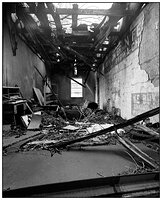
Abandoned Grain Silo 1

H
Abandoned Grain Silo 1

  • 0
  • 0
  • 28

Forum statistics

Threads
204,390
Messages
2,867,874
Members
102,251
Latest member
archgen
Recent bookmarks
0
Ah, classic example of German engineering (and design) 👍. Active multimeter with 2.5% accuracy and 10MOhm impedance. Why not trust a company that is also famous for their light meters when it comes to a multimeter for camera repair 😉.

That particular model of the Gossen Metrawatt is very expensive to get.
 
Yours analog meter isn't a simple meter (passive like Andrea said) as I believe it has high impedance OP amp input stage to give it as high input impedance as a typical digital multimeter. It also has a liner resistance scale.
Yes, I mentioned in post #2 above that the PM-2505 is an active multimeter. My point is that you should only use a passive multimeter if it has at least 10-20kOhm/V input impedance (like the one @4season presented) for low-current circuitry like the one in SLRs. If in doubt, it is always better to use an active multimeter. I think even the cheaper ones have a voltage-independent impedance of 10MOhm (like the PM-2505 has). Often, you can get these multimeters from reputable manufacturers like Gossen, Philips, or even Fluke for quite cheap on the used market. Most people have inherited the devices and have no interest in them (or not even know exactly what it is). As long as the batteries have not leaked (similar problem as with cameras) they usually still work.
 
That particular model of the Gossen Metrawatt is very expensive to get.

IMG_6722.jpeg


This one is not exactly cheap either 😉

I figured it’s worth investing in good equipment that will hopefully last a long time.

This multimeter really comes in handy when dealing with currents in the microamp range, which my EUR 25 multimeter can’t measure.
 
Andreas only buys the good stuff 😉.

I just checked for how much they sell and was like 'WTF?'.

You can spend as much money as you want on devices—there’s no limit. Compared to high-quality oscilloscopes, lab power supplies, and soldering stations, multimeters are actually quite affordable; you could easily spend thousands of euros on those. It depends on what you’re doing. Fortunately, I don’t need that for my projects.
 
Last edited:
You can spend as much money as you want on them—there’s no limit. Compared to high-quality oscilloscopes, lab power supplies, and soldering stations, multimeters are actually quite affordable; you could easily spend thousands of euros on those. It depends on what you’re doing. Fortunately, I don’t need that for my projects.

You're right, these devices can be very expensive. However, for a hobbyist doing the "usual" electronics stuff there is a point on the curve of dimishing marginal utility where spending more is no longer justified by the extra quality/functionality of the device. Of course, scientific research or product development is a different topic.

I usually try to buy from the "middle" segment because this seems to be the sweet spot regarding price, functionality, durability, and accuracy. Also I sometimes overshoot; I know that I not really need a multimeter like my Agilent 34401A with 0.004% accuracy but sometimes you just have to treat yourself 😊. Fortunately, I didn't have to buy any of this stuff for camera repair but had everything already available. Otherwise, I would have reconsidered entering this hobby.

 
You're right, these devices can be very expensive. However, for a hobbyist doing the "usual" electronics stuff there is a point on the curve of dimishing marginal utility where spending more is no longer justified by the extra quality/functionality of the device. Of course, scientific research or product development is a different topic.

I usually try to buy from the "middle" segment because this seems to be the sweet spot regarding price, functionality, durability, and accuracy. Also I sometimes overshoot; I know that I not really need a multimeter like my Agilent 34401A with 0.004% accuracy but sometimes you just have to treat yourself 😊. Fortunately, I didn't have to buy any of this stuff for camera repair but had everything already available. Otherwise, I would have reconsidered entering this hobby.


In context the considered overkill Agilent 34401a isn't that much more than the Metrawatt and the accuracy is 100 times more.
 
In context the considered overkill Agilent 34401a isn't that much more than the Metrawatt and the accuracy is 100 times more.
Sure but the footprint of the Agilent is huge on the bench (about 38cm deep plus power cable), has a noisy fan, isn't that straightforward to use, and if the VFD display breaks you're screwed. Currently, I mainly use it for calibrating and adjusting other multimeters. Don't see any application in camera repair my Brymen BM257s couldn't do for much cheaper.
 
Photrio.com contains affiliate links to products. We may receive a commission for purchases made through these links.
To read our full affiliate disclosure statement please click Here.

PHOTRIO PARTNERS EQUALLY FUNDING OUR COMMUNITY:


Ilford ADOX Freestyle Photographic Stearman Press Weldon Color Lab Blue Moon Camera & Machine
Top Bottom