• Welcome to Photrio!
    Registration is fast and free. Join today to unlock search, see fewer ads, and access all forum features.
    Click here to sign up

Calibrating for cyanotype using Mike Ware’s ‘simple’ formula + stouffer

Pasture

A
Pasture

  • 0
  • 0
  • 6
Angular building

A
Angular building

  • 3
  • 1
  • 27

Recent Classifieds

Forum statistics

Threads
201,078
Messages
2,818,681
Members
100,516
Latest member
victorreeds
Recent bookmarks
0

hellomynameis

Member
Allowing Ads
Joined
Nov 4, 2018
Messages
13
Location
London
Format
Traditional
Hello!

Hoping someone might be able to help.

I am calibrating my cyanotype process with an exposure unit. My first task is determining exposure time using a stouffer 21 step wedge. The machine I’m using is dated, so bulb not the best, but have little choice.

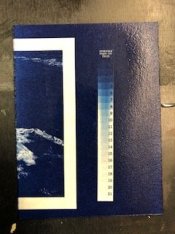
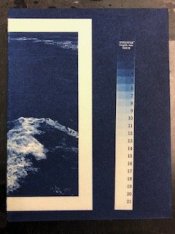
As per stouffer instructions I am looking for max density all the way up to 7 with 8 a slight shade lighter. The traditional process I was getting to 1 hour and got up to 4. Thought this too long so tried the Ware’s simple formula since I read exp times faster. However, is solarising well before reaching 7 despite the paper around it looking a super luscious blue. Tried 45 and 75 minutes just to push it.

Any idea why this might be happening or what I might try next to resolve. Any be doing hour and a half exposures with classic formula!!!

Thanks in advance

1st image is 45 mins
2nd image is 75 mins - with solarisation
 

Attachments

  • B4C85D08-D04B-4795-AB10-610905FE7D16.jpeg
    B4C85D08-D04B-4795-AB10-610905FE7D16.jpeg
    18.3 KB · Views: 264
  • 9F8AC2A0-FB16-4B07-82CC-64C7DB5C59A0.jpeg
    9F8AC2A0-FB16-4B07-82CC-64C7DB5C59A0.jpeg
    21.2 KB · Views: 266
OP
OP

hellomynameis

Member
Allowing Ads
Joined
Nov 4, 2018
Messages
13
Location
London
Format
Traditional
Those are mighty long exposures for cyanotypes. What kind of bulbs does your exposure unit have?

Your main image looks decent with strong blues and nearly white borders.

Hey thanks for replying!
The stouffer is to test the min exposure time for maximum density. This exposure times means I am able to then expose a 1-100% density step wedge that will give me the info I need to create a correction curve for max amount fo tones.
Its all about getting the blue up to 7, so that I have enough info further up the wedge, the lights and highlights so I'm able to do this...

It's a niche request, think stouffer may typically be used for photopolymer/photo-etch and darkroom processes....
 

MattKing

Moderator
Moderator
Joined
Apr 24, 2005
Messages
54,618
Location
Delta, BC Canada
Format
Medium Format
Are you sure that your step wedge has the same transmission characteristics with respect to UV as the material used for your negative?
 

nmp

Member
Allowing Ads
Joined
Jan 20, 2005
Messages
2,054
Location
Maryland USA
Format
35mm
Hey thanks for replying!
The stouffer is to test the min exposure time for maximum density. This exposure times means I am able to then expose a 1-100% density step wedge that will give me the info I need to create a correction curve for max amount fo tones.
Its all about getting the blue up to 7, so that I have enough info further up the wedge, the lights and highlights so I'm able to do this...

It's a niche request, think stouffer may typically be used for photopolymer/photo-etch and darkroom processes....

I do understand about the Stouffer. You don't need to get to the step 7 necessarily, although that may be recommended by Stouffer to ensure good leeway to accurately calculate the correct exposure time. Your initial exposure should be such that you get two successive densities to be the same. Actual exposure time then can be calculated from the position of the first of those two steps and the step increment of the wedge, which I believe would be 1/2 stop.

As far as the reason for these long exposures, one possibility is the UV source is fairly weak. That's why I asked about the bulbs. If you want to get to step 7 from step 1, your would need 3 stops more exposure at least, that would be prohibitively too long. I would say if you are happy with the Dmax of the print, just use a time you are comfortable with (I think the 45 min looks pretty good) and make your digineg calibration. I know that may not be the highest Dmax that might be possible, but it's a trade-off against much longer exposures.

Are you using plain water or acid bath for clearing the print? The former would result in clearer whites, but at the cost of somewhat lower Dmax at a given exposure and shortened dynamic range. In that case the minimum exposure for maximum density would be pushed higher, as I have seen in the classic recipe. So if you are not using acid bath, I would suggest you can try that.
 
Last edited:

nmp

Member
Allowing Ads
Joined
Jan 20, 2005
Messages
2,054
Location
Maryland USA
Format
35mm
Are you sure that your step wedge has the same transmission characteristics with respect to UV as the material used for your negative?

Normally the negative material is placed on the paper first and then the Stouffer. This way the absorption within the negative is also taken into account. The step wedge is calibrated against UV transmission standard to accurately meter 1/2 stop (or 1/3 as the case may be) of exposure.
 

MattKing

Moderator
Moderator
Joined
Apr 24, 2005
Messages
54,618
Location
Delta, BC Canada
Format
Medium Format
I was just wondering if the substrates and the image bearing components used for both the negative and the step wedge might have different UV absorption characteristics.
 
OP
OP

hellomynameis

Member
Allowing Ads
Joined
Nov 4, 2018
Messages
13
Location
London
Format
Traditional
I do understand about the Stouffer. You don't need to get to the step 7 necessarily, although that may be recommended by Stouffer to ensure good leeway to accurately calculate the correct exposure time. Your initial exposure should be such that you get two successive densities to be the same. Actual exposure time then can be calculated from the position of the first of those two steps and the step increment of the wedge, which I believe would be 1/2 stop.

As far as the reason for these long exposures, one possibility is the UV source is fairly weak. That's why I asked about the bulbs. If you want to get to step 7 from step 1, your would need 3 stops more exposure at least, that would be prohibitively too long. I would say if you are happy with the Dmax of the print, just use a time you are comfortable with (I think the 45 min looks pretty good) and make your digineg calibration. I know that may not be the highest Dmax that might be possible, but it's a trade-off against much longer exposures.

Are you using plain water or acid bath for clearing the print? The former would result in clearer whites, but at the cost of somewhat lower Dmax at a given exposure and shortened dynamic range. In that case the minimum exposure for maximum density would be pushed higher, as I have seen in the classic recipe. So if you are not using acid bath, I would suggest you can try that.


Apologies, of course you understand about the stouffer!

I think you're right, the bulb is old for sure, a halide bulb, which I know deteriorates fast. And the unit is in a shared open access print studio so gets a lot of use. I just thought it might be doable but didn't quite realise how long an exposure time it would need! I don't have a huge range of options (until I can afford my own LED!). Think I may have to make my peace with a max that is close, but not perfect, for the sake of my sanity! Like you say, it's a trade-off.

The whites I'm happy with - those [photos aren't great, taken under tungsten which makes them look yellow. They are actually pretty perfect white, the best tI've had, which I think down to Ware's new formula.

Appreciate the help!
 
Last edited:
OP
OP

hellomynameis

Member
Allowing Ads
Joined
Nov 4, 2018
Messages
13
Location
London
Format
Traditional
I was just wondering if the substrates and the image bearing components used for both the negative and the step wedge might have different UV absorption characteristics.

Hi Matt, thanks!

Could be, but the stouffer is the stouffer and the negative is a film positive printed by a company here in London that prints specifically for this purpose (and other photo print processes - photopolymer, alt processes etc.) so would be really surprised!
 

Herzeleid

Member
Joined
Oct 31, 2008
Messages
386
Location
Ankara/Turkey
Format
Multi Format
What is your exposure unit? Bulbs? And which formula you are using? Low or high contrast formulation?
Simple cyanotype works faster than traditional formula. In my experience it was whole stop faster than traditional. I usually expose for 5,5 to 6 mins.
45mins is extremely long for exposing simple cyanotype.
 

nmp

Member
Allowing Ads
Joined
Jan 20, 2005
Messages
2,054
Location
Maryland USA
Format
35mm
Apologies, of course you understand about the stouffer!

I think you're right, the bulb is old for sure, a halide bulb, which I know deteriorates fast. And the unit is in a shared open access print studio so gets a lot of use. I just thought it might be doable but didn't quite realise how long an exposure time it would need! I don't have a huge range of options (until I can afford my own LED!). Think I may have to make my peace with a max that is close, but not perfect, for the sake of my sanity! Like you say, it's a trade-off.

The whites I'm happy with - those [photos aren't great, taken under tungsten which makes them look yellow. They are actually pretty perfect white, the best tI've had, which I think down to Ware's new formula.

Appreciate the help!

No apologies needed. I hope I didn't sound like I was offended because I was not....it so happens there is a lot of stuff I do not know about, much to my chagrin...:smile:

I guess Sun is not a great option for this time of the year in London. Otherwise it would do a better job.

:Niranjan.
 

nmp

Member
Allowing Ads
Joined
Jan 20, 2005
Messages
2,054
Location
Maryland USA
Format
35mm
I was just wondering if the substrates and the image bearing components used for both the negative and the step wedge might have different UV absorption characteristics.

They may or may not, but that won't be a problem if they are taken care of separately. Stouffer I think specs at 95% transmission of the base film. So the overall exposure would have to compensated by decreasing it by a factor of 0.95. If the negative film material is placed underneath the Stouffer while doing the test, then it would be automatically compensated. Otherwise the exposure time should be increased by the fraction absorbed.

:Niranjan.
 
Last edited:

MattKing

Moderator
Moderator
Joined
Apr 24, 2005
Messages
54,618
Location
Delta, BC Canada
Format
Medium Format
I was just thinking back to the contortions I went through trying to print a cyanotype with a T-Max 100 negative.
(Before remembering that T-Max 100 incorporates a UV blocker).:wondering:
The OP has since confirmed that the negative came from a source that was likely to be using materials that are similar to the materials used for the step wedge.
I do wonder, though, if the differences between materials explains some of the frustrations experienced by those who incorporate step wedges while trying to print from inkjet produced digital negatives.
 

Mainecoonmaniac

Member
Allowing Ads
Joined
Dec 10, 2009
Messages
6,297
Format
Multi Format
If you're contacting with an analog negative, you'll have to determine a standard print time. You do this by processing an unexposed piece of film as you do normally. With the blank negative, you put a Stouffers 21 step tablet under the unexposed neg. You'll try to expose on your cyanotype until the first 2 steps merge and record the time. Then you multiple the time by .21. This exposure time will give you highest D-max with the least amount of exposure. If the contrast range of your neg doesn't fit your cyanotype, you have 2 options.
1. Adjust your process time with your film accordingly.
2. Scan your negative and make a digital negative. If you do, you'll have to find your standard print time with the OHP film.
 

nmp

Member
Allowing Ads
Joined
Jan 20, 2005
Messages
2,054
Location
Maryland USA
Format
35mm
I was just thinking back to the contortions I went through trying to print a cyanotype with a T-Max 100 negative.
(Before remembering that T-Max 100 incorporates a UV blocker).:wondering:
The OP has since confirmed that the negative came from a source that was likely to be using materials that are similar to the materials used for the step wedge.
I do wonder, though, if the differences between materials explains some of the frustrations experienced by those who incorporate step wedges while trying to print from inkjet produced digital negatives.

I know a lot of people swear by the Stouffer, but I like to keep it simple and use the old-fashioned test strips for finding the exposure times. Put a piece of the negative material on top of the coated paper and a piece of opaque cardboard on top of that to partially cover and expose several intervals moving the cardboard each times. Usually it takes 2 tries - first to get a rough idea and the second one to fine tune. That way you don't have to worry about the the individual densities of the Stouffer and the negative. I guess the advantage of the Stouffer is being able to shoot only once and do the calculations to arrive at the correct time.
 
Photrio.com contains affiliate links to products. We may receive a commission for purchases made through these links.
To read our full affiliate disclosure statement please click Here.

PHOTRIO PARTNERS EQUALLY FUNDING OUR COMMUNITY:


Ilford ADOX Freestyle Photographic Stearman Press Weldon Color Lab Blue Moon Camera & Machine
Top Bottom