

• Welcome to Photrio!
    Registration is fast and free. Join today to unlock search, see fewer ads, and access all forum features.
    Click here to sign up

Advice needed on Rolleiflex lightmeter

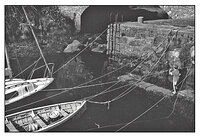
Boy and boats

A
Boy and boats

  • 2
  • 0
  • 48
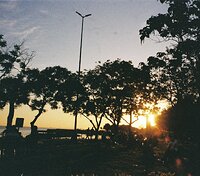
sunset.jpg

A
sunset.jpg

  • 0
  • 0
  • 33

Recent Classifieds

Forum statistics

Threads
204,376
Messages
2,867,678
Members
102,240
Latest member
baronvonsmootj
Recent bookmarks
1

Analogski

Member
Joined
Mar 29, 2025
Messages
99
Location
Holland
Format
Multi Format
Hi there,

Recently I had my Rolleiflex 3.5f serviced. The technician who checked the camera out gave me a description about the light meter. He wrote:

"The deviation of your exposure meter is one f-stop too long at a light value of 1/500 + aperture 8. At 1/125 + 1/30, the deviation is less than ½ f-stop too long".

So, I think I'm overthinking this one and not sure anymore what to do when metering.

I know.... Use a handheld meter or learn the sunny 16 rule. The last one om learning, but I don't want to screw up in poor natural light situations. And a handheld meter for street photography, or when taking pictures of my family, is for me not ideal.

Could you give me advice how to read/set my built in lightmeter?


Thanks a lot!
 
That may be the worst description you could get. But it sounds like the meter is close enough through the shutter speed range for b&w. Try a test roll using the values the meter gives. Check the results by developing.
 
I agree that the report is confusing. 1/500 and f/8 is 15EV, what is "1/125 + 1/30"?

At any rate, 1 or 1/2 stop overexposure is nothing to worry about; I would use as-is. You can set the meter to a 1 stop lower ISO to compensate if you want.

If you want to further overthink it, consider the effects of shutter efficiency: exposure time varies as a function of aperture for the fast speeds.
 
Why don’t you do the study yourself? Compare the Rollei meter with a trusted handheld or camera meter. Do it in a couple of light ranges. Then decide if you understand or agree with what the repairperson wrote or if there’s anything to worry about. Most of all, heed the earlier comments; both are really good advice.
 
Last edited:
I don't think it's that complicated. IMO what the tech said is that the meter recommendation at 1/500 and f/8 will overexpose by a stop (it would be nice to know at what ISO they meant, but I assume something in the mid-range like ~100). That's fairly bright light.

At either 1/125 or 1/30 (and what f-stop ? maybe f/8), it is overexposing by less than 1/2 stop. Overexposure by less than 1/2 stop is not a big deal unless you are shooting slide film. So use it and remember it might overexpose by a stop in bright light. Of course, the recommendation to try comparing it to some known-accurate handheld meter is a good one, if you have a known-accurate handheld meter.
 
Could he mean the shutter speed? He didn't said the ISO?

This, I expect.
Was there, perchance, an issue with language and translation?
Typically, the advice refers to how the shutter speeds differ from the indicated speed. And when a 1/500 set shutter speed is about a stop too slow - closer to 1/250 - then the camera set according to the meter reading over-exposes by a stop.
And continuing with this example, the 1/125 and 1/30 speeds are probably about a 1/2 stop slow.
 
This, I expect.

I'd assume that except for the use of the word "meter" in

"The deviation of your exposure meter is one f-stop too long at a light value of 1/500 + aperture 8. At 1/125 + 1/30, the deviation is less than ½ f-stop too long".

But an old shutter like that is probably not running at 1/500 -- or any other exact speed.

The best advice is probably to directly check the meter against a known good one. A phone app would probably work well enough.
 
I agree Don, which is why I suspect a language issue.
 
I would do a ring around, in open shade a gray card, model, a swath of black cloth with texture, white cloth with texture. Shoot a roll of your usual film, set the meter at ASA 25, meter, shoot a frame, cover the lens and shoot a blank frame, then move the ASA until you get to top end of the meter, 1600 or 3200. Then in bright light test again then develop the film. When printed or scanned you are looking for the frame that provides zone III shadows, shadows with details, the black cloth, zone V, the gray card and if you are lucky zone VII the white cloth. The frame with Zone III, the black cloth is your personal ISO for that camera film and developer. If Zone VII is blown out, reduce by 10% if too flat increase development by 10%. The shots in bright light should match or provide guidance as top how you film developer combo will work in normal lighting.
 
This, I expect.
Was there, perchance, an issue with language and translation?
Typically, the advice refers to how the shutter speeds differ from the indicated speed. And when a 1/500 set shutter speed is about a stop too slow - closer to 1/250 - then the camera set according to the meter reading over-exposes by a stop.
And continuing with this example, the 1/125 and 1/30 speeds are probably about a 1/2 stop slow.

Now the shutter performance like that. 1 stop slow at 1/500 and 1/2 stop slow at lower speed is typical of cameras that old but if he serviced it shouldn't he adjust it so they are closer than that.
 
Now the shutter performance like that. 1 stop slow at 1/500 and 1/2 stop slow at lower speed is typical of cameras that old but if he serviced it shouldn't he adjust it so they are closer than that.

In many cases, the fastest shutter speeds in these leaf shutter cameras didn't start out as being their fully "up to speed" and even if adjusted were not and are not either.
And attempts to adjust them risk making the slower speeds less accurate as well.
 
Photrio.com contains affiliate links to products. We may receive a commission for purchases made through these links.
To read our full affiliate disclosure statement please click Here.

PHOTRIO PARTNERS EQUALLY FUNDING OUR COMMUNITY:


Ilford ADOX Freestyle Photographic Stearman Press Weldon Color Lab Blue Moon Camera & Machine
Top Bottom
