• Welcome to Photrio!
    Registration is fast and free. Join today to unlock search, see fewer ads, and access all forum features.
    Click here to sign up

Adjustment Curves Layer for the DN of the multi-layer gum prints?

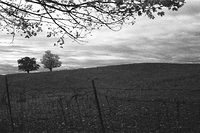
Pasture

A
Pasture

  • 0
  • 0
  • 6
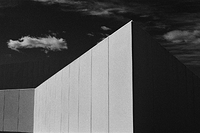
Angular building

A
Angular building

  • 3
  • 1
  • 27

Recent Classifieds

Forum statistics

Threads
201,078
Messages
2,818,681
Members
100,516
Latest member
victorreeds
Recent bookmarks
0

Bob Carnie

Subscriber
Allowing Ads
Joined
Apr 18, 2004
Messages
7,735
Location
toronto
Format
Med. Format RF
The thin gelatine layer applied on top of the gum layer sticks on it and is not perceived as a separate layer.
If you want to try it I'd advice to first test Palladium on gelatine sized paper till you get it right and then the whole Pd over gum process. If the Pd sensitizer doesn't apply evenly on the gelatine sized paper (there are many kinds of gelatine) just moisten the gelatine layer with a brush, absorb well the excess water with some absorbent paper, let it stay for 3-5 minutes and then apply the Pd sensitiser. It will come out evenly (at least it works for me...).
Sounds interesting, do you find that this gelatin sits as a layer or does it sink in, I have seen carbon transfer that is gelatin sized separate or flake off, probably why I moved away from carbon transfer.
 

Andrew O'Neill

Moderator
Moderator
Allowing Ads
Joined
Jan 16, 2004
Messages
12,688
Location
Coquitlam,BC Canada
Format
Multi Format
Sounds interesting, do you find that this gelatin sits as a layer or does it sink in, I have seen carbon transfer that is gelatin sized separate or flake off, probably why I moved away from carbon transfer.

I think the best way around that issue in carbon (one that I've never experienced), is to do a double transfer, where the image sits "in" a heavy gelatin size.
 

Bob Carnie

Subscriber
Allowing Ads
Joined
Apr 18, 2004
Messages
7,735
Location
toronto
Format
Med. Format RF
Hi Andrew

This is how my friend John Bentley gets around it , all three matrixces are transferred to a very heavy watercolour paper and is some of the prints a gelatin coating goes over which would solve this.

Sandy King as far as I have seen and I have seen a lot of his prints does not put a coating on the prints as he wants you to see the relief and its really obvious to the naked eye.
I met with Mark Osterman years ago at GEH and this topic was brought into conversation whereas he stated that very old Transfers 100 years plus were in some cases flaking and required conservation efforts, I would imaging a coating of gelatin would be that solution to the problem.

 

Andrew O'Neill

Moderator
Moderator
Allowing Ads
Joined
Jan 16, 2004
Messages
12,688
Location
Coquitlam,BC Canada
Format
Multi Format
Hi Andrew

This is how my friend John Bentley gets around it , all three matrixces are transferred to a very heavy watercolour paper and is some of the prints a gelatin coating goes over which would solve this.

Sandy King as far as I have seen and I have seen a lot of his prints does not put a coating on the prints as he wants you to see the relief and its really obvious to the naked eye.
I met with Mark Osterman years ago at GEH and this topic was brought into conversation whereas he stated that very old Transfers 100 years plus were in some cases flaking and required conservation efforts, I would imaging a coating of gelatin would be that solution to the problem.

Interesting. I never thought about putting a gelatine coating over top (I guess hardened with formalin)...I might try it with a clear acrylic medium. Thanks Bob.
 
Photrio.com contains affiliate links to products. We may receive a commission for purchases made through these links.
To read our full affiliate disclosure statement please click Here.

PHOTRIO PARTNERS EQUALLY FUNDING OUR COMMUNITY:


Ilford ADOX Freestyle Photographic Stearman Press Weldon Color Lab Blue Moon Camera & Machine
Top Bottom
